

























































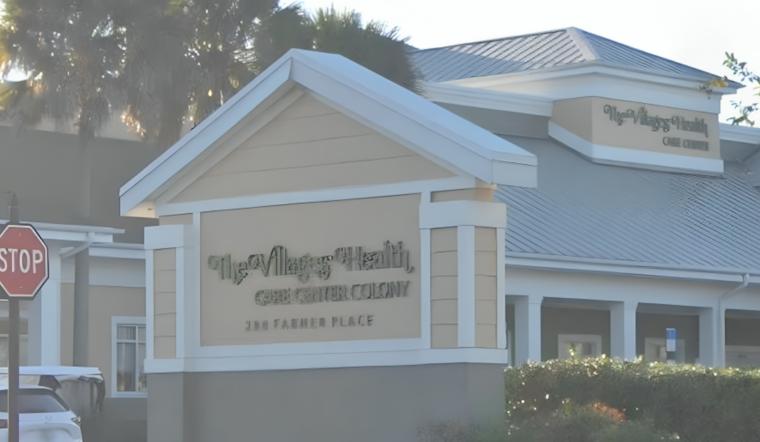
The Villages Health System has agreed to pay $541.5 million to settle federal claims that it knowingly submitted false diagnosis codes to inflate Medicare Advantage payments for years, one of the largest healthcare fraud settlements of its kind. The primary care provider group, which serves more than 55,000 patients across eight primary care centers and two specialty care centers in Central Florida, admitted to sending unsupported medical codes to private Medicare Advantage insurers between 2020 and 2024.
According to the Tampa Free Press, the U.S. Bankruptcy Court for the Middle District of Florida approved the settlement agreement on August 25. The company submitted improper diagnosis codes to inflate Medicare Advantage payouts, and the invalid codes reached major insurers including UnitedHealthcare, Humana Inc., and GuideWell Mutual Holding Corporation, each of which received the false submissions and shared in the resulting inflated payments passed along by the Centers for Medicare & Medicaid Services.
The Department of Justice detailed the internal mechanics behind the scheme in a filing this month. Between 2020 and 2024, The Villages Health used internal practices called “Retrospective Amendments” and “Sprints” to insert unrequested diagnosis codes into patient records, sometimes months or more than a year after a patient's actual visit, according to the Department of Justice. Those record changes were initiated by internal coding staff rather than treating physicians and were routed retrospectively for approval, using unapproved or untimely chart amendments never originated by the doctors who actually saw the patients.
How the Inflated Codes Padded Payments
Medicare Advantage offers larger payments for individuals with more severe health conditions, and CMS pays insurers a monthly risk-adjusted rate for each Medicare Advantage patient. Insurers in turn share a portion of those increased payouts with provider networks such as The Villages Health, creating a financial incentive tied directly to how sick a patient's chart makes them appear.
An internal audit commissioned by The Villages Health in August 2024, conducted by an outside consultant, estimated that the improper coding led to $361 million in inflated payments from private insurers to the healthcare provider, and $416 million in total overpayments from CMS to those insurers between 2020 and 2024, per Healthcare Dive's reporting. Assistant Attorney General Gregory W. Kehoe said the company knowingly submitted false diagnosis codes to increase Medicare Advantage payments and profits.
Three days after filing its initial self-disclosure report with federal regulators, The Villages Health sent a letter to patients on December 30, 2024, admitting it had implemented billing practices since 2020 that were inconsistent with Medicare payment policies. The letter assured patients that the company was working with the government to repay all resulting overpayments, and the company initiated the formal resolution process through the HHS-OIG Self-Disclosure Protocol on December 27, 2024.
Bankruptcy, Sale to CenterWell, and What Comes Next
The Villages Health filed for Chapter 11 bankruptcy in the U.S. Bankruptcy Court for the Middle District of Florida on July 3, 2025, and its operational assets were later acquired by CenterWell, a subsidiary of Humana Inc., for $50 million during the bankruptcy proceedings in late 2025, according to Becker's ASC Review. CenterWell's purchase was aimed at keeping primary care services running for senior residents across the community. To help fund its Chapter 11 liquidation plan, the company also reached an $80 million settlement in 2026 with controlling developer entities tied to the founding Morse family, resolving estate claims over insider transactions including rent and line-of-credit repayments, as reported by ElevenFlo.
The bankruptcy sale followed a stretch of anxiety for local seniors worried about losing access to their doctors. As Hoodline reported at the time, nearly half of the health system's patient base relied on UnitedHealthcare coverage, and TVH and CenterWell reached a deal in November 2025 to keep accepting UnitedHealthcare Medicare Advantage plans through 2026 after the bankruptcy filing threatened to disrupt those networks.
Insurers Are Refunding the Government
UnitedHealthcare, Humana, and GuideWell are each returning the resulting overpayments to the federal government through code deletions or formal repayment agreements, since insurers that receive inflated capitated payments must return federal funds once invalid codes are removed. Healthcare Dive reports that GuideWell had refunded more than $3 million and Humana nearly $151,000 as of March 2026, with those amounts credited against the final settlement figure.
Federal officials credited The Villages Health for flagging the issue, providing written findings, and cooperating with investigators throughout the process. Miranda L. Bennett said entities will be held accountable when they submit unsupported information that inflates payments, and the Justice Department said it will continue holding entities accountable for inflating payments through invalid diagnoses. The HHS-OIG Self-Disclosure Protocol remains available to managed care entities and providers billing managed care entities that want to disclose potential liability, a framework that let The Villages Health negotiate a resolution and receive cooperation credit rather than face mandatory exclusion or harsher statutory penalties.
A Record-Setting Sum, With Recovery Questions Ahead
At $541.5 million, the agreement is one of the largest Medicare Advantage risk-adjustment settlements in False Claims Act history, trailing only Kaiser Permanente's $556 million settlement reached in January 2026, according to Becker's ASC Review. Congressional advisory data from MedPAC indicates that Medicare Advantage risk-score adjustments and upcoding practices industrywide are projected to drive $22 billion in additional spending in 2026 compared with traditional Medicare, underscoring how these local coding decisions ripple into the broader federal budget.
Questions remain about how much of the $541.5 million liability will actually be recovered through the liquidating trust once bankruptcy distributions are sorted out, per Healthcare Dive's reporting, along with broader policy debates over private insurer clawbacks and systemic Medicare Advantage upcoding across Florida. For now, the case stands as a stark reminder of how billing decisions made in back offices can ultimately shape the healthcare available to tens of thousands of seniors in the nation's largest retirement community.



