

























































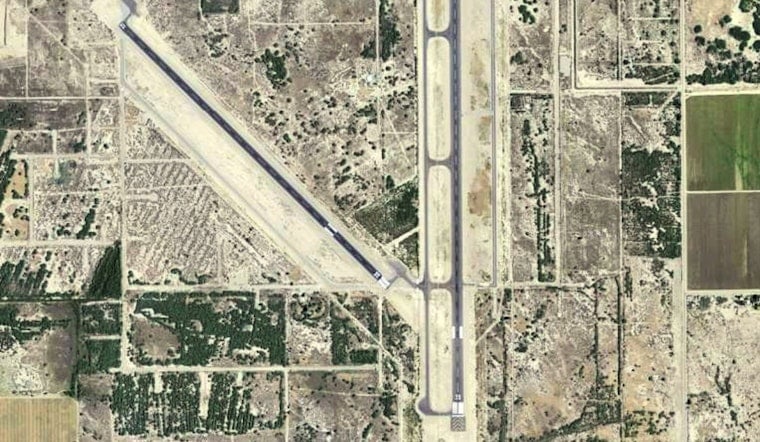
The Twenty-Nine Palms Band of Mission Indians has sued Riverside County, claiming officials lured the tribe into spending $12 million on 612 acres near Jacqueline Cochran Regional Airport in Thermal, then blocked the very runway access that justified the purchase. The federal lawsuit accuses the county and its Board of Supervisors of fraud, racial discrimination, and constitutional violations tied to a resolution passed on what the tribe calls rushed notice last August.
The tribe filed its complaint in the U.S. District Court for the Central District of California on Monday, August 24, 2026, according to Law360, which obtained the lawsuit. As detailed by the New York Post, the six-count lawsuit alleges fraudulent inducement, regulatory taking, and both equal protection and substantive due process violations, and it seeks the return of the tribe's $12 million purchase price, compensation for lost development value, attorney fees, and a court order terminating the county resolution at the center of the dispute.
At issue is a mechanism known as a through-the-fence, or TTF, agreement, which allows private property owners next to an airport to taxi aircraft from their land directly onto the runways. The tribe says it spent more than a year trying to negotiate such an arrangement with Riverside County for a proposed three-party deal involving the county, the tribe, and 29 Aviation LLC, described in the lawsuit as a tribal charter aviation company.
A Resolution the Tribe Calls a Bait-and-Switch
According to the lawsuit, the Riverside County Board of Supervisors adopted Resolution No. 2025-230 in August 2025, a measure the tribe says was pushed through on rushed notice and that effectively barred it from negotiating airport access for the land it had just purchased. The tribe describes the resolution as a government-engineered bait-and-switch that stripped away the very access it says justified the $12 million land purchase in the first place.
The tribe also alleges that Riverside County staff acknowledged the proposed language behind the resolution was overly broad, though that account comes from the tribe's own telling in the litigation. Per the lawsuit, the tribe argues the resolution does not comply with Federal Aviation Administration policy, and it points to another arrangement, a TTF agreement involving the H.N. and Frances C. Berger Foundation, as evidence that adjacent-property airport access can be managed through negotiated restrictions, fee structures, and continued county control rather than an outright ban. The Berger Foundation, which the lawsuit says already has access to Jacqueline Cochran Regional Airport, reportedly opposed the county's resolution as well.
The tribe's central claim is that Riverside County denied it the same airport-access opportunities extended to other groups, amounting to discrimination in contracting and a denial of equal protection. That comparison to the Berger Foundation's existing access sits at the heart of the tribe's fraud and discrimination allegations.
Federal Rules Complicate the Picture
The dispute unfolds against a federal regulatory backdrop that cuts in more than one direction. Under FAA Order 5190.6B, the Federal Aviation Administration generally discourages new commercial through-the-fence agreements at federally obligated public airports. That federal framework forms part of the backdrop to the tribe's argument that the county acted arbitrarily rather than in line with standard aviation oversight. According to the Federal Aviation Administration’s Report to Congress on the Airport Improvement Program, Oroville had a fee and rental structure for commercial and noncommercial through-the-fence operations. The dispute also raises questions about private property owners seeking through-the-fence access to airport airfield facilities.
Jacqueline Cochran Regional Airport sits on 1,850 acres in Thermal and features an 8,500-foot primary runway and a 4,995-foot secondary runway, according to details compiled by FlyXO. The airfield dates back to 1942, when it opened as Thermal Army Air Field, before later operating as Thermal Airport and then Desert Resorts Regional Airport until it was renamed in 2004 to honor aviator Jacqueline Cochran, per Wikipedia. Congressional project submissions have also allocated $10 million toward Phase 1 construction of a new contract air traffic control tower at the airport, which currently has none, according to the office of Rep. Raul Ruiz.
A Tribe With Deep Regional Investment
The Twenty-Nine Palms Band of Mission Indians is a federally recognized tribe of Chemehuevi descendants headquartered in Coachella and led by Tribal Chairman Darrell Mike since 2007. The tribe operates Spotlight 29 Casino in Coachella and Tortoise Rock Casino in Twentynine Palms, giving it an established commercial footprint across Riverside and San Bernardino counties.
Beyond gaming, the tribe has positioned itself as a regional infrastructure partner, having spearheaded the widening of the Dillon Road corridor to six lanes and the replacement of the Dillon Road Bridge over the Coachella Valley Stormwater Channel. In May, California awarded the tribe nearly $950,000 in Cal Fire grant funding. A separate CAL FIRE reference concerns hazardous-fuels work across 223 acres. Riverside County has separately invested in water and sewer infrastructure in Thermal.
Riverside County has not yet responded publicly to the allegations in the lawsuit. The case now heads to federal court, where a judge will weigh the tribe's fraud and civil-rights claims against the county's authority to regulate access to a public airfield it operates.





