

























































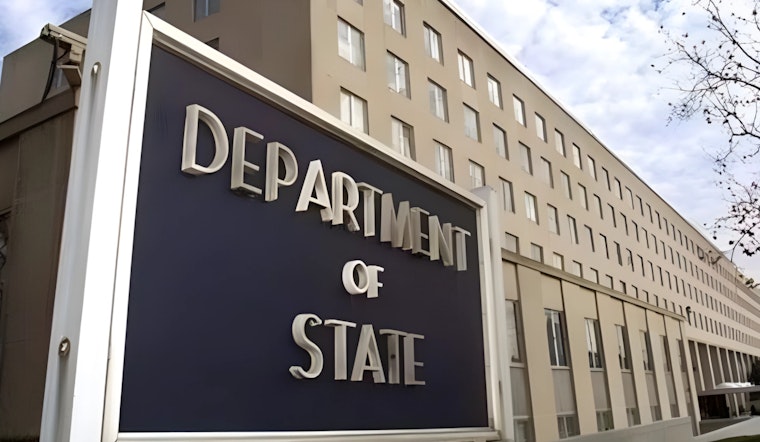
The Trump administration is preparing to revoke the business and tourism visas of up to 200,000 foreigners who have applied for or are seeking asylum in the United States, a move that officials say would become the largest single mass revocation of visas in American history. The State Department will coordinate the effort with the Department of Homeland Security, targeting people who entered on B1 or B2 visas and later filed asylum claims.
According to MySA, State Department spokesperson Tommy Pigott said the agency is working with DHS to identify and revoke nonimmigrant visas of foreigners who claimed to be short-term visitors and then filed for asylum to stay permanently. Pigott declined to say how many visas might ultimately be revoked, even as the plan under discussion covers as many as 200,000 people. The revocations would target B1 and B2 visas issued between 2016 and 2026 to holders who sought or are seeking asylum, per State Department documents cited by the outlet.
What a Revoked Visa Actually Means
Losing a visa is not the same as losing the right to remain in the country, at least not immediately. Under Section 221(i) of the Immigration and Nationality Act, the State Department has broad discretion to cancel a visa, but a so-called prudential revocation does not automatically end someone's lawful nonimmigrant status or make them instantly deportable while they are inside the U.S., according to Adelphi University. Removing someone with a pending asylum claim still requires separate immigration court proceedings.
Once a revocation is logged in the State Department's Consular Lookout and Support System, however, the visa becomes instantly invalid for reentry, whether or not the holder was ever notified or had the physical document stamped, per federal regulations cited by the legal resource eCFR. That system is shared across international border security networks, meaning anyone who travels abroad after revocation could find themselves locked out at the gate. Consistent with that legal gap, the seed reporting notes that visa revocations would not necessarily result in immediate deportation, even as people with pending asylum cases would be recategorized under a different status and lose their business or tourism traveler standing.
A Colombian Case and a Broader Argument
Deputy Secretary of State Christopher Landau has pointed to the case of a Colombian citizen who entered the United States in 2015 on a tourist visa and later applied for asylum as an example of the pattern officials are targeting, according to the MySA report. Landau has argued that asylum is not supposed to be a loophole to circumvent immigration law, and has said people try to use tourist and business visas to enter the country and then apply for asylum. B1 visas are generally issued for business trips, while B2 visas cover tourism, family visits, or medical care.
Current B1 and B2 applicants must now affirm they will not apply for asylum in the United States and must prove they intend to return to their home countries. That requirement traces back to Section 214(b) of the Immigration and Nationality Act, which establishes a legal presumption that every visitor visa applicant intends to remain permanently, per the U.S. Embassy in India. Consular officers weigh employment, family, and property ties abroad when deciding whether an applicant has overcome that presumption.
Part of a Wider Enforcement Push
The State Department began screening current B1 and B2 visa holders after receiving information about asylum requests from U.S. Citizenship and Immigration Services, the MySA report states. The agency has already revoked roughly 175,000 visas over the past 18 months, including from people convicted or accused of crimes such as drunken driving, rape, and robbery, and from people who publicly spoke against U.S. policies, particularly in the Middle East. Separately, NBC News reports the total has surpassed 175,000 across all nonimmigrant visa classifications since President Trump's second term began, a figure fed by continuous vetting and expanded inter-agency data sharing.
That enforcement push has already produced a smaller, related crackdown. Under Executive Order 14419, Secretary of State Marco Rubio launched the Birth Tourism Prevention Task Force earlier this month, which revoked nearly 900 visitor visas in its first two weeks targeting commercial networks accused of coaching pregnant travelers, as Hoodline reported on the birth tourism crackdown. The administration claims birth tourism is used by foreign pregnant women seeking U.S. births for their children to benefit from birthright citizenship, and it has moved broadly to crack down on the practice even after courts including the Supreme Court rejected Trump's challenges to end birthright citizenship.
Fast-Tracking Asylum Cases Into Court
The visa plan lands alongside a separate procedural shift at USCIS. On July 27, the agency issued an interim final rule allowing asylum officers to refer affirmative asylum applications directly to immigration courts for deportation proceedings without conducting an initial interview, ending a practice that had stood since 1990. Federal officials have argued the system was being exploited for delay and work authorization, while legal advocates counter that direct court referrals severely restrict applicants' ability to secure lawful work permits, according to USCIS's own release.
The scale of the backlog those cases feed into is enormous. The U.S. asylum backlog exceeded 2.4 million total pending cases at the end of fiscal year 2025, with more than 1.4 million affirmative asylum cases pending before USCIS alone as of March 2026, according to the Council on Foreign Relations. TRAC Immigration data shows Miami-Dade County, Florida, Cook County, Illinois, and Queens County, New York, already lead the nation in pending deportation cases, with 137,373, 108,934, and 103,562 cases respectively as of June 2026 — the metro areas most likely to absorb any surge if visitor visa holders seeking asylum are pushed into court, per US Immigration AI.
Lawmakers Push Back, Legal Fights Loom
Congressional Democrats have already raised alarms. On August 14, 71 House Democrats led by Reps. Morgan McGarvey and Pramila Jayapal sent a letter to DHS criticizing the fast-track asylum rules and noting that ICE has begun detaining valid visa holders with pending asylum claims at domestic airports, according to Rep. McGarvey's office. The lawmakers cited incidents in which domestic travelers with active asylum claims were arrested at airport gates.
The State Department has not disclosed how many affected B1 and B2 visa holders are seeking or have sought asylum, and it is expected to announce the revocations in the coming weeks, per the documents cited in the MySA report. The plan would likely face legal challenges, the outlet notes, adding to a string of Trump-era immigration actions that have already drawn court fights, including sudden F-1 visa revocations that alarmed universities and heightened airport screening that prompted New York immigration attorneys to urge caution, as Hoodline has previously reported.





