

























































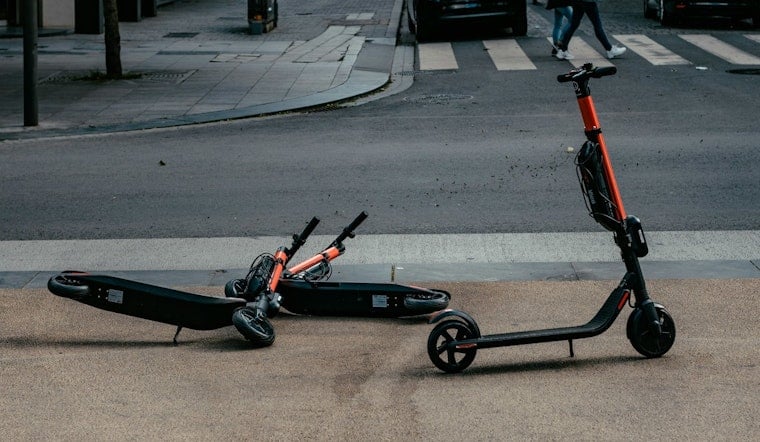
Starting Wednesday, sheriff's deputies in West Hollywood will begin a full-day enforcement push targeting scooters and e-bikes left blocking sidewalks — but riders who illegally cruise those same sidewalks at speed will not be the focus of the crackdown. The city says its enforcement tools can catch a device parked in the wrong spot. They cannot yet tell whether that same device was ridden along a sidewalk on the way there.
The distinction matters because it is baked into the technology. Under West Hollywood's dockless mobility program, riders are required to end trips inside marked virtual parking zones inside the Lime app, and the company handles rider notifications about those zones. But according to WEHOonline, city staff say Lime's GPS is not precise enough to reliably geofence sidewalks, which means the city cannot enforce illegal sidewalk riding through the app even though it wants to. The enforcement operation launching Wednesday concerns only where e-bikes and scooters may be parked after use — not who may ride them or where, per the same account.
A Program Built on a Single Operator
West Hollywood didn't always work with just one company. The city launched its Dockless Micromobility Pilot Program on July 1, 2021, and in April 2024 executed an exclusive agreement designating Lime as its sole operator, according to the City of West Hollywood. Lime pays the city a flat permit fee plus 20 cents per trip, or 40 cents for trips that both start and end within city limits. The consolidation appears to have driven up device usage: daily utilization for individual Lime scooters rose from 1.6 trips to 4 trips per device across local neighborhoods after the single-operator switch took effect, city data shows.
That surge in ridership has coincided with mounting complaints about clutter and safety. Alan Strasburg, who has advocated for stronger dockless mobility enforcement, recorded Lime bikes blocking the sidewalk on the Sweetzer side of City Hall back in May, per WEHOonline's reporting. City staff have since selected virtual parking zones with enough sidewalk space to hold a parked device without blocking pedestrians, and residents can report abandoned or improperly parked devices through the city's service requests page or app. Additional parking-zone requests, submitted through the Engage WeHo portal, are reviewed by city staff for accessibility before Lime adds them to the app.
Sidewalk Collisions Have Left Lasting Injuries
The stakes behind the sidewalk debate are not abstract. In December 2023, Nicole Stevens was hit by a scooter on a sidewalk outside MedMen on Santa Monica Boulevard; the rider had been traveling at approximately 20 miles per hour on the sidewalk and hit and ran after the collision, the outlet reported. Stevens suffered skull fractures, brain swelling, seizures and amnesia.
She was not the city's only sidewalk casualty. In April 2022, Debbie Meister was struck by a scooter rider in a crosswalk at Santa Monica Boulevard and Westmount Drive, suffering a fractured elbow and broken foot that required surgery and two nights at Cedars, according to the same WEHOonline account. Both incidents predate the current enforcement push but illustrate why disability advocates and older residents have pressed the city to act on sidewalk safety, not just parking.
What State Law Already Says
California law already restricts where scooters can legally go. State law bans scooters from sidewalks except to enter or exit a driveway and caps scooter speed at 15 miles per hour. Under California Vehicle Code § 21235, motorized scooter operators must hold a valid driver's license or instruction permit and are restricted to streets with speed limits of 25 mph or lower unless riding in a Class II or Class IV bike lane, and riders under 18 must wear helmets. The same statute explicitly prohibits leaving a scooter lying on its side on a sidewalk or parking it in any way that obstructs pedestrian traffic — meaning improper parking has been a state vehicle code infraction independent of any city geofencing program, according to FindLaw.
E-bikes fall under a separate framework. Under Assembly Bill 1096, e-bikes are split into three classes based on speed and motor assist, with Class 1 and Class 2 topping out at 20 mph and Class 3 pedal-assist bikes reaching 28 mph while requiring riders to be at least 16 and wear a helmet, per Danville Safety Advocates. While state law grants Class 1 and Class 2 e-bikes default access to roadways and bike paths under CVC § 21207.5, cities retain police-power authority to ban e-bikes from sidewalks locally — and West Hollywood, like Beverly Hills and Santa Monica, has done exactly that. Yet that local ban has gone effectively unenforced for the same GPS-precision reasons cited for scooters.
City Officials Weigh In on the Meeting That Shaped the Plan
The enforcement plan traces back to a July 15 mobility meeting that included nine city staffers and seven residents and advocates, according to WEHOonline's reporting. Attendees reportedly included Community Safety Director Danny Rivas, ADA Coordinator Raelynn Napper, Public Works Director Helen Collins, City Attorney Lauren Langer, and Transportation and Mobility Manager Tamar Fuhrer. Disability Advisory Board member Yola Dore was also named as part of the discussions covered by the outlet.
Starting Wednesday, sheriff's deputies will provide education and issue tickets when necessary for parking violations, and the city says it will promote the parking program through bus shelter ads, kiosks and its newsletter. The Lime app itself already prevents riders from ending trips outside designated virtual parking zones, which is meant to stop devices from being abandoned mid-sidewalk in the first place.
A Parallel Push to Get More Residents on E-Bikes
Even as it tightens parking rules, West Hollywood is separately trying to get more residents onto e-bikes of their own. The city's E-Bike Incentive Program is accepting applications through August 31, offering up to 50 selected residents a free e-bike from local retailer Bike Shop LA, covering full purchase costs, safety training and ongoing maintenance, with priority given to low- and moderate-income applicants, according to the City of West Hollywood. Selected residents must agree to submit quarterly mileage reports.
The local program stands in contrast to the state's troubled effort. California's statewide e-bike voucher program, which offered low-income residents up to $2,000 off an e-bike, was placed on indefinite hold by the California Air Resources Board in May 2025 due to persistent technical glitches and portal crashes, according to Patch. West Hollywood's smaller, locally run lottery has continued operating without those disruptions.
A Nationwide Injury Trend Looms in the Background
The safety concerns driving West Hollywood's parking crackdown fit into a much larger national pattern. Emergency room-treated injuries involving micromobility devices nationwide surged to an estimated 149,100 in 2024, with e-scooters accounting for 79,300 emergency visits and e-bikes accounting for 59,200, according to the U.S. Consumer Product Safety Commission. Micromobility injuries have climbed an average of 23% annually since 2017, the agency reports.
Age restrictions add another layer of legal exposure for families. California Vehicle Code § 21235(d) prohibits minors under 16 from operating motorized scooters on public streets or sidewalks, and California Civil Code § 1714.1 allows parents to be held civilly liable for damages caused by a minor's unlawful scooter operation, according to the Kohn Law Office. For now, though, West Hollywood's Wednesday rollout addresses only parking. Whether the city can eventually close the sidewalk-riding enforcement gap will likely depend on Lime's ability to sharpen its GPS technology, something the city has said isn't precise enough yet to reliably distinguish a sidewalk from an adjacent street or bike lane.





