

























































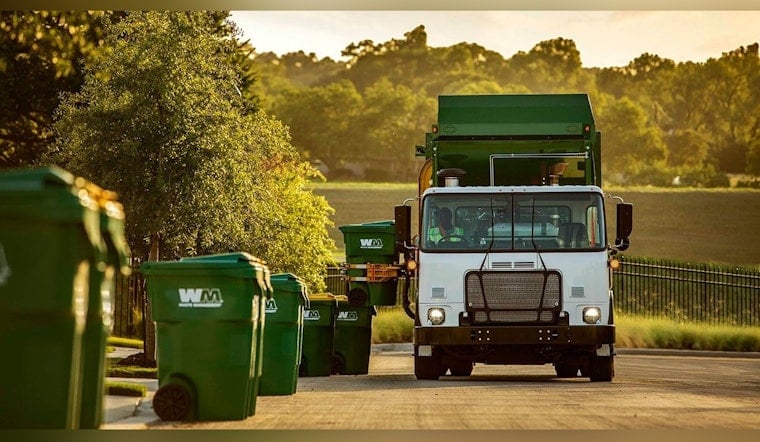
West Sacramento residents are bracing for higher trash bills no matter what happens next, as the city moves toward replacing its longtime waste hauler with a company whose proposed rates run notably higher than the incumbent's. The city's 10-year waste collection contract is expiring, and officials say current rates have been kept artificially low for years — a cushion that's about to disappear regardless of which company wins the new deal.
The West Sacramento Environment and Utilities Commission is set to seek public comment today on a proposal to switch trash haulers from USA Waste of California, better known as Waste Management, to GreenWaste Recovery, according to KCRA. City staff began a competitive procurement process and evaluated three providers — Waste Management, Atlas Disposal, and GreenWaste Recovery — before an evaluation panel concluded that GreenWaste demonstrated the best overall ability to meet the city's needs, the station reports.
That recommendation comes with a real cost difference. Public notice comparisons reviewed by the West Sacramento Unbiased Community Discussion Board on Facebook show GreenWaste's proposed monthly bundled residential rate at $52.30, compared with $40.10 proposed by incumbent Waste Management. Per the KCRA report, residential container pickup rates would rise 22.29% to 40.53% under GreenWaste, versus a 7.82% to 29.14% increase if the city renews with its current provider.
Why Rates Are Rising Either Way
City officials have been direct about the underlying math: the city-manager's office set solid waste rates below the increases the current provider had sought, but the outlet notes that waste collection rates will increase regardless of which provider the city ultimately chooses. That's partly a function of the expiring contract locking in prices that no longer reflect the cost of running a modern hauling operation.
Statewide, California's Senate Bill 1383 requires a 75% reduction in landfilled organic waste compared to 2014 levels, which has pushed jurisdictions across the state to raise solid waste rates to pay for weekly organic collection, sorting, and enforcement, according to CalRecycle. Organic waste breaking down in landfills is California's third-largest source of methane emissions, which is part of why the mandate exists in the first place. Neighboring Davis went through a similar reckoning in late 2025, when the city found that mid-sized Yolo County cities depend heavily on commercial haulers' scale to procure the specialized equipment SB 1383 requires, according to the City of Davis.
A Steeper Penalty for Sorting Mistakes
Beyond the base monthly rate, residents who mis-sort their waste would face a much bigger fine under the proposed GreenWaste contract. Contamination charges for placing non-recyclable items into recycling or organic pails would jump from $25 to $85.39 per incident, per the same Facebook community post citing the public notice comparisons. Those penalties exist to keep non-organic material from polluting compost streams, which matters because the county is investing heavily in processing that organic waste stream.
The switch would also change who residents deal with when a bill is wrong or a bin doesn't get picked up: the GreenWaste transition would move customer billing responsibility from the city to the provider itself, per KCRA's reporting. The West Sacramento City Council must still approve any new waste collection services contract before it takes effect, and the outlet reports that residents will not see the new rates take hold until next summer.
Coming Right After Water and Sewer Hikes
The timing is notable for a city already asking residents to absorb higher utility costs. The West Sacramento City Council adopted a five-year schedule of water and sewer rate hikes effective April 1, 2026, citing a 19% inflation surge since 2021 that drove up operations and maintenance expenses, according to the City of West Sacramento. The city's prior utility rate schedule had gone unadjusted since 2021.
To soften the blow for vulnerable households, the city maintains a Low-Income Rate Assistance program offering a $20 monthly credit, with $2 of that applied to refuse bills, along with a Fixed Income Senior Rate Assistance program offering a $15 monthly credit. Under Proposition 218, any property-related rate increase — including solid waste, water, and sewer fees — requires a 45-day public notice period and a formal protest hearing, where a majority written protest from property owners can block the proposal, according to the city's utility rate study documentation.
Where the Trash Actually Goes
West Sacramento contributes roughly 24% of the total municipal solid waste volume deposited at the Yolo County Central Landfill in Woodland, ranking second behind the city of Woodland's 32% share, according to Yolo County data cited by LocalWiki. That landfill is undergoing its own transformation: Yolo County finalized a 20-year agreement in July with Yolo RNG, LLC to convert landfill gas into pipeline-quality renewable natural gas, replacing an aging gas-to-electricity plant built in the late 1980s, as reported by the West Sacramento News-Ledger. The county also broke ground last year on a solar canopy at the landfill designed to generate more than 750,000 kilowatt-hours of clean electricity annually, an investment expected to save an estimated $2.5 million over 20 years.
For now, the open question is whether public pushback at the Environment and Utilities Commission meeting or during the eventual Proposition 218 protest period could change the council's course. The commission's meeting today marks the first formal opportunity for residents to weigh in before the matter advances toward a final council vote.





