

























































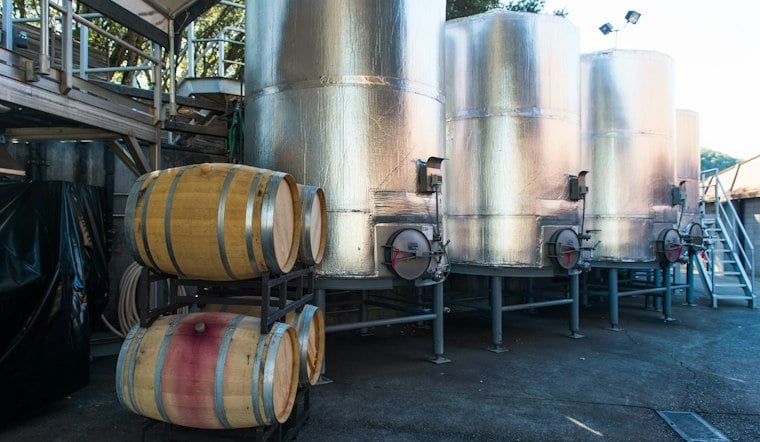
Winemakers scrambling to salvage their 2026 harvest got an unwelcome surprise last month when Legend Napa Valley, a custom crush winery in American Canyon, told clients it was ceasing operations immediately. The closure notice landed in mid-August, right as grapes were coming in, and gave winemakers roughly two weeks to clear out their wine, barrels, and equipment before the facility cut its power and locked the gate.
A Letter That Upended Harvest Plans
Legend Napa Valley, located at 100 Napa Junction Road, is a custom crush winery, meaning it provides smaller wine producers with equipment, cellar space, and storage they cannot afford to own outright, according to the San Francisco Chronicle. Winemaker John Gibson picked Vermentino from the Sierra Foothills on August 18 and received the closure letter the very next day, per the Chronicle's reporting. The facility barred any additional grapes from entering effective immediately, and Legend cited only “extraordinary and sustained conditions affecting the wine industry” as the reason for shutting down.
Gibson called the notice “a very overwhelming moment” and said the situation was unprecedented across his 47 harvests in Napa Valley. He had to move his wine and equipment out by September 3, and said he may consider legal action once harvest wraps up. Legend had given Gibson his own key for after-hours access to the facility, but reclaimed it once the closure letter went out.
Scrambling Winemakers, Mounting Costs
The logistics were brutal for small producers with nowhere else lined up. Gibson, who makes wine for four different brands and is a 50 percent partner in Four Winds, visited seven facilities in four days trying to find new homes for his wine, ultimately splitting it between three different wineries. He owned two 3,000-gallon tanks that needed relocating and paid at least $5,000 just to truck his wine barrels elsewhere.
Jay Nuñez, who founded No Love Lose Wine Co., told the Chronicle he saw the closure coming a couple of weeks before the letter arrived, after Legend increased his monthly fee from $4,000 to $9,200 and Legend founder Andre Crisp refused to let him crush additional grapes at the facility. Nuñez had 15 tons of grapes scheduled to arrive the next day when the situation came to a head, leaving him to arrange a move during harvest.
Patrick McEvoy, another affected client, said moving during harvest required substantial organization on his part. McEvoy told the Chronicle this was his third custom crush facility closure in three years, and Legend gave him just nine business days to move out. He had also paid $1,000 for a California alcohol permit he never got to use at the facility.
From Renovation to Shutdown
The closure came just as Legend had finished a round of renovations, including a large indoor tasting room, patio, and offices — though the winery never actually opened that indoor tasting space to the public. Andre Crisp, the winery's founder, was appointed CEO of Luna Vineyards and elected to its board in September 2013 at age 33 after eleven years as a Silicon Valley technology entrepreneur, according to Wine Business. He also owns Global Wine Brands, which produces private-label wines, and purchased the 20-acre American Canyon property along with its 20,000-square-foot winery in December 2021. As recently as 2023, Crisp had planned a commercial kitchen and food program at Legend and intended to build his family home on the property; that same year Legend brought on former Oregon and California winemaker Todd Nelson as general manager and head winemaker to expand client services, a sign the business was still investing in growth just three years before it shut down.
A Sale Tied to Napa's Apartment Boom
Legend sold the property last August to JSP Domaine 3 LLC, an entity connected to San Francisco-based developer Jackson Square Properties, for $5.5 million. The Domaine at Napa Junction, a 291-unit, 17-building apartment complex adjacent to the Legend site, was recently developed. Jackson Square said the property sale was not intended to cause or require the closure of Legend's custom crush operations, and attributed the shutdown to business conditions, including insufficient contracted grape volume. The developer said it currently has no plans to build apartments on the Legend site and said it hopes Legend will reimagine its hospitality offering going forward.
Not every client was caught in the crossfire — Rachel Novak, who co-founded Novak & Mason Cellars and had been a Legend client since 2023, noted that the facility had allowed clients to perform their own winemaking work on-site.
A Statewide Squeeze on Custom Crush
Legend's sudden collapse came amid a broader decline in U.S. wine sales. Nationally, U.S. wine case sales and spending fell between 2020 and 2025.
Roughly a quarter of California's wine grape vineyards have been removed or taken out of production since peak pandemic levels, and about half of the 2026 harvest went to market without buyer contracts, according to the Washington Times. That is a stark contrast to the norm; Allied Grape Growers reports that a typical California harvest sees 70 to 80 percent of grapes secured under contract before picking even begins.
For winemakers like Gibson and Nuñez, the shutdown meant an immediate scramble for tank space, trucking, and cash just to keep their wine safe during the busiest weeks of the year.




