

























































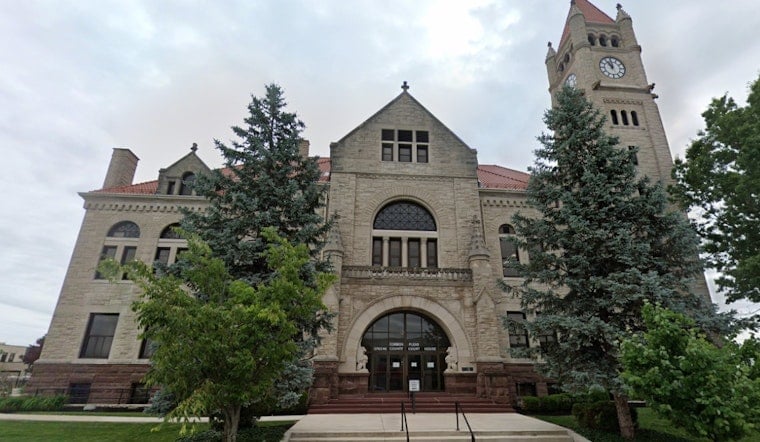
Antioch University has taken its governance partner to court, accusing the Coalition for the Common Good — the joint venture it built with Otterbein University — of attempting a hostile takeover of its board and bank accounts. A Greene County Common Pleas court sided with Antioch on Tuesday, issuing a temporary restraining order that blocks the coalition from dissolving Antioch's board of governors or accessing its accounts while the case plays out.
The lawsuit, filed August 28 in Greene County Common Pleas Court, was first reported by the Springfield News-Sun, which detailed how the mostly online school headquartered near Yellow Springs, with campuses in several states, says the coalition attempted to seize control of its bank accounts, dictate its financial decisions, and oust sitting president Lori Varlotta. Antioch's complaint alleges breach of contract and asks the court to declare any vote to dissolve Antioch's board of governors unlawful, while also seeking to stop the coalition from terminating or otherwise harming Antioch-affiliated employees. According to Higher Ed Dive, the restraining order preserves the status quo while the litigation moves through full judicial review.
A Partnership Built on Equal Footing
Antioch and Otterbein created the Coalition for the Common Good in 2023 as a way to share resources, and Antioch's lawsuit argues the arrangement was always meant to function as a joint venture with the two universities as equal partners. Under the coalition's corporate bylaws, Antioch appoints four of the nine seats on the governing board, forming what's called an Antioch Standing Committee whose approval is required for major operational or governance changes affecting the school, per the same account from Higher Ed Dive. In practice, Antioch became an operating division of the coalition, while Otterbein — a private university in Westerville — retained its own fiduciary board, name, brand, and separate accreditation as a coalition subsidiary.
Otterbein officials have emphasized that the university itself is not a party to the lawsuit. The coalition currently counts only Antioch and Otterbein as members, and the coalition has not fulfilled its stated goal of attracting other institutions to join.
Months of Friction Before the Filing
The conflict didn't erupt overnight. Coalition Board Chair Dan Gifford and Vice Chair Charlene Hayes issued a notice in late May threatening to dissolve Antioch's board on June 30 unless actionable organizational recommendations were made, and the two sides entered voluntary mediation as a result, according to Higher Ed Dive's reporting. That mediation began the same day the dissolution deadline hit, but it collapsed after coalition leaders moved forward with dissolution resolutions anyway. The coalition also scheduled a June meeting specifically aimed at amending Antioch's bylaws and dissolving its board of governors — though the vote to dissolve the board never actually happened, according to the Springfield News-Sun.
Antioch's complaint further alleges that coalition leadership tried to force Antioch to pay for the coalition's own legal and consulting expenses incurred while preparing the takeover attempt, an unproven allegation contained in the pending lawsuit. John Comerford chairs the Coalition for the Common Good, though coalition officials were unavailable for comment before the Springfield News-Sun's deadline.
Money Concerns Behind the Governance Clash
Money appears to sit at the center of the dispute. Varlotta's own analysis found the coalition was in financial trouble, and she has warned that continued financial distress would interfere with Antioch's ability to serve its students, per the Springfield News-Sun. Tax filings cited by the paper show the coalition brought in about $83 million in the 2025 tax year but spent roughly $88.5 million, ending the year with $32.9 million in net assets.
In a letter dated August 28, Varlotta and Steve Crandall said the university's president, cabinet, and board of governors all remain in their positions despite the coalition's actions. Antioch maintains its own board of governors with delegated governance responsibilities, and the university says the coalition has been acting as though that board has already been dissolved — attempting, in Antioch's telling, to deny the board any voice or authority within the coalition altogether. Antioch has said the takeover attempt, per its own statement Tuesday, will not disrupt students' courses or employees' work schedules.
Separate Accreditation, Separate History
Antioch is quick to note it remains completely separate from Antioch College, a small liberal arts college on the school's historic Yellow Springs campus. That distinction traces back to 2008, when Antioch University suspended operations at its original Yellow Springs undergraduate college during a budget deficit crisis, according to Belt Magazine. An alumni group later purchased the campus and reopened Antioch College as its own independent institution in 2011.
Antioch University is separately accredited by the Higher Learning Commission, which reaffirmed the university's accreditation in September 2025 for the maximum 10-year period running through the 2034–2035 academic year, requiring no interim monitoring, according to Antioch's own Common Thread publication. The university enrolled 3,397 total students in fall 2023, with more than 3,000 in graduate programs spread across online platforms and branch locations in California, Washington, and New England, per Higher Ed Dive's October 2025 reporting.
The academic partnership between the two schools had, until recently, been expanding. By fall 2025, the coalition had created 19 Graduate Early Admission Pathways letting Otterbein undergraduates take Antioch graduate courses at no extra tuition cost, with 61% of entering Otterbein freshmen aware of the initiative, according to Otterbein's own Towers magazine. It remains an open question how the court's restraining order will affect those shared enrollment pathways going forward. The Greene County Court of Common Pleas, which holds original civil jurisdiction over disputes involving damages exceeding $500, also maintains a court-administered civil mediation program that could still come into play as the case proceeds.


