

























































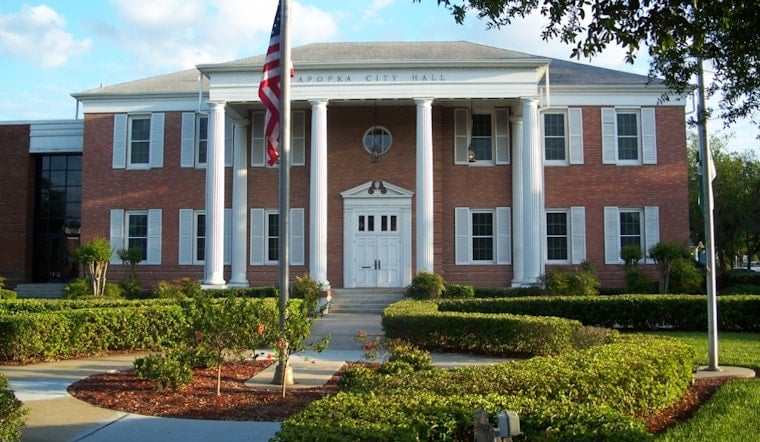
Apopka households will pay more for water, sewer and garbage service starting Oct. 1, after city commissioners approved a 6% increase for water, sewer and reclaimed-water rates and a 6.5% increase for sanitation service during their Sept. 2 meeting. The change pushes base monthly customer charges from $65 to $69, with additional fees still applied based on actual usage.
The vote, reported by WESH, means Apopka, Fla. residents will see the increases reflected in water, sewer and reclaimed-water rates, as well as sanitation service, beginning next month. Before the hike, the city's combined baseline bill sat at $65.25 per month for standard accounts, or $77.63 for households with reclaimed water service, according to ClickOrlando. Those figures broke down to $12.36 for water, $26.29 for sewer and $26.60 for garbage before usage charges were tacked on.
Why the Rate Hike Is Happening Now
The increase isn't a standalone decision. It's the latest step in a multi-year fiscal plan the city adopted in February 2026, when commissioners approved a 10% rate increase for fiscal year 2026 followed by 6% annual increases through 2029. That schedule replaced a steeper 15.5% hike that had been under consideration in 2025, after the city identified $3.1 million in operational savings, per the same account from The Apopka Chief.
At the Sept. 2 meeting, consulting firm Raftelis Financial Consultants told commissioners the 6% water rate increase will help finance capital improvement debt, including pipeline upgrades meant to fix two major water system constrictions causing flow and pressure problems in north Apopka, according to The Apopka Chief. A separate 6.5% sanitation rate increase approved the same night is meant to cover rising costs tied to the city's rapid population growth, higher labor and fuel expenses, elevated landfill disposal fees, and an expansion of the sanitation truck fleet, the outlet reported.
Meter Troubles Still Fresh for Some Residents
The rate increase lands not long after a separate billing controversy involving faulty water meters. In July, Mayor Nick Nesta announced the city had allocated $365,000 in utility account credits to compensate residents hit with back-billing caused by malfunctioning meters across Apopka, the local paper reported. The city has also undertaken a meter-replacement program, and the issue involved estimated charges and later back-billing for some residents.
Apopka's rate schedule also offers limited relief for some fixed-income residents, though not for newcomers. The city permanently eliminated its Senior Citizen Sanitation Discount for new applicants back in 2010, according to the City of Apopka Government, meaning fee relief on refuse collection is restricted strictly to accounts grandfathered in before that cutoff.
Taxes Rising Alongside Utility Bills
The utility hike isn't the only added cost hitting Apopka households this fall. The city has a tentative fiscal year 2027 property-tax millage rate of 4.6761 mills. Combined with the new utility charges, the two increases represent compounding costs converging on local budgets at the same time.
City leaders have tied much of the financial pressure to Apopka's rapid growth. The city ranks as the fifth fastest-growing submarket in the Orlando metro area, with an average annual population growth rate of 2.89% since 2010 and a median household income of $95,703 as of 2026, according to prior Hoodline reporting on Apopka's road funding gap. That growth has strained infrastructure across the city, from water pipelines to road capacity.
Not every utility cost in Apopka is climbing, however. Residential electricity rates in the city averaged $0.18 per kilowatt-hour as of August 2026, about 14% below the national average of $0.21 per kilowatt-hour, according to EnergySage data. That means the added financial strain households are feeling is coming specifically from municipal water, sewer, garbage and tax increases rather than regional power costs.


