

























































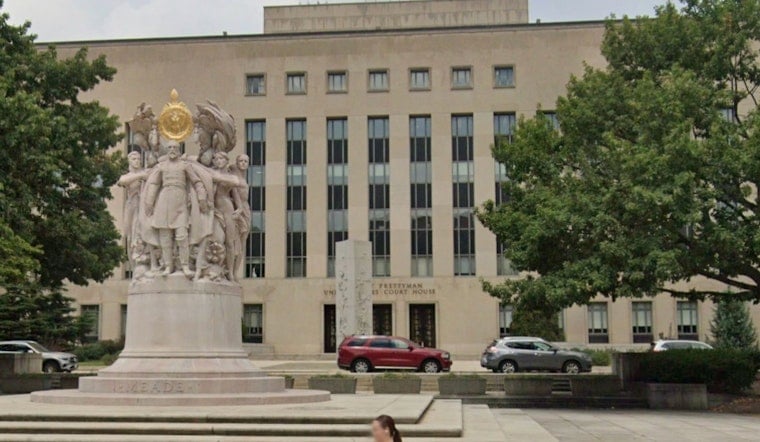
A federal appeals court has upheld an order blocking the Internal Revenue Service from sharing taxpayer addresses with immigration authorities, ruling that the process the agency built to feed data to Immigration and Customs Enforcement violated federal law in numerous ways. The U.S. Court of Appeals for the District of Columbia Circuit found that the IRS had already disclosed roughly 47,000 taxpayer addresses to ICE before a lower court froze the practice.
The ruling, issued Tuesday, keeps in place an injunction that a lower-court judge had imposed after the Center for Taxpayer Rights and Main Street Alliance sued over the data-sharing arrangement, according to the Honolulu Star-Advertiser. The IRS and ICE agreement had required the tax agency to process ICE requests for the last known addresses of suspected unlawful residents, and the IRS began working through requests covering as many as 1.28 million people starting in July 2025, per the same report. Democracy Forward represented the plaintiffs in the case.
At the heart of the court's findings was how loosely the IRS verified the requests it was fulfilling. The agency's procedure did not require the number ICE provided in an address field to actually be a real zip code, and it allowed ICE to obtain taxpayer information whenever it supplied any five- or nine-digit number in that field, the Star-Advertiser reported. Court records cited in the case showed ICE had submitted requests for 1.28 million taxpayers using the exact same ICE employee as the listed point of contact on every single one, with placeholder entries such as “00000” or “Don't Care 12345” sufficient to trigger a match, according to Courthouse News.
A System Built for Volume, Not Verification
The IRS procedures adopted under the Trump administration failed to require ICE to provide an actual taxpayer address before information was released, and the system instead automated review of millions of records without individual review or another compliance mechanism, per the Star-Advertiser's reporting. Federal tax law requires specific, individualized names and addresses before the IRS can release return information, Courthouse News noted in its coverage of how those safeguards were sidestepped.
The scale of the transfers alarmed civil rights groups well before Tuesday's ruling. According to court filings cited by Democracy Forward, the IRS transferred as much confidential taxpayer address data to ICE during a single week in August 2025 as it had provided to all federal law enforcement agencies combined over the entire preceding year, with the agency processing mass address requests using automated scripts shortly after adopting the new protocol.
Earlier proceedings had already quantified how badly the verification process broke down. U.S. District Judge Colleen Kollar-Kotelly determined in February 2026 that the IRS broke federal privacy law approximately 42,695 times by disclosing last known taxpayer addresses to ICE without confirming ICE had supplied legally sufficient details, according to trial court filings reported by The Washington Post — meaning more than 42,000 of the 47,289 address disclosures failed basic statutory verification requirements.
Judges Appointed by Obama Reject 'Weak Sauce' Defense
The three-judge D.C. Circuit panel, composed of Judges Cornelia Pillard, Patricia Millett, and Robert L. Wilkins, all appointed by Democratic President Barack Obama, dismissed the Trump administration's argument that blocking the policy was unusual or harmful as “weak sauce.” U.S. Circuit Judge Cornelia Pillard said the administration's complaint that the injunction hindered federal law enforcement was a gripe with Congress, not the court, in language reported by FedScoop. FedScoop reported the phrase generated significant attention in legal and political commentary surrounding the opinion.
In her 32-page opinion, Judge Pillard opened by citing Watergate-era abuses to explain why Congress restricted inter-agency tax data sharing in the first place, per Courthouse News's account of the ruling. Congress barred the IRS from sharing taxpayer information with other government agencies unless stringent conditions were met, a restriction rooted in the post-Watergate concerns that prompted limits on tax-record disclosures. FedScoop's analysis of the opinion noted that Section 6103 carries steep civil and criminal penalties, including felony imprisonment, for willful unauthorized disclosures of tax data — a warning the court aimed squarely at agency personnel involved in the transfers.
A Second Court, a Different Judge, the Same Concern
The D.C. Circuit case was not the only judicial pushback the arrangement has faced. In a parallel lawsuit, U.S. District Judge Indira Talwani in Massachusetts issued a separate preliminary injunction in February 2026 prohibiting the Department of Homeland Security and ICE from using or viewing any IRS taxpayer information obtained under their April 2025 agreement, according to FedScoop's reporting on that case.
Skye Perryman said she was pleased the court acted to stop the unlawful behavior, according to the Star-Advertiser's report. The Department of Homeland Security, which oversees ICE, said through a spokesperson that it disagrees with the ruling and that the department will continue using every lawful tool available to locate and remove people with final orders of removal. The Trump administration had contended the lower-court ruling hindered federal law enforcement, an argument the appeals panel rejected.
Lawmakers and Advocates Warn of Revenue Fallout
Congressional opposition to the arrangement has also been organized and vocal. Lawmakers and advocates have opposed the arrangement, arguing that bulk transfers violate Section 6103.
Undocumented immigrants pay nearly $100 billion in annual taxes, per reporting from ABC News, which noted that their tax data generally stayed confidential from immigration enforcement. The prospect of using tax data for immigration enforcement has raised concerns about a chilling effect, while immigration enforcement officials maintain tax records are necessary to locate individuals with final removal orders.
The dispute over IRS data access predates this specific agreement. Legal challenges began in February 2025 when advocacy groups filed emergency litigation to block the newly created Department of Government Efficiency from gaining broad access to confidential IRS financial databases, according to Law&Crime. That earlier fight over administrative access to tax systems fed directly into the IRS-ICE litigation now before the courts. While Tuesday's ruling upholds the injunction halting automated disclosures, underlying merits litigation and a parallel appeal in the First Circuit remain active as higher courts continue weighing statutory compliance and agency rulemaking standards, Law&Crime reported.



