

























































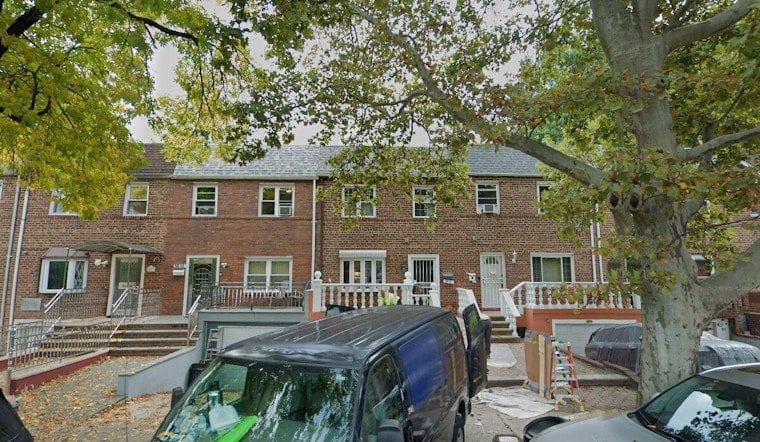
A vacant house on a quiet Bayside, Queens block has become the center of a two-year standoff between neighbors and a man they believe moved in without permission, changed the locks, and has remained there for years. Residents say they first spotted him in the home in March 2024, and they are still waiting for an official warrant of eviction to remove him.
The home belonged to Richard Klibschon, who died in 2018 with no children or immediate heirs, according to WABC-TV. Because Klibschon left no known family to claim the property, it fell into a legal limbo that neighbors say made it an easy target. Bayside residents believe the man living there is Vernon Glass, though the station reports he has refused to confirm his identity, and Eyewitness News says it received no answers from the man living in the home or from attorneys who previously represented him.
A Familiar Name From a Nassau County Case
Nassau County police said Glass previously took over a vacant home in North Woodmere, changed the locks, and collected thousands of dollars in rent while posing as the landlord — the same pattern neighbors describe in Bayside. Glass rented that home to three people and was ultimately sentenced to five years of probation in December 2019 after pleading guilty to a lesser felony and misdemeanor charge, per the station's report. He had initially pleaded not guilty in court.
Court records show a lawsuit was also filed in 2022 against Glass and another woman after Flushing homeowners claimed the pair entered their property by force and without permission. Those Flushing homeowners asked a judge to evict Glass and the woman, but the case notes the homeowners eventually dropped it. Their attorney said the family lost so much money that the house went into foreclosure.
Neighbors Describe Growing Unease
Bayside residents describe the man as an illegal occupant and say they have felt increasingly apprehensive, uneasy and concerned about neighborhood safety since he moved in more than two years before the station's report was published. The Surrogate's Court process included appointing a Public Administrator, according to background compiled by the Heritage Library Foundation. According to an NYC Comptroller's Office audit report, a Public Administrator may step in when someone dies without a will or when no heir is willing or able to administer the estate. That step has added months to a process residents describe as agonizing.
A mortgage bank law firm told residents it lacked authority to remove the illegal occupant because a foreclosure sale on the home had not yet been completed. The same law firm filed a request in 2025 seeking appointment of a public administrator to represent the deceased homeowner's property, and by 2026 the public administrator had filed documents seeking removal of the illegal occupants. The occupants were served documents ordering them to attend a court hearing in July but reportedly did not attend the hearing against the appointed administrator.
Congressman Steps In as Frustration Mounts
Congressman Tom Suozzi has helped neighbors obtain information about the case and get a public administrator appointed, and he told the station he was hopeful a resolution would happen soon. “A fraudster is wrecking the quality of life for the entire neighborhood,” Suozzi said, according to the station's report. He called the overall situation awful.
Under New York Penal Law §§ 140.05–140.17, unauthorized entry or occupancy of real property without an owner's consent may constitute criminal trespass, and police may remove trespassers in clear cases, according to SquattersRights.org. But that same source notes that civil proceedings may be used when an occupant claims a right to remain — a process that keeps forcing homeowners and their neighbors into a prolonged civil process even after an alleged break-in.
A State Law Meant to Close This Exact Gap
New York lawmakers amended Real Property Actions and Proceedings Law § 711 in April 2024 to explicitly state that a tenant does not include a squatter, eliminating 30-day tenant protections for unauthorized occupants, according to the New York State Senate. That change was heavily shaped by a February 2024 case in Flushing, Queens, where homeowner Adele Andaloro was arrested for unlawful eviction after changing the locks on a man who had forced his way into her $1 million property, a case detailed by CBS New York.
That Flushing case involved Brian Rodriguez, whose prosecution Hoodline previously covered after he pleaded guilty in Queens Supreme Court to illegal home occupation and agreed to a two-year prison sentence. Even with the law changed, Bayside residents are still waiting for the mechanics of eviction to catch up in their own case, since an official eviction warrant is what actually starts the legal process of removing people from inside a home. According to New York Courts, a warrant of eviction authorizes a sheriff or marshal to carry out the eviction.
Bayside, Queens is a suburban, middle-class residential neighborhood in Eastern Queens where public safety and property value preservation rank among residents' top civic priorities, according to City & State New York. For now, neighbors continue watching the house and waiting on the courts, hopeful that the public administrator's filings will finally bring the eviction warrant they have sought for more than two years.





