

























































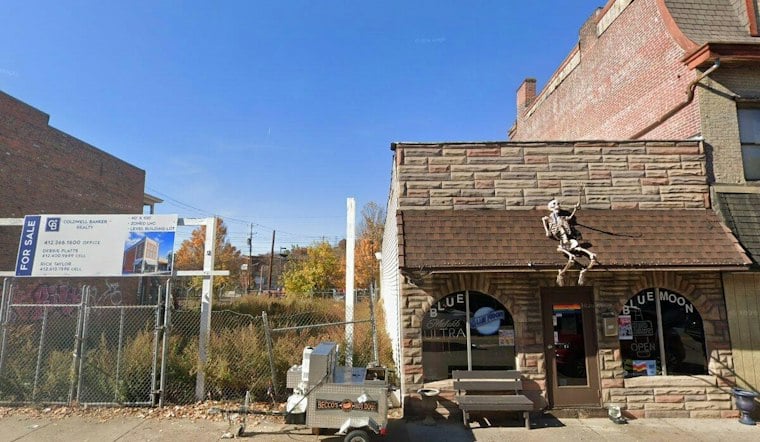
Photos showing a drag performer in what appeared to be blackface at a Lawrenceville bar have ignited outrage across Pittsburgh's Black and LGBTQ+ communities, prompting an apology from the venue nearly a week after the show. The performance took place during the weekly open stage night at Blue Moon Bar, a long-running LGBTQ+ venue on Butler Street, and the performer has since removed her Instagram account.
According to WPXI, Blue Moon Bar management posted its apology on social media roughly a week after the Wednesday night show, saying staff were not present and did not witness the performance themselves. Management told the station it consulted with witnesses and event hosts before speaking publicly, and said two guest hosts present that night did not realize what was happening in the moment. Discussion in local community forums indicated the performer's face makeup was intended to depict Hexxus, the animated pollution villain from *FernGully*, as a tribute to actor Tim Curry, though the tribute framing did nothing to quiet the backlash.
Blue Moon Bar's statement, as reported by WPXI, called blackface “racist, harmful, and never acceptable,” while also saying the new performer did not intend to cause harm. The bar said it accepts full responsibility for the performance happening on its stage, even though staff weren't in the room at the time.
A Longtime LGBTQ+ Landmark Under Scrutiny
Blue Moon Bar sits at 5115 Butler Street in Lawrenceville and has operated since 2002, according to QBurgh, which also reported the bar lost co-founder Geraldine “Geri” Lupin, who died in July 2026 after helping build the venue into one of the city's longest-running queer nightlife spots. The bar carries outsized national weight in drag culture: it served as the early home stage for RuPaul's Drag Race Season 4 winner Sharon Needles and Season 5 runner-up Alaska Thunderfuck, both of whom got their start performing there, according to Philadelphia Magazine. Per WPXI, the bar has hosted more than 1,000 performers over nearly 25 years of operation.
That history is part of why the incident landed so hard. Blue Moon Bar posted a dressing-room sign prohibiting performances based on race, ethnicity, or nationality that isn't the performer's own, and told WPXI it plans to improve screening of acts at its Wednesday open stage going forward, along with making clear to performers and audiences that racially offensive performances will not be tolerated.
Advocates Say Apology Isn't Enough
Ciora Thomas, founder of SisTers PGH, a nonprofit supporting Black and transgender communities, called for venues to take more proactive steps to address racism rather than reacting after the fact, per WPXI. Thomas said the incident reflects a larger and longstanding problem of discrimination against Black people within LGBTQ+ spaces, and said there has been no real progress despite years of conversation about it within the community.
Thomas's advocacy work extends well beyond this single incident. She previously founded People's Pride PGH, an alternative annual Pride event created, according to Very Local, in response to perceived racial exclusion in Pittsburgh's traditional Pride programming. SisTers PGH itself opened a new downtown drop-in center called The Stonewall Inn PGH on Transgender Day of Visibility in March 2026, and secured a $150,000 grant from The Pittsburgh Foundation in May to sustain services for marginalized transgender and nonbinary residents, according to the Pittsburgh Post-Gazette.
Legal Framework for Public Accommodations
Under Chapter 659 of the Pittsburgh Code of Ordinances, commercial establishments serving the public are defined as places of public accommodation and are barred from discriminating based on race, color, sexual orientation, or gender identity, with complaints enforced by the Pittsburgh Commission on Human Relations. Pittsburgh and Allegheny County also passed CROWN Act legislation in October 2020, according to Littler Mendelson, expanding local anti-discrimination protections to explicitly cover traits historically associated with race.
The broader stakes for Pittsburgh's trans community remain steep. Research from UCLA's Williams Institute, cited in local housing reports, found that transgender adults in Allegheny County experience recent homelessness at nearly six times the rate of cisgender adults, a disparity frequently linked to discrimination in housing and public accommodations. Local leaders often point to numbers like these when pressing queer venues and institutions for greater accountability.



