

























































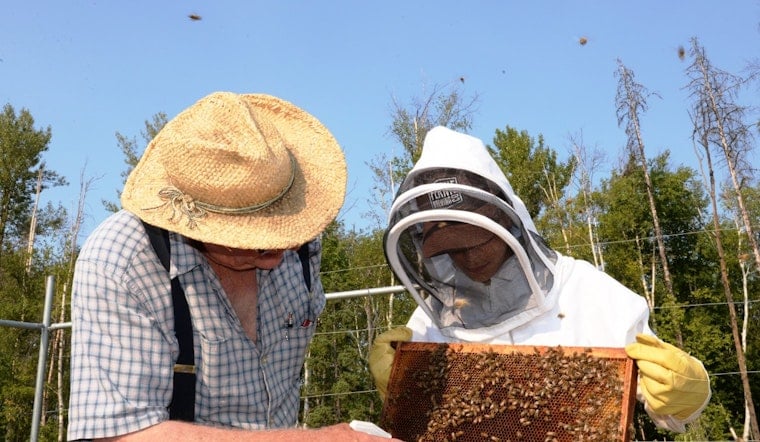
At Stormy Acres Bee Farm in Bowie, Maryland, retired U.S. Marine Corps veteran Allan Storm tends to 100 bee colonies and roughly 1.2 million honeybees, work he says gives him purpose after 22 years in uniform. Storm started beekeeping around 2007, and he now leads a national nonprofit that pairs veterans and first responders with experienced beekeepers to help them navigate the return to civilian life.
Storm's organization, Hives for Heroes, has grown to nearly 10,000 members across the country, according to WJLA. The nonprofit was founded in 2018 in Houston by U.S. Marine Corps veteran Steve Jimenez, who started the group after he found that working with bees eased his own severe PTSD and post-service isolation, according to Hives for Heroes. Jimenez built the organization as a peer-to-peer mentorship network, and Storm now carries that mission forward in Prince George's County.
Roughly 200,000 U.S. servicemembers leave the military each year, per the WJLA report, and Storm has said that finding purpose and bringing veterans together through beekeeping may help prevent another suicide. That stakes-driven mission lines up with grim federal numbers: the Department of Veterans Affairs' annual suicide prevention report, released in February, found that 6,398 veterans died by suicide in 2023, according to the U.S. Department of Veterans Affairs. Sixty-one percent of those veterans had received no VA healthcare services in the year before their deaths, an average of 17.5 veteran suicides a day nationwide.
From Air Traffic Control Tower to the Hive
Before he became a full-time beekeeper, Storm worked as an air traffic controller, per the same WJLA account. He has said beekeeping became his full-time job only after he retired, and he describes the appeal of the work in almost meditative terms — noting that bees have separate jobs throughout their lives, each insect moving through defined roles within the colony. Storm bottles his own honey from the farm's hives, work he says gives him purpose and something to do.
The therapeutic claims Storm and other veteran beekeepers describe now have peer-reviewed backing. A study published in the Therapeutic Recreation Journal in October 2024 delivered the first clinical evidence that therapeutic beekeeping meaningfully reduces anxiety and depression while improving overall health perceptions among military veterans, according to the journal. Researchers evaluated veterans enrolled in the Department of Veterans Affairs' HIVES recreational therapy program using standardized health assessment tools. Major VA healthcare systems, including facilities in Los Angeles, Palo Alto, St. Louis, and Manchester, New Hampshire, have since folded clinical beekeeping into their Whole Health offerings for veterans managing PTSD, according to VA Greater Los Angeles Health Care, with medical staff reporting that hive work fosters mindfulness and reduces emotional numbing in trauma survivors.
A Century-Old Idea With Modern Momentum
Using beekeeping to rehabilitate veterans isn't a new concept. The federal government first officially recommended it as a therapeutic and vocational activity for disabled American servicemembers back in 1919, following World War I, according to Military.com. Those early programs recognized that hive work offered manageable outdoor labor, limited social stress, and income potential for injured troops — themes that echo directly in Storm's mission today.
Michigan State University Extension runs a complementary program called Heroes to Hives, which launched in 2015 and has trained more than 19,000 military-connected participants through free nine-month courses, making it the nation's largest agricultural education initiative built around veterans. The curriculum folds in Small Business Administration tools alongside hive management instruction. Separately, Hives for Heroes builds on the connection between veterans and agriculture.
Bowie's Bees Also Power a Solar Farm
Storm's beekeeping work extends beyond his own farm. In September 2025, he partnered with Summit Ridge Energy to manage honeybee hives at the 1-megawatt Cross Road Trail solar farm in Brandywine, an agrivoltaic arrangement that combines renewable energy generation with pollinator habitat, according to Summit Ridge Energy.
Storm's beekeeping work extends beyond his own farm. That work fits into Maryland's broader apiary landscape. Managed honeybees take on greater importance amid losses among wild pollinators.
For Storm, the mission remains rooted in the same idea that first drew him to beekeeping nearly two decades ago: giving veterans something to focus on, and each other, as they rebuild life after service.





