

























































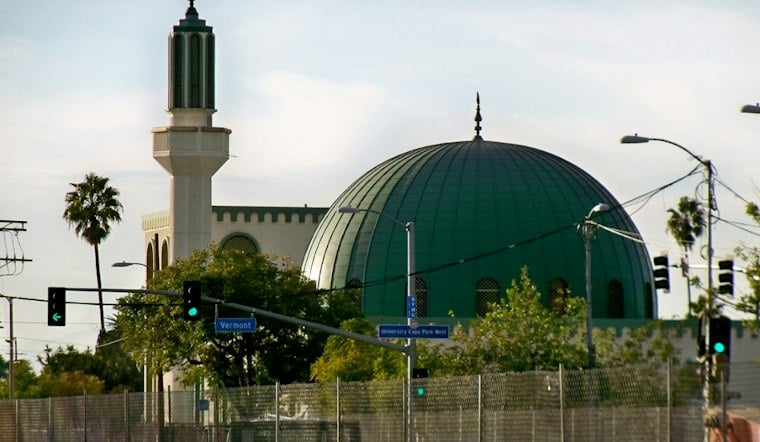
California is now the second state in the country to officially recognize Eid al-Fitr and Eid al-Adha as state holidays, after Governor Gavin Newsom signed Assembly Bill 2017 into law on Monday. The signing adds the two major Muslim festivals to a state holiday list that already includes Lunar New Year and Diwali, giving California's more than 1 million Muslim residents formal recognition on the state calendar.
The bill, authored by San Francisco Democratic Assemblymember Matt Haney, passed the Assembly 62-3 and the Senate 30-4 in August before reaching the governor's desk, according to LegiScan. It was introduced in March, during the month of Ramadan, and was co-sponsored by CAIR-California, the California Commission on Asian and Pacific Islander American Affairs, and the Muslim Impact Council, according to CAIR California. Oussama Mokeddem, the organization's legislative and government affairs director, described the signing as an exciting day for California Muslims and a big day for American Muslims, per LAist.
What the New Law Actually Changes
Despite the milestone, the law's practical reach is narrower than a full statewide day off. California state employees can now use existing paid time off to celebrate Eid ul-Fitr and Eid ul-Adha, but the law does not mandate statewide time off for either holiday, the outlet reports. The statute specifically excludes the observances from becoming mandatory judicial holidays that would shut down state court operations, per the same LegiScan bill text.
Instead, local school districts can declare a district-wide day off if enough community members identify it as a need, and students can already cite state law when absent from school to celebrate Eid, LAist notes. The California Globe reported that Assembly Bill 2017 authorizes K-12 districts and community colleges to close only through locally negotiated collective bargaining agreements, and allows the State Board of Education to develop model curriculum guides on the holidays' significance, according to California Globe.
A Student's Push for Recognition
Adam Khaja, an 11th grader at Palos Verdes Peninsula Unified School District, told LAist that the holiday recognition signals that people do not have to give up an important part of their identity to fully participate in Californian society. He said he plans to advocate for a district-wide day off at his own school district. The report also notes that Muslim Women Professionals provides templates for advocating for time off to celebrate Eid ul-Fitr and Eid ul-Adha, giving employees and students a starting point for those local conversations.
Following Washington's Lead, and Diwali's Precedent
California's move follows a broader multi-state trend: Washington became the first state in the nation to recognize Eid al-Fitr and Eid al-Adha as official state holidays in 2025, according to LAist. California's law also echoes a legal framework the state used just last year, when Newsom signed Assembly Bill 268, authored by Assemblymember Ash Kalra, making California the third U.S. state to establish Diwali as an official state holiday starting January 1, 2026, per KTVU FOX 2. That law used a similar structure of voluntary school closures and employee leave credits, one now mirrored in AB 2017.
Because Muslims follow the lunar calendar, the dates of Eid ul-Fitr and Eid ul-Adha vary each year. Eid ul-Fitr, which marks the end of Ramadan, will likely fall on March 10, 2027, while Eid ul-Adha, which honors Abraham's willingness to sacrifice his son as a mark of devotion to God, will likely fall on May 17, 2027, according to LAist.
The Backdrop of Rising Hostility
Advocates have framed the new law against a backdrop of both public opinion and violence. LAist reported that the Muslim community is facing unwarranted and unjustified criticism, citing a Pew study that found 42 percent of Americans believe Muslim Americans have a negative impact on the country. The article also referenced the May 2026 attack at the Islamic Center of San Diego as part of that context.
That attack was severe: two armed teenagers opened fire at the Islamic Center of San Diego, the largest mosque in San Diego County, killing security guard Amin Abdullah and community members Mansour Kaziha and Nader Awad before taking their own lives in a neighboring street, according to The Guardian. A research assessment by the Center for Strategic and International Studies found the shooting marked the first ideologically motivated lethal attack on a mosque in recorded U.S. history. In August, a North Carolina grand jury indicted a 17-year-old girl as an adult on three counts of murder by aiding and abetting in connection with the attack, alleging she helped record and distribute the gunmen's livestream and white supremacist manifesto, according to the Associated Press.
Lingering Dissent in Sacramento
The bill did not pass without friction. When AB 2017 cleared the California Assembly in May, Assemblymember Carl DeMaio cast the sole negative vote while 15 lawmakers abstained or were absent, California Globe reported, reflecting ongoing legislative debate over the government's role in recognizing religious observances. Still, with bipartisan margins in both chambers and the governor's signature now secured, the law places California alongside Washington as the only two states to statutorily recognize both Eid holidays.



