

























































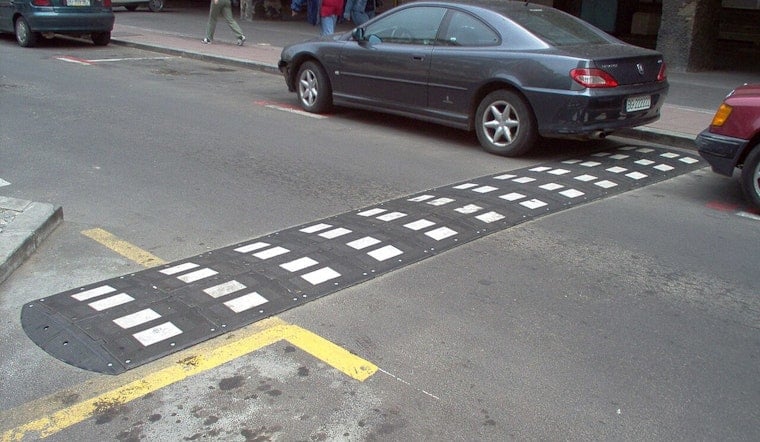
Compton has planted rubber medians at three of its most notorious sideshow intersections, and early numbers suggest the low-tech fix is doing what years of police response could not: keeping cars from spinning donuts in the middle of the street. The Los Angeles County Sheriff's Department recorded a 45% drop in street takeovers across Compton and nearby unincorporated areas during the first two quarters of 2026 compared to the same period last year, following the initial installations.
The figures, reported by CBS Los Angeles, mark one of the first hard indicators that a physical barrier can succeed where citations and patrol cars have struggled. Compton spokesperson Marcus Harris said the city has so far installed the rubber medians at three key intersections: Alondra Boulevard and Central Avenue, Long Beach Boulevard and Compton Boulevard, and Wilmington Avenue and Stockwell Street. Harris said the city plans to expand the barriers to 30 additional intersections as part of a broader elimination campaign, according to the same report.
Compton City Engineer Jack Gong said the rubber median system is built to last, with an expected lifespan of at least 10 years. Gong described it as a cost-effective physical barrier that keeps vehicles from drifting or spinning freely without risking damage to the cars themselves, a design choice that helps explain why the city chose rubber over more rigid alternatives.
A Costly Lesson From 2022
Compton's current approach followed a failed experiment years earlier. In August 2022, the city spent over $4,000 installing small raised ceramic markers known as Botts' Dots across four major intersections, only for street drivers to mock the deterrents and resume performing donuts over and around them within days, according to a separate CBS Los Angeles report at the time.
That failure pushed city leaders toward taller, continuous physical barriers rather than low-profile road markers. It also underscored a problem law enforcement has long acknowledged. Sheriff's deputies and California Highway Patrol officers told the Los Angeles Times in August 2022 that they face severe staffing constraints when responding to takeovers, noting that two patrol cars cannot safely disperse crowds of up to 200 vehicles, where officers have faced physical attacks and collisions.
Those risks have shown up in the neighborhood before. In January 2024, a street takeover in Compton escalated into widespread looting after a crowd used a stolen vehicle to ram into Ruben's Bakery, causing up to $70,000 in structural damage, as previously reported by the Los Angeles Times. That incident drew national attention and intensified pressure on city officials to secure public intersections by any means available.
Residents Notice Quieter Nights
Longtime Compton resident Willie Breaux said the rubber medians have noticeably reduced street takeover noise and neighborhood disruption. Breaux said the barriers have also allowed police and fire department vehicles to travel through critical corridors without the delays that takeovers routinely caused.
Hoodline previously reported on a South LA grocery store ransacking tied to a pre-dawn street takeover, and that story cited the same statewide penalty changes now reinforcing Compton's infrastructure push. Under a legislative package signed by Governor Gavin Newsom that took full effect on July 1, 2025, courts gained authority to suspend driver's licenses for 90 days to six months for sideshow convictions, while officers were authorized to impound vehicles belonging to drivers, spectators, and organizers, according to the California DMV.
Los Angeles County officials have also moved on the financial front. In July 2026, county officials proposed doubling misdemeanor fines to $1,000 for street takeover organizers and promoters under amendments to Chapter 13.46 of the county code, following a series of violent sideshow incidents across unincorporated areas.
Sideshows Shift To Unprotected Streets
The early success has come with a catch. Harris noted that while the rubber medians eliminated tire marks at Alondra Boulevard, nearby unequipped intersections such as Wilmington Avenue and Greenleaf Boulevard continue to experience severe asphalt damage from ongoing takeovers, suggesting drivers are simply relocating to streets the city has not yet fortified.
That displacement effect is likely to shape how quickly Compton can roll out the remaining 30 planned installations, since sideshow networks tend to coordinate meetup locations quickly through social media once a favored intersection becomes impassable. For now, city officials are treating the rubber medians as one piece of a layered strategy that pairs physical roadway redesign with the stiffer license suspensions, vehicle impoundments, and fines now written into state and county law.



