

























































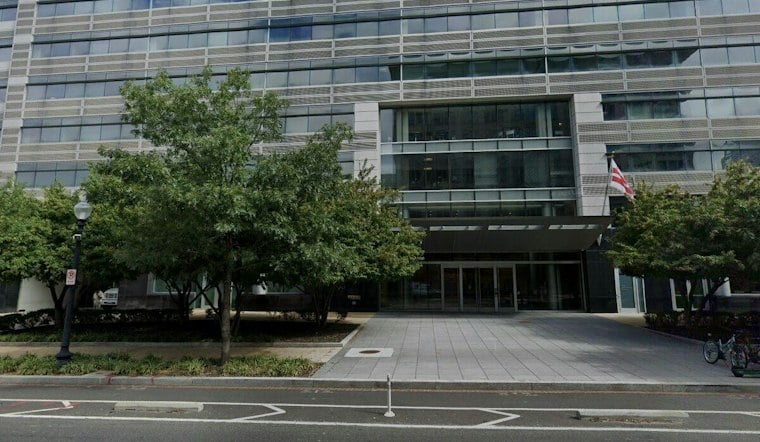
A federal judge has ruled that the agencies overseeing parole and probation in Washington, D.C. violated federal disability rights law by failing to accommodate supervisees with physical and mental impairments, some of whom ended up back behind bars over missed phone calls and other technical infractions tied to their medical conditions. U.S. District Judge Trevor N. McFadden granted partial summary judgment on liability against the U.S. Parole Commission and the Court Services and Offender Supervision Agency, finding both had failed to establish any formal process for handling disability accommodations.
A Two-Year Legal Fight Reaches a Ruling
The ruling caps more than two years of litigation in Mathis v. United States Parole Commission, a class-action suit first filed in May 2024 by a coalition that included the ACLU, the ACLU of D.C., the Public Defender Service for the District of Columbia, and Latham & Watkins LLP, according to the American Civil Liberties Union. As reported by the Tampa Free Press, Judge McFadden found that the U.S. Parole Commission and CSOSA violated Section 504 of the Rehabilitation Act, the federal statute enacted by Congress in 1973 that bars federal agencies from denying benefits to or discriminating against qualified individuals because of disability, as described in a Georgia Tech overview.
Government estimates cited in the case indicate that roughly 90 percent of people under supervision in the system show some indication of a disability, the Tampa Free Press reports. Yet the judge found neither agency maintained standard operating procedures, guidelines, or designated personnel for handling accommodation requests, and both lacked any means for supervisees to even request one.
Missed Calls, a Missed Surgery, and a Death in Custody
The court record described specific supervisees swept up in the gap. Kennedy Davis, who is on lifetime parole and has depression, anxiety, post-traumatic stress disorder, and severe pain from third-degree burns, missed a check-in call because he lacked telephone access, according to the Tampa Free Press's reporting. He was arrested for it, spent two months in jail, and missed a scheduled burn surgery as a result, the outlet notes.
William Mathis, who had congestive heart failure that restricted his mobility, was fitted with an ankle monitor despite a physician's warning that it would dangerously limit blood flow in his leg, per the same account. The device caused him pain and swelling, and he missed heart surgery while held in jail after the commission overrode a hearing examiner's recommendation for his release. Mathis died while the case was still pending, the report states. Another class member was cited for failing to report while admitted to a psychiatric hospital. A different class member suffered memory loss after two strokes and a four-month coma, the outlet reports.
Judge Rejects Government's Ad Hoc Defense
The government had argued that accommodation needs were handled informally on a case-by-case basis, that some plaintiffs never made explicit accommodation requests, and that certain proposed accommodations would impose an undue administrative burden, according to the Tampa Free Press. Judge McFadden rejected each argument, ruling that an inconsistent, ad hoc method failed to provide the meaningful access required by federal law. He said claiming to lack notice does not get the government off the hook, according to the outlet's account of the ruling, pointing to supervision officers and hearing examiners who noted physical and mental impairments in offender records without ever offering accommodations.
The judge's finding builds on a preliminary injunction he issued back in September 2024, ordering the Parole Commission and CSOSA to immediately assess and accommodate the disability needs of the named plaintiffs while the case proceeded, according to court filings obtained by Justia Law. In that earlier ruling, McFadden held that even though Section 504 lacks an explicit statutory right for private citizens to sue federal agencies, courts retain inherent equitable power under the Supreme Court's Armstrong v. Exceptional Child Center precedent to enjoin federal statutory violations, rejecting the government's motion to dismiss.
Numbers Behind the Disparity
Litigation filings from May 2024 showed that while 10 percent of all supervised individuals in D.C. faced proceedings for technical violations between 2021 and 2022, the rate for supervisees with disabilities was nearly double, at 18 percent, according to the ACLU's complaint. Judge McFadden formally certified the class in February 2025, expanding the case to cover all individuals with disabilities who are or will be on parole or supervised release in D.C. under USPC or CSOSA oversight and who require accommodations, per the ACLU of DC.
The scale of who is affected is considerable. During fiscal year 2025, CSOSA supervised 12,352 unique individuals in the District, with an average daily population of 7,470 people spread across probation, supervised release, and parole, according to the Court Services and Offender Supervision Agency. Probation made up 68 percent of that caseload, supervised release 16 percent, and parole 4 percent, the agency's data shows.
Why D.C. Residents Answer to Federal Agencies
The structural reason both agencies exist at all traces back to the National Capital Revitalization and Self-Government Improvement Act of 1997, which stripped D.C. of authority over its own post-conviction supervision and handed it to federal control, creating CSOSA and assigning parole adjudication to the U.S. Parole Commission, according to the D.C. Sentencing Commission. CSOSA became an independent federal executive agency in August 2000 after a three-year transition period.
Judge McFadden, appointed to the federal bench in October 2017 after previously serving as Deputy Assistant Attorney General in the Justice Department's Criminal Division, an Assistant U.S. Attorney, and a police officer in Fairfax County, Virginia, according to the Federal Judicial Center.
What Comes Next
The court has reserved a decision on specific remedies for a later date, with a future proceeding scheduled to determine the specific policies, notices, and procedural reforms the agencies must implement, the Tampa Free Press reports.





