

























































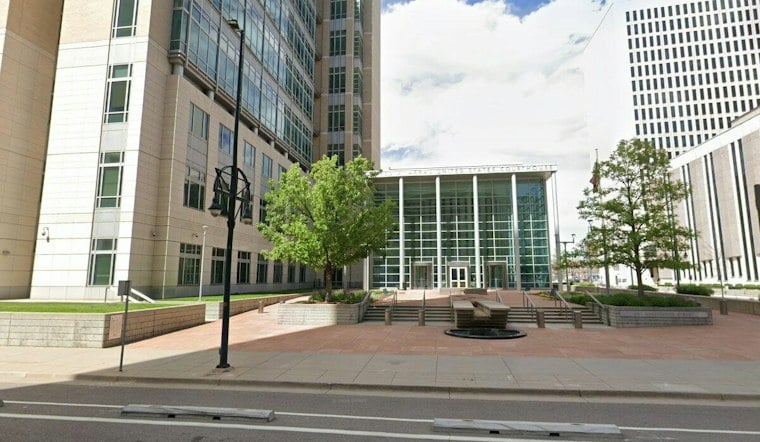
The central question in a Denver building-energy lawsuit is whether rules based on a building’s overall energy use can conflict with federal standards for individual appliances. On September 15, the Justice Department filed a statement of interest in the existing-building case, telling U.S. District Judge Regina Rodriguez that Denver’s Energize Denver program and Colorado’s Regulation 28 plausibly raise that issue under the Energy Policy and Conservation Act (EPCA), a 1975 federal law. The filing states the federal government’s position but does not make DOJ a party to the case, according to the Denver Gazette.
DOJ’s argument, as reported by the Gazette, is that EPCA establishes national efficiency standards for covered equipment and limits state and local rules that impose requirements concerning those products’ energy use. Denver’s programs set building-level targets rather than naming a particular appliance for removal. The dispute is whether meeting those targets nevertheless affects the use or replacement of federally covered furnaces, water heaters, air conditioners, or other equipment.
The legal boundary is still unsettled
Federal guidance establishes the broader preemption framework, not the answer for Denver. A U.S. Department of Energy rulemaking notice says EPCA provides for federal preemption of state energy-conservation regulations for covered products and notes that states may petition for exemptions under criteria in the statute. The notice concerns covered products; it does not determine whether Denver’s building-wide requirements fall within that category or establish an exemption for the city.
A relevant but limited comparison is Berkeley, California. In 2023, the Ninth Circuit ruled that EPCA preempted Berkeley’s prohibition on gas piping in new construction because it prevented covered appliances from using natural gas; the court denied rehearing en banc in 2024, according to the Air-Conditioning, Heating, and Refrigeration Institute. Berkeley’s rule concerned new buildings and directly restricted gas piping. Denver’s existing-building rules are framed as energy-use targets, so the comparison does not resolve whether EPCA preempts them.
Denver disputes which claims remain
Denver has asked Judge Rodriguez for permission to respond to DOJ, arguing that the federal filing addressed allegations plaintiffs removed from their amended complaint. The city says the remaining claims concern possible replacement of one federally covered product with another to meet local targets, rather than a requirement to install equipment that exceeds federal performance standards. Plaintiffs maintain that the rules still concern appliance energy use, including through the path tied to Colorado’s greenhouse-gas goals, the Gazette reported. The judge has not yet decided whether to accept the city’s brief or which existing-building claims may proceed.
The existing-building challenge was brought by the Colorado Apartment Association, the Apartment Association of Metro Denver, the Colorado Hotel and Lodging Association, and NAIOP Colorado against city and state defendants, according to the amended complaint. The owners argue that the targets effectively force removal of gas equipment that meets federal standards. Denver and Colorado say owners can also comply through steps such as insulation, operational changes, or equipment swaps, according to the Gazette. A magistrate judge recommended in August that most of this case proceed; Rodriguez has not yet ruled on that recommendation.
A separate case concerns new construction
The DOJ statement concerns the challenge to rules for existing buildings, not a second lawsuit over Denver’s new-construction code. In that separate case, restaurant, homebuilding, hotel, and apartment groups argued that limits on gas equipment unlawfully restrict products approved under federal law. Chief U.S. District Judge Philip Brimmer dismissed the suit on August 7, and plaintiffs appealed to the 10th Circuit on September 11, according to the Gazette. The different stage and subject matter of that case make it distinct from the claims before Judge Rodriguez.
The Denver dispute sits within a broader policy landscape, but the scale of that landscape does not settle the legal question. ENERGY STAR, a U.S. Environmental Protection Agency program, has reported more than 50 jurisdictions with some form of building-performance policy. That is a broad count: it does not mean those jurisdictions have rules identical to Denver’s or face the same EPCA challenge.
For now, the key issue before Rodriguez is whether the plaintiffs’ remaining allegations connect Denver’s building-wide targets closely enough to federally regulated product energy use to trigger preemption. The DOE notice describes the statute’s general approach, and the Berkeley decision offers a comparison involving a direct restriction on gas infrastructure in new buildings. Neither, on the supplied record, determines the outcome of Denver’s existing-building case.





