

























































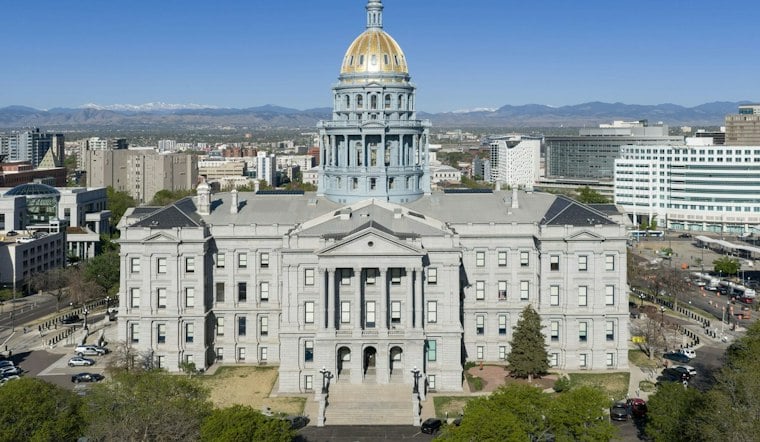
Denver has landed in last place among major U.S. cities for returning to the office, with new tracking data showing office attendance down 50% from 2019 levels even as most of the country creeps back toward pre-pandemic norms. Downtown Denver's commercial skyscrapers, many of which cannot find tenants, sit as a visible symbol of that lag, according to a report from Colorado Public Radio.
The numbers come from Placer.ai, which tracked office visits across U.S. cities and found Denver was one of only two tracked cities, alongside Washington, D.C., where office visits were actually lower in August 2026 than the year before, as Colorado Public Radio reported. Nationally, office visits remained below 2019 levels, according to the same report, underscoring Denver's lag.
Washington, D.C.'s struggles are discussed separately in the report. Denver's problem is presented as a workforce that simply never fully came back to downtown desks in the first place.
Remote Work and Denver's Office Market
Remote work is part of the broader discussion around Denver's office market. The shift toward remote work helps explain why downtown office space has had high vacancy for several years.
Denver's post-pandemic office recovery remains a challenge. Figures cited in the report put downtown Denver's office vacancy in the high-30-percent range, well above vacancy across the broader Denver metro commercial market.
A Bifurcated Market Behind the Headline Number
The vacancy crisis is not evenly distributed, with higher- and lower-tier properties experiencing different market conditions. That flight-to-quality pattern shows up locally too: WilmerHale expanded its downtown Denver office space even as the broader market struggled.
The Denver Gazette reported downtown Denver had more than 11.5 million square feet of vacant office space in the second quarter of 2025. Office space is also being considered for residential or institutional conversions. Public loan programs and Downtown Denver Development Authority commitments are part of efforts to rehabilitate old commercial buildings and bring people back downtown, per the CPR report.
Institutions and Investors Bet on Conversion
The University of Colorado was under contract to purchase Independence Plaza, a roughly 567,000-square-foot office building near 16th Street and Skyline Park, while the foundation was still conducting due diligence, according to the Denver Gazette — a deal Hoodline previously covered as CU moved into an empty tower. Private firm The Luzzatto Co. has taken a similar bet, acquiring the 621 and 633 17th St. office towers along with the Denver Energy Center at steep discounts, with plans to convert the complexes into more than 1,200 residential apartments, the Gazette reported.
Not every conversion effort has gone smoothly. Hoodline reported in April that a proposed office-to-apartment flip at 475 17th St. hit financing trouble when the Downtown Denver Development Authority pulled its support, and in August an underoccupied Uptown tower, Capitol Center, was scheduled for auction with a $1.5 million starting bid — both signs of how uneven the path to adaptive reuse can be.
A Hazy August and a Mayor's Core Mission
The CPR report offers a broader portrait of a downtown still searching for its footing. Mayor Mike Johnston has made revitalizing downtown Denver a core mission of his administration, a priority Hoodline detailed in July when regional mayors touted jobs, housing, and a downtown comeback.
Denver's response includes tax-increment financing, institutional buyouts, and residential conversions to chip away at the more than 11.5 million square feet of vacant office space reported in the second quarter of 2025.





