

























































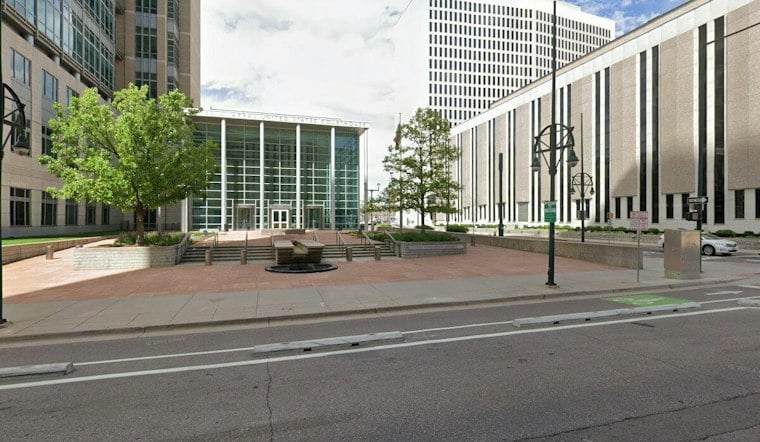
A federal judge has dismissed Douglas County's lawsuit challenging Colorado's Collective Bargaining by County Employees Act, ruling the county lacked legal standing to sue rather than deciding whether the law itself is constitutional. The dismissal marks the latest setback in a multi-front legal battle the county has waged since 2024 against the state law that expanded collective bargaining rights for county workers, while Douglas County disputes whether it applies to sheriff's deputies.
Douglas County filed the federal lawsuit against Gov. Jared Polis and Colorado Department of Labor and Employment Director Joe Barela in October 2025, seeking both a declaration resolving legal uncertainties surrounding the law and an injunction blocking its future enforcement. According to the Denver Gazette, county officials argued that the Collective Bargaining by County Employees Act, known as COBCA, violates state and federal free-speech protections and conflicts with federal labor law meant to promote open and robust dialogue on labor relations issues. The law, enacted under Senate Bill 22-230 and taking effect on July 1, 2023, extended unionization and collective bargaining rights to an estimated 36,000 county public service employees in counties with populations of 7,500 or more, according to Colorado Senate Democrats.
The state moved to dismiss the case for lack of standing, and the court agreed, finding the county alleged speculative future harm rather than a credible threat of future injury. U.S. District Judge Philip Brimmer wrote that an injury in fact does not automatically occur by the mere presence on the statute books of an unconstitutional statute, per the Denver Gazette's report. The judge did not rule on the merits of the county's challenge to the law.
County's Arguments Fall Short on Evidence
Douglas County officials pointed to a prior finding that the county violated COBCA as evidence they had already suffered harm, and argued the law creates a chilling effect on free speech. The county further contended that complying with federal law could expose it to charges for violating a conflicting and preempted state law. Brimmer found the county had not provided sufficient support for those claims, ruling that a potential conflict between federal and state law is insufficient on its own to establish standing.
The court also noted that past exposure to allegedly illegal conduct does not by itself show a present case or controversy justifying injunctive relief. Judges found the plaintiffs offered no affidavits or testimony showing they wished to engage in protected speech but held back out of fear of enforcement, and the county failed to allege any intent to engage in conduct that would actually violate the law. Still, the court acknowledged the county's prior COBCA violation as part of the record, even while concluding it wasn't enough to establish standing for the federal case.
Two State Cases Still Pending
The federal dismissal is just one piece of a broader legal campaign. Douglas County has filed a similar lawsuit against Polis in state court, along with multiple other suits alleging the collective bargaining law is unconstitutional and void, and that it does not apply to sheriff's deputies at all. A state court already dismissed the similar state-level lawsuit for lack of subject-matter jurisdiction, and the county is now awaiting a decision on its appeal of that ruling.
The county's arguments in that earlier state litigation, filed in May 2024, framed the law as an unconstitutional unfunded mandate that makes compliance optional, according to Douglas County Government. The county and Sheriff Darren Weekly contended the state law cannot govern independently elected constitutional officers such as the sheriff, clerk and recorder, coroner, treasurer, surveyor, or assessor.
Deputies' Union Drive Sparked a Separate Fight
Douglas County is also awaiting a decision on its attempt to overturn a separate state ruling that found county officials unlawfully interfered with a 2024 unionization effort by sheriff's deputies. That fight traces back to a Fraternal Order of Police campaign to organize Douglas County deputies that began in early 2024, according to Ballotpedia.org.co.host, referenced by the same organizing timeline reported by Ballotpedia.
A November 2024 CDLE investigation found Douglas County spent nearly $130,000 in taxpayer funds hiring consultants to deliver anti-union messaging to sheriff's deputies, as reported by 9News. The state's unfair labor practice finding cited county officials for holding mandatory employee meetings and sending anti-union emails to discourage deputies from organizing.
CDLE's ruling ordered Douglas County and the Sheriff's Office to cease anti-collective bargaining actions, post notices informing staff of their union rights, and distribute the state's official determination letter directly to all employees, according to FOX31's coverage of the decision. In appealing that ruling, county commissioners and Sheriff Weekly cited the law's statutory carve-out for personal opinion, arguing state regulators unconstitutionally penalized elected leaders for expressing honest views about collective bargaining.
A Statewide Shift in Labor Law
Douglas County's fight sits against the backdrop of a broader statutory shift. Before the 2022 law passed, public-sector collective bargaining in Colorado operated under local control, with only four of the state's 64 counties voluntarily recognizing public employee unions, according to figures compiled by the Denver Metro Chamber of Commerce. The Collective Bargaining by County Employees Act granted county workers the right to organize and negotiate over working conditions, pay and benefits.
Colorado lawmakers further expanded these protections through Senate Bill 23-111 in 2023, prohibiting retaliation against municipal and public employees who discuss job conditions or organize, even before a formal collective bargaining agreement is in place. That trend has continued to play out statewide this year, including Denver library workers voting 391-16 to unionize despite the city's budget crunch. For now, the core constitutional questions Douglas County has raised about the collective bargaining law remain unresolved in every court that has heard them, with the county's appeals in state court still pending.



