

























































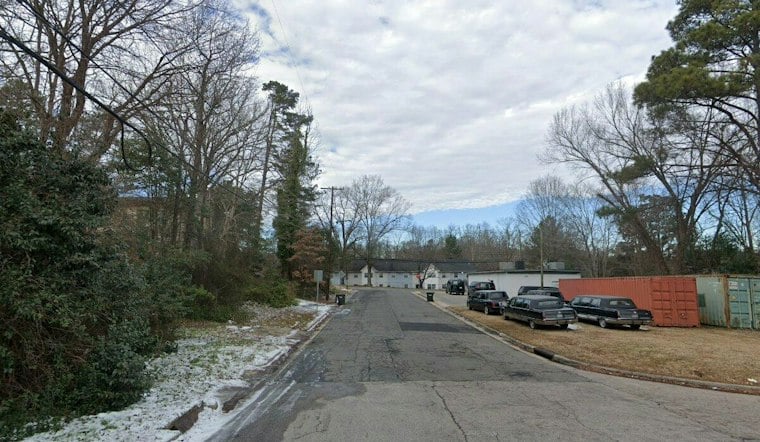
Durham police launched a targeted crackdown Tuesday afternoon, September 29, 2026, on the Fayetteville Street and Pilot Street corridors, arresting two men and seizing two handguns, more than $9,000 in cash, and drugs including over 30 grams of crack cocaine near a homeless encampment along the American Tobacco Trail. The operation comes after months of resident complaints about crime, sanitation and drug activity so close to an elementary school that some say it sits less than 50 feet from tents.
Dubbed Operation Safe Passage, the effort focused specifically on the Fayetteville Street and Pilot Street corridors and the surrounding stretch of the American Tobacco Trail, according to The News & Observer. Police said they arrested 36-year-old Christopher Kelly on the 500 block of Barton Street on drug and weapons charges, including two counts of possessing controlled substances with intent to sell or deliver near a school. A second man, 38-year-old Jowell Edwards Jr., was arrested in the Fayetteville and Pilot streets area on a parole violation.
Officers reported seizing two handguns — one of them reported stolen — along with ammunition and more than $9,000 in cash, the outlet's report states. Beyond the crack cocaine, police said they also confiscated more than 5 grams of marijuana during the sweep. Durham Police Chief Stephanie Mardis said the operation was a direct response to mounting community complaints about crime and homeless encampments in the area, the same News & Observer report notes.
Two Fatal Stabbings Loom Over the Corridor
Two Fatal Stabbings Earlier in 2026 Two fatal stabbings occurred along the trail in March and April 2026, roughly five months before the September 29 operation. As reported by ABC11, a 51-year-old man was stabbed to death on March 9 in nearly the same spot. Neighborhood discussions have also included safety concerns about the trail as city officials work through longer-term housing plans.
Concerns about the encampment reached the Durham City Council when residents pressed officials to act on what they described as a sanctioned encampment near Pilot Street posing public-health and safety risks. Jacqueline Wagstaff told the council that a school sits less than 50 feet away from the encampment, according to a report from citizenportal.ai.
Housing-First Efforts Continue Elsewhere in Durham
While police pursued enforcement on Fayetteville Street, Durham has been leaning on a separate, housing-focused strategy elsewhere in the city. The recently approved city budget includes $4 million for Durham's Strategic Framework to Make Homelessness Rare and Brief, according to CBS 17. During the city's most recent Housing Sprint, 14 of 15 participants were matched to housing, the outlet reported.
That same effort connected all 18 people living at the Oakwood Park encampment with transportation and temporary hotel shelter costing $60 to $80 a night, funded partly through the city's Flexible Housing Assistance Fund, which combines $2 million in federal money with a $500,000 county contribution, per the same account. Even so, Durham's non-congregate family shelters carry a waitlist of around 50 people, while single-adult shelters hover around 200, the report notes — a gap that helps explain why encampments keep reappearing even as housing placements continue.
A Regional Model in Raleigh
Durham's dual approach echoes a similar effort just down the road. Wake County's Wake at Home initiative connected 33 people living at a Raleigh encampment with housing and support, according to WRAL. That effort followed eight weeks of intensive outreach before the encampment closed, with participants receiving a year-long rental subsidy and case management services as part of a first phase aiming to move 400 people directly into housing.
Back in Durham, Chief Mardis said her department is committed to transparency and updates as Operation Safe Passage progresses, framing the crackdown as one piece of a broader push to address crime, safety and encampment issues raised by residents, trail users and businesses. Whether that effort will eventually pair enforcement with the kind of housing placements seen at Oakwood Park and in Raleigh remains an open question for a corridor that saw two fatal stabbings in March and April 2026, roughly five months before the Tuesday operation, and a raid that pulled guns, cash and drugs off its streets.



