

























































South Carolina's absentee voting rules are headed for a court-ordered overhaul after a federal appeals court ruled that letting only voters 65 and older skip an excuse to vote by mail violates the U.S. Constitution. The ruling, handed down August 18, throws the state's long-standing age divide in mail balloting into question just as officials look ahead to future elections.
A unanimous three-judge panel of the 4th U.S. Circuit Court of Appeals found in Grant v. Belangia that South Carolina's law violates the Twenty-Sixth Amendment by allowing voters 65 and older to cast absentee ballots without any excuse while requiring younger voters to fit into narrow categories like disability, military service, employment, or out-of-county travel, according to Democracy Docket. As Greenville Online reports, the U.S. Circuit Court reversed a lower court's decision that had upheld the age-based rule, and a district court will now decide the next steps in the case.
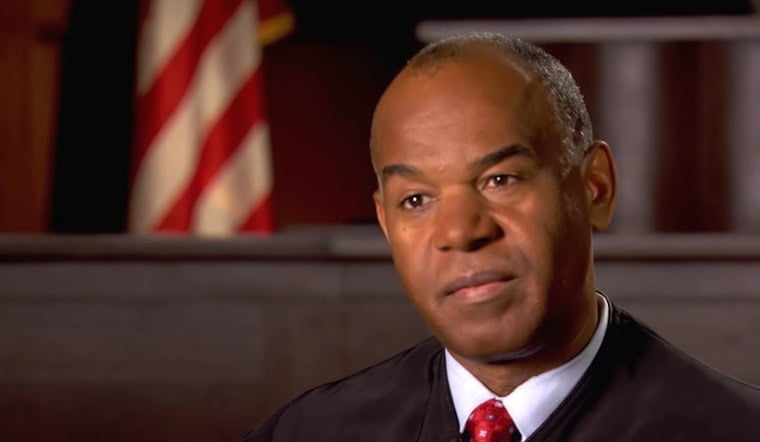
The panel that issued the ruling included Chief Judge Roger Gregory and Judge Pamela Harris, both appointed by Barack Obama, along with Judge Julius Richardson, a Donald Trump appointee — a cross-ideological lineup that Democracy Docket says signals broad judicial consensus on the underlying constitutional question. Gregory authored the panel's opinion, holding that age-based access rules abridge voting rights protected by the Twenty-Sixth Amendment, per the same outlet's reporting.
How the Case Reached the Appeals Court
The lawsuit dates back to December 2023, when five South Carolina voters under 65 sued, arguing that conditioning mail ballot access on age amounted to unlawful age discrimination. In March 2025, a federal district court judge sided with the South Carolina State Election Commission, granting summary judgment and dismissing the claims — a decision the plaintiffs then appealed, according to Democracy Docket. That reversal is what set up the current standoff over what comes next.
The 4th Circuit did not simply strike down the law and walk away. It remanded the case back to the U.S. District Court in South Carolina and laid out two possible paths for a remedy: extend no-excuse absentee voting to voters under 65, or eliminate the no-excuse privilege for voters 65 and older altogether, the Democracy Docket report notes. Per Greenville Online, that decision now rests with the district court.
A Rare Use of the Twenty-Sixth Amendment
Legal commentators have flagged just how unusual this kind of ruling is. As the Washington Examiner notes, federal appellate courts have rarely invoked the Twenty-Sixth Amendment — ratified in 1971 — to strike down election administration laws, since most ballot access fights center on race or residency rather than age. That rarity is part of why legal observers are watching this case so closely.
The stakes go beyond South Carolina. The 4th Circuit's ruling created a split with the 5th and 7th U.S. Circuit Courts of Appeals, which previously upheld similar age restrictions on mail balloting in Texas and Indiana, per Democracy Docket's reporting. Circuit splits on constitutional questions frequently draw Supreme Court review, and this one is no exception, the outlet notes.
Ripple Effects Already Reaching North Carolina
The decision is already being cited outside South Carolina. On August 20, voting rights plaintiffs challenging North Carolina's Senate Bill 747 filed a notice with the 4th Circuit pointing to the South Carolina ruling as binding precedent for Twenty-Sixth Amendment claims across the circuit, according to the Carolina Journal. Those North Carolina plaintiffs are challenging a separate provision affecting young voters, the outlet reports.
Back in South Carolina, nothing changes immediately. Implementation of any new mail voting rules could be delayed if the South Carolina State Election Commission seeks an en banc rehearing before the full 4th Circuit or appeals to the U.S. Supreme Court for a stay, according to The Post and Courier. State officials have not exhausted their appellate options, the paper notes, meaning South Carolina voters may not see any concrete change to who can vote absentee without an excuse until the district court, and possibly higher courts, weigh in further.





