

























































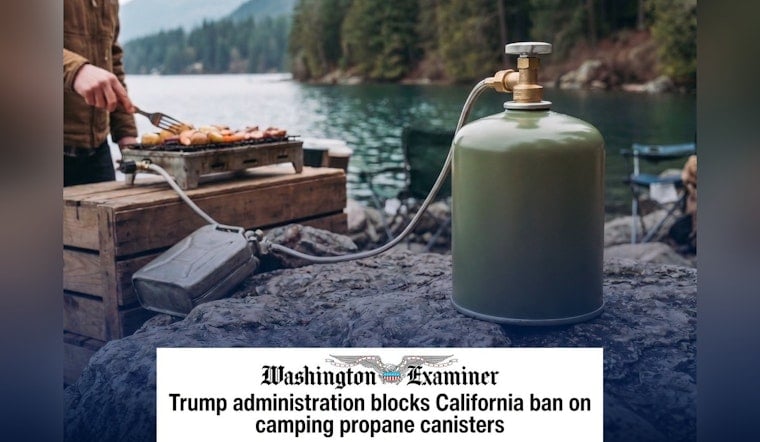
California's plan to outlaw single-use propane camping canisters by 2028 is dead on arrival, after federal transportation regulators ruled Tuesday that state law cannot override national hazardous materials standards. The decision keeps the small, non-refillable 1-pound cylinders campers screw onto stoves and lanterns on store shelves statewide, reversing a law state lawmakers had spent two years building toward.
Federal Agency Sides With Manufacturer Over State Law
The U.S. Department of Transportation's Pipeline and Hazardous Materials Safety Administration announced on September 8, 2026, that federal hazardous materials law preempts California's planned ban on single-use propane cylinders, ruling the state measure unlawful because it creates design and manufacturing standards that conflict with federal rules, according to PHMSA. The agency's determination came after cylinder manufacturer Worthington Enterprises, Inc. filed an administrative application in late 2025 arguing that California's Senate Bill 1280 conflicted with federal Hazardous Materials Transportation Act standards. The U.S. Department of Transportation framed the move on social media as protecting campers and keeping costs down, with Transportation Secretary Sean Duffy's agency saying the ruling stops California restrictions on camping propane canisters and supports Americans enjoying the outdoors.
Worthington's petition, filed under Docket No. PHMSA-2025-0776, asserted that state sales bans disrupt interstate commerce and undermine federal design uniformity for the containers, per records the manufacturer submitted through Regulations.gov. Those canisters are built to DOT-39 non-refillable specifications under 49 CFR § 178.65, and PHMSA has long warned consumers never to refill them because of the risk of structural failure or explosion.
Newsom Signed the Ban Two Years Before It Was Set to Take Effect
Senate Bill 1280, authored by state Sen. John Laird and signed into law by Governor Gavin Newsom in September 2024, was scheduled to take effect on January 1, 2028, prohibiting the sale or distribution of single-use, non-refillable propane cylinders across California. The law was never absolute: it carved out exemptions for cylinders under 15 ounces used in construction, containers with height-to-width ratios of 3.55 to 1 or greater, and canisters sold to government agencies for emergency purchasing programs, according to Governor Newsom's office.
The scale of what the ban targeted was significant. An estimated 4 million to 7 million single-use, 1-pound propane cylinders are sold annually in California, representing more than 10 percent of the 40 million to 60 million disposable cylinders sold nationwide each year, per the governor's office.
State Lawmaker Says Federal Ruling Protects Corporate Interests
State Sen. John Laird issued a statement after the ruling condemning what he characterized as a Trump administration decision that benefits corporate special interests while leaving California taxpayers and local waste facilities to bear the ongoing safety and disposal costs of single-use canisters, according to his office. Laird's office maintained the law was essential for protecting waste management workers, a position rooted in the financial and safety burden the cylinders place on municipal systems.
Properly disposing of discarded single-use propane cylinders costs local California municipal waste and recycling programs up to $65 per cylinder because of the hazardous handling required for residual pressurized gas, according to Modern Campground. An estimated 75 percent of single-use propane cylinders sold in California end up in municipal landfills or recycling streams rather than proper hazardous waste facilities, creating fire and explosion risks for sanitation machinery and personnel, per the California Department of Justice.
California's Legal Defense Predates the Federal Ruling
California Attorney General Rob Bonta had already tried to head off this outcome. In March 2026, Bonta submitted formal legal comments to PHMSA opposing Worthington's preemption petition, arguing that SB 1280 falls within traditional state police powers to protect waste management workers from explosion hazards, according to the California Department of Justice. Bonta's filing asserted that federal law does not preclude states from restricting the sale of non-refillable products, a legal theory PHMSA's ruling has now rejected.
It remains unclear whether Bonta will challenge PHMSA's administrative preemption ruling in federal court, a decision that would determine whether California gets another shot at enforcing its cylinder ban before the 2028 effective date. Also unresolved is how outdoor gear manufacturers and retailers will adjust their inventory plans now that the state deadline they had been preparing for is no longer in effect, and whether other states weighing similar waste-reduction laws will rethink their approach in light of the federal preemption.



