

























































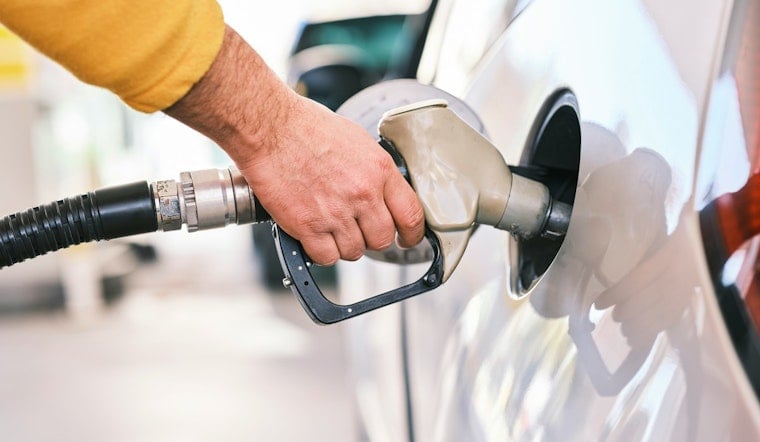
Florida drivers woke up Wednesday to a nasty surprise at the pump: the state's average price for regular gasoline jumped 18 cents overnight, according to AAA, pushing the statewide average to $4.07 a gallon. That's a roughly 4.6% increase in a single day, and it caps months of steadily rising prices that have already strained household budgets across the state.
The overnight spike was even sharper in Jacksonville, where AAA data showed the local average climbing from $3.8881 to $4.0986 per gallon — an increase of about 21.05 cents, or roughly 5.4%, according to News4JAX. Jacksonville drivers are now paying about $1.03 more per gallon than they were a year ago, when the local average sat at $3.0699. Statewide, Florida's average is up 20 cents from a month ago, when it stood at $3.87, and up 10 cents from a week ago, when it was $3.97.
Why Florida Feels Every Wholesale Shock So Fast
Florida's vulnerability to sudden price swings comes down to geography and infrastructure. The state has no operational petroleum refineries and no direct interstate pipeline connections to major Gulf Coast refinery networks, according to the Tampa Bay Times. Instead, nearly all of the state's gasoline arrives by marine tanker and barge, funneling through deepwater ports like Port Tampa Bay, which alone handles roughly 43% of Florida's fuel supply. Because fuel has to travel by sea rather than pipeline, any disruption in shipping costs or wholesale crude prices passes through to local gas stations almost immediately.
In an effort to ease those shipping bottlenecks, the federal government issued a temporary waiver of the Jones Act in mid-2026, the same Tampa Bay Times report noted, allowing foreign-flagged vessels to move petroleum products between U.S. ports. The Jones Act normally requires domestic maritime shipping to run on U.S.-built, owned, and crewed vessels, and loosening that rule was meant to lower transport costs into Florida's fuel terminals. Whether that waiver has meaningfully slowed the state's price climb remains an open question.
A Global Squeeze Tracing Back to the Strait of Hormuz
The roots of the spike trace back well beyond Florida's coastline. Global energy markets have faced severe supply pressure since the 2026 U.S.-Israel conflict with Iran disrupted maritime trade through the Strait of Hormuz, a choke point that handles about 20% of the world's seaborne crude oil supply, according to FactCheck.org. Rising crude costs feed directly into gasoline production costs, forcing rapid retail adjustments across state lines.
The financial toll on American drivers has been staggering. Between the conflict's onset in late February 2026 and early September 2026, U.S. consumers absorbed an estimated $100 billion in extra fuel costs — $55 billion on gasoline and $45 billion on diesel — per research from Brown University cited in recent news reporting. Elevated diesel prices have also pushed up freight and logistics costs nationwide, contributing to broader retail inflation beyond just what drivers pay at the pump.
Record-Breaking Prices Nationwide
Florida's spike arrived on the heels of a historically brutal stretch for drivers everywhere. Heading into Labor Day weekend, the national average for regular unleaded hit $4.14 a gallon, making it the most expensive Labor Day driving period on record, according to Florida Politics, shattering the previous holiday record of $3.82 a gallon set back in 2012. August 2026 was itself the most expensive August ever recorded, with national daily averages staying above $4 a gallon for the entire month, as elevated crude prices and Middle East shipping risks blocked the usual late-summer price decline.
As of September 9, 2026, the AAA national average for regular gasoline stood at $4.22 a gallon, meaning Florida's $4.07 statewide average was actually about 15 cents below the national benchmark despite the overnight jump. West Coast states are faring far worse, with California's average topping $5.80 a gallon. Florida's current price also remains well below the state's all-time record of $4.89 a gallon, set on June 13, 2022, when Russia's invasion of Ukraine sent global crude markets into chaos.
Taxes Add a Fixed Burden to Every Gallon
Even before wholesale swings hit the pump, Florida drivers are paying a substantial baked-in tax load. Effective January 1, 2026, the state's motor fuel tax rose to 22 cents per gallon, which combined with the 9.9-cent State Comprehensive Enhanced Transportation System tax, local option county taxes, and the 18.4-cent federal excise tax, creates a total tax burden exceeding 60 cents per gallon, according to the Florida Department of Revenue. Florida law requires those state tax rates to adjust annually based on changes in the National Consumer Price Index.
Cheaper Gas Still Findable Across Northeast Florida
Drivers willing to hunt could still find prices well under the state average around Jacksonville on Wednesday. A Love's Travel Stop on Pecan Park Road in Duval County was selling regular for $3.72 a gallon, while a Citgo on South Ponce de Leon Boulevard in St. Johns County had it at $3.71. A BP on North Orange Avenue in Clay County was charging $3.81, a Mobil on Crill Avenue in Putnam County was at $3.79, a Citgo on North Lowder Street in the Macclenny/Baldwin area was at $3.74, and a Gate station on State Road 200 in Nassau County was priced at $3.89.
How Drivers Are Coping With the Squeeze
The pain at the pump has already prompted community relief efforts elsewhere in the state. On September 2, former NFL player Chad Johnson and DraftKings gave away 35,000 gallons of free gas to hundreds of waiting motorists in North Miami-Dade, with drivers lining up around the block to save $60 to $65 on a single fill-up. That giveaway followed weeks of climbing prices that Hoodline also tracked in South Florida in late July.
With no relief in sight from wholesale markets, AAA is urging drivers to squeeze more mileage out of every gallon. The organization recommends keeping tires properly inflated, avoiding unnecessary idling, and shutting off the engine if stopped for more than 60 seconds, since idling wastes fuel. AAA also advises slowing down and avoiding hard acceleration, since driving above 50 mph can significantly reduce fuel economy, along with combining errands, avoiding heavy traffic, and removing unnecessary weight or roof racks when they're not in use.
AAA further recommends maintaining vehicles according to manufacturer specifications and addressing a check engine light promptly, since a poorly running engine burns more fuel. The organization's research also found that premium gasoline provides no added benefit unless a vehicle's manufacturer specifically recommends or requires it — meaning many drivers may be spending more than they need to simply by filling up with a higher grade than their car requires.


