

























































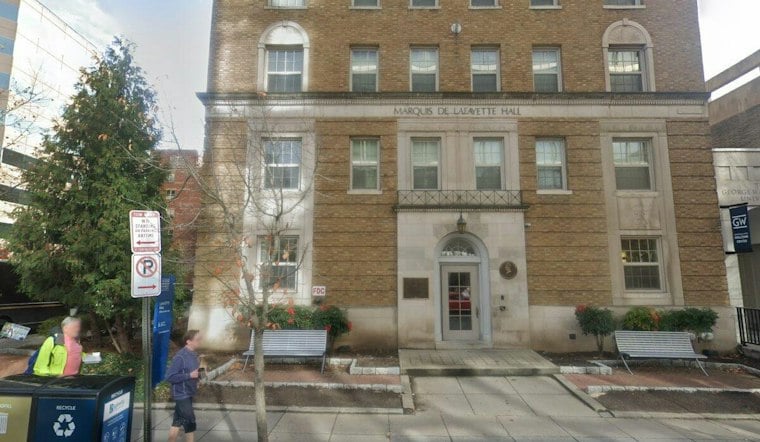
A federal advisory panel recommended suspending the American Psychological Association's Commission on Accreditation for one year, citing concerns about its oversight of accredited programs. The National Advisory Committee on Institutional Quality and Integrity voted 7-4 on September 24 to make the recommendation, with a 2023 antisemitism complaint involving a George Washington University psychology professor among the issues raised.
Committee member Steve Taylor moved for the suspension, arguing it would preserve federal leverage to press for structural changes at the accreditor, according to The GW Hatchet. The vote differed from the Department of Education staff recommendation to renew the APA's recognition, according to The American Quorum.
The complaint at issue was filed with the Office for Civil Rights in 2023 by advocacy group StandWithUs. It alleged that then-assistant professor of clinical psychology Lara Sheehi was antisemitic toward Jewish and Israeli students and created a hostile environment in Diversity Sequence I, a required non-credit course for doctoral students in APA-accredited programs, according to the Hatchet's reporting. The complaint also alleged that faculty and administrators initiated disciplinary proceedings against students who raised concerns about Sheehi. A NACIQI staff report cited by the Hatchet said the APA's accreditation committee was unaware of complaints involving Israeli and Jewish students at GW.
How the Complaint Moved Through Federal Review
The Office for Civil Rights opened its investigation in April 2023. Before then, GW had commissioned a review by the law firm Crowell & Moring LLP; the university said the review, reported in March 2023, found no evidence substantiating the allegations against Sheehi, according to George Washington University. Sheehi left GW in late 2023 to join the faculty of the Doha Institute for Graduate Studies in Qatar, The GW Hatchet reported.
In January 2025, GW reached a resolution agreement with the Office for Civil Rights addressing the antisemitism complaint and a separate complaint alleging anti-Palestinian discrimination, filed by Palestine Legal, according to the Hatchet. The agreement said GW appeared to have responded ineffectively to reports of both antisemitism and anti-Palestinian discrimination. It required the university to clear disciplinary remediation records for Jewish graduate students sanctioned after confronting faculty over classroom discussions, according to The Times of Israel.
The agreement also required GW to review its anti-discrimination policies, retain discrimination-related reports for at least seven years, conduct a climate survey on discrimination and harassment, and hold trainings for community members, the Hatchet reported. GW revised its policies in May 2025. University spokesperson Julia Garbitt said GW had completed its policy review and implemented the revisions, and had agreed to strengthen its capacity to address discrimination and harassment.
APA's Site Visits Missed the Federal Investigation
The APA Commission on Accreditation visited GW in November 2024 and conducted a periodic review in April 2025. The commission remained unaware of the OCR investigation and settlement through that review, according to the Hatchet. The NACIQI staff report said the APA was still responsible for identifying problems at GW's program and checking compliance with its standards.
The APA has since sought further information from GW. Aaron Joyce said the accreditation committee requested a special report, and the Commission on Accreditation formally requested information about GW's professional psychology program on September 21. GW is preparing its response and will cooperate as appropriate, Garbitt said. She added that the APA and the Middle States Commission on Higher Education continue to accredit the program, and that GW will continue working with the APA commission while monitoring the federal recognition process.
Joyce said the APA strongly disagrees with NACIQI's recommendation and that it will address each alleged violation of its standards, including any involving antisemitism.
What a Suspension Would — and Wouldn't — Do
At the September 24 hearing, Combat Antisemitism Movement representative Alyza D. Lewin argued that the APA had a blind spot toward hostility targeting Jewish students' ancestral and ethnic ties to Israel in mandatory coursework, according to the Combat Antisemitism Movement. The organization said Lewin's testimony heavily influenced panel members to reject the staff recommendation for renewal.
The recommendation could affect programs beyond GW. The APA Commission on Accreditation oversees more than 1,300 doctoral, internship and postdoctoral residency programs nationwide and has held continuous federal recognition since 1975, according to the American Psychological Association. NACIQI's recommendation is non-binding and goes to Department of Education Under Secretary Nicholas Kent, who has final authority to accept, modify or reject a one-year suspension, according to The EDU Ledger.
A suspension of federal recognition would not force university psychology departments to close or strip general Title IV student aid eligibility, since programmatic accreditor recognition is legally distinct from the institutional accreditation tied to federal financial aid, the same outlet notes. It could, however, impair specialized federal training grants and complicate state licensing pathways for graduates across the country.
How Federal Recognition and State Licensing Differ
NACIQI advises the education secretary on accreditor recognition; it does not make the final decision, according to a Federal Register notice. Federal regulations define a programmatic accrediting agency as one that accredits specific educational programs, including programs preparing students to enter a profession, distinguishing that role from institution-wide accreditation, according to 34 CFR 602.3.
Licensure is a separate question: GW's clinical psychology program disclosure says state licensing authorities determine the educational and training requirements in their jurisdictions, according to George Washington University. The disclosure does not establish a single pathway for Washington, D.C., Maryland and Virginia, so a federal recognition suspension alone would not determine whether an individual graduate meets a state's licensing requirements.
The APA vote did not happen in isolation. During the same September meeting, NACIQI deadlocked on whether to renew or deny recognition for the American Bar Association's law school accrediting council, reflecting what the EDU Ledger describes as heightened federal scrutiny of professional accreditors generally. The Hatchet also reports that the ABA's accreditation council repealed its diversity standard earlier in September, and that the accreditor for the Milken Institute School of Public Health withdrew from Department of Education recognition in July. The Trump administration has sought to influence higher education and overhaul accreditation oversight broadly, with President Trump having called accreditation his secret weapon to curb diversity, equity and inclusion efforts in 2025, according to the Hatchet.




