

























































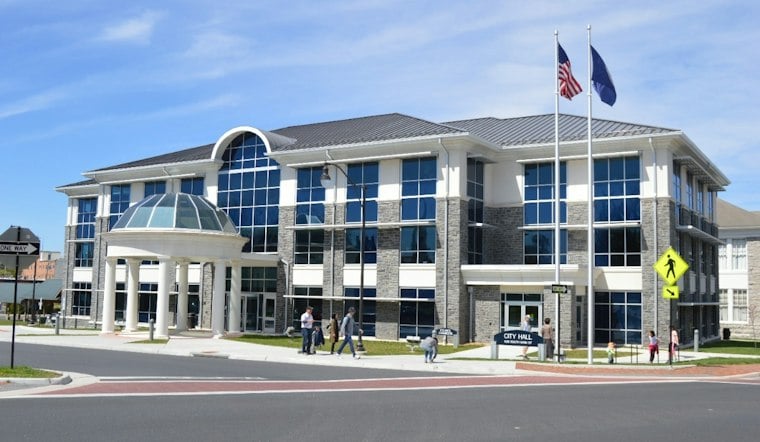
Harrisonburg City Council is weighing whether to bar the city from ever procuring or using automatic license plate recognition systems, after directing its top attorney earlier this month to draft a formal prohibition. The proposal, known as Ordinance 26-023, landed on the council's September 22 meeting agenda for consideration, but the public record has not yet confirmed what happened next.
How the Proposal Took Shape
According to The River 95.3, Harrisonburg City Council directed City Attorney Chris Brown on September 8 to prepare an ordinance prohibiting the city's procurement or use of ALPR systems, shorthand for automatic license plate recognition. Brown, who serves as the city's attorney, then brought the drafted measure back to council for consideration at its September 22 meeting, the outlet reported.
The September 22 agenda specifically listed language directing council to consider approving the enactment of an ordinance prohibiting procurement or use of automatic license plate recognition systems by the city, per the same station's report. That agenda item carried the identifier Ordinance 26-023.
No Confirmed Outcome Yet
What remains unclear is whether council actually passed the measure. The station's report notes that minutes from the September 22 meeting were still in draft status, and Harrisonburg's legislative system had not yet published the actions taken on the legislation or their results. That leaves the ordinance's fate, for now, an open question in the public record.
License plate reader systems have drawn scrutiny well beyond Harrisonburg. These setups typically rely on high-speed cameras paired with computer algorithms to identify passing vehicles, and can capture a plate image along with the date, time, location, direction and lane of travel, according to the Boston Bar Journal. The same publication notes that many systems combine real-time alerts with historical data that can be searched by plate number in connection with stolen vehicles, missing persons or suspected criminal activity.
Privacy Concerns Driving the Debate Statewide
Advocacy groups have flagged similar worries. The American Civil Liberties Union says license plate reader data is sometimes pooled into regional sharing networks and can be retained for years or indefinitely, collecting a plate number alongside the date, time and location of every scan, as described on the ACLU's website. The Boston Bar Journal has also reported that civil-rights and immigrant-rights groups worry AI-enhanced ALPR systems could enable a form of nationwide surveillance and facilitate biased or discriminatory law enforcement practices.
Harrisonburg would not be the only Virginia locality grappling with the technology. The Lynchburg Police Department paused operation of 15 fixed Flock Safety license plate reader cameras positioned on city rights-of-way after concerns raised by elected officials and residents, according to The Roanoke Times. The Roanoke Times described growing national backlash against the technology, which the Boston Bar Journal says is becoming increasingly common in cities across the country.
For now, Harrisonburg residents interested in the outcome will need to watch for updated meeting records. The City of Harrisonburg notes that council meets at 7 p.m. on the second and fourth Tuesday of each month in Council Chambers at 409 South Main Street, with meetings open to the public.




