

























































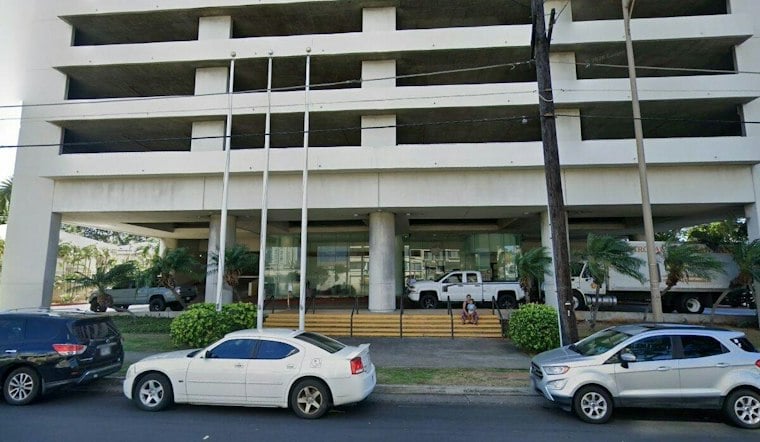
Honolulu spent more than $386 million in federal COVID-19 relief funding, but a new city audit has concluded that a large share of it never delivered the broader community and economic recovery benefits city officials originally promised. The 62-page review, covering March 2020 through November 2024, found that Honolulu significantly changed its original 2021 spending plan for American Rescue Plan Act funds, shifting dollars toward city operations, short-term household assistance, water infrastructure and the purchase of the Waikiki Vista apartment building.
The findings come from the Office of the City Auditor, which concluded that Honolulu's ARPA reallocation produced limited recovery and community support impacts for Oahu residents and businesses. As Honolulu Star-Advertiser reporter Ian Bauer detailed, the city originally planned to spend $266.2 million on community support and economic recovery but ultimately spent $162.8 million in that category — a decrease of nearly 39% from the planned amount. Meanwhile, spending on modernizing city operations climbed from $70 million to more than $176 million.
Where the Money Actually Went
According to the audit, Honolulu concentrated more than $277 million, or 72% of its nearly $386.3 million ARPA award, in four areas: $131.9 million for retired city employees' OPEB liability, $65.6 million for short-term household assistance, $42.4 million for water infrastructure improvements, and $37.7 million to purchase the Waikiki Vista property. The city reprogrammed $132 million in ARPA funding specifically to offset nearly $132 million in OPEB costs, according to the audit's figures reported by the Star-Advertiser.
The Blangiardi administration told the paper that the OPEB funding was intended to create general-fund capacity for potential temporary hazard-pay settlements. City officials, through spokesperson Scott Humber, defended the city's use of ARPA funding, noting that no ARPA funds were actually used to pay hazard-pay settlements themselves — those settlements were paid from the general fund instead. That distinction matters given the scale of Honolulu's hazard pay obligations: Civil Beat reported in May 2025 that the city approved $41 million in hazard pay for 3,650 unionized workers represented by HGEA, pushing total citywide hazard pay settlements to roughly $120 million.
A Deadline That Forced the City's Hand
Much of the reshuffling traces back to a hard federal cutoff. Honolulu faced a Dec. 31, 2024, deadline to obligate its remaining ARPA funds, and the audit found the city reallocated $132 million mainly from projects unlikely to be executed before that deadline. Federal Treasury guidelines set strict cutoffs for municipal ARPA commitments — funds had to be obligated by the end of 2024, according to Hawaii Free Press. Honolulu's ARPA award totaled just over $386 million, according to the same reporting.
Auditors found that Honolulu complied with 200 of 238 applicable ARPA criteria, an 84% overall compliance rate across the 28 ARPA-funded projects reviewed, totaling about $151.7 million. The city's spending shift drew criticism over transparency and planning.
Waikiki Vista's Unresolved Tenant Questions
Some of the audit's sharpest scrutiny falls on Waikiki Vista, the 19-story property at 2241 Kapiolani Boulevard that Honolulu purchased in 2022 for $37.75 million. The building contains 109 residential units and 124 parking stalls and was intended to house individuals at 30% or 50% of area median income and below. It also has four nonresidential floors occupied by three unrelated tenants: the Royal Hawaiian Band, Hale ‘Imi Ola — which provides emergency and bridge-housing services — and Chabad of Hawai‘i, which occupies two of those floors.
Auditors found that Honolulu had not demonstrated that Chabad of Hawai‘i's space supports a governmental function, affordable housing objectives, or another eligible ARPA use. That space totals about 28,111 square feet, or 16.3% of Waikiki Vista, representing approximately $6.15 million of the property's purchase price. Humber said Chabad of Hawai‘i was already an existing tenant when the city purchased the building. The audit also noted that Waikiki Vista was not listed in Honolulu's affordable-housing pipeline as of June, raising questions the city has not yet resolved about how the property fits its stated housing mission.
Infrastructure Spending and What Got Cut
On the infrastructure side, Honolulu allocated $47.4 million to critical island infrastructure, including $25 million for the planned Kalaeloa Seawater Desalination Facility and $4.3 million for Board of Water Supply security improvements. The city also allocated $8.09 million for Monsarrat Avenue improvements near Waikiki. Separately, $65.6 million, or 58% of a $113 million pool, went toward short-term assistance. Notably, the city allocated no ARPA funding for broadband expansion that had been included in the original plan.
The Honolulu Board of Water Supply was associated with a $25 million city ARPA allocation for the planned Kalaeloa facility — an allocation that accounted for more than half of the $42.4 million designated for municipal water infrastructure.
Auditor Flags Transparency and Planning Gaps
Beyond the dollar figures, the Office of the City Auditor identified shortcomings in performance metrics. The office also criticized the Blangiardi administration's public transparency when ARPA priorities changed over time. As a result, the city administration was recommended to publicly disclose significant funding changes going forward, develop more impactful and achievable future emergency-funding plans, and ensure full compliance with funding requirements. The Managing Director's Office generally agreed with the audit's findings and recommendations, according to the Star-Advertiser's reporting.
This is not the first time Honolulu's pandemic-era financial management has drawn scrutiny. A separate City Auditor report, Report No. 26-01, found in January that the Office of Economic Revitalization had expended over $324.3 million in federal, city and private funds since 2020 while prioritizing administrative capacity over actual economic recovery programs, according to Hawaii Free Press. That finding prompted the Honolulu City Council to vote to override Mayor Rick Blangiardi's budget veto, with six council members voting for the override and cutting $2.9 million from the office's operating budget, as reported by Hawaii Public Radio. Pandemic-era fund management has also drawn scrutiny.
The pressure on Honolulu's general fund from pandemic-related labor costs has continued well beyond the ARPA reallocation itself. A roughly $16.77 million Resolution 74 hazard-pay payout for Local 996 underscored the multi-million-dollar strain such claims have placed on city finances. Honolulu firefighters have separately pursued their own frontline hazard pay claims with the Blangiardi administration, as detailed in Hoodline's hazard pay negotiations report.
All of this unfolds against a broader fiscal backdrop that has made spending scrutiny more pointed citywide. Broader budgetary pressures have magnified scrutiny on public spending efficiency across city government. With the federal government's ARPA performance period ending Dec. 31, 2026, now just months away, the audit leaves open how much further transparency Honolulu will provide as it closes out its pandemic-era relief spending.



