

























































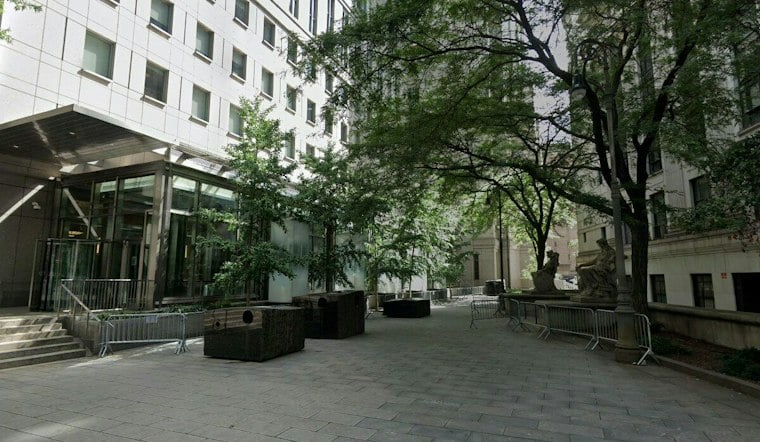
Ilit Raz, the Israeli founder and former CEO of AI hiring startup Joonko Diversity, Inc., pleaded guilty to securities fraud Thursday in Manhattan federal court, admitting she raised roughly $27 million from investors by lying about her company's customers and revenue. The plea, entered before U.S. District Judge Alvin K. Hellerstein, closes out a case that stretched from a 2023 internal company collapse to a criminal prosecution that began in 2024.
A Scheme Built On Fabricated Clients
According to the U.S. Department of Justice, Raz raised the fraudulent funding across two major rounds around June 1, 2021, and June 2, 2022. Reporting from The Jerusalem Post details how Raz claimed Joonko had worked with over 100,000 job candidates and had more than 100 corporate customers, including large global fashion brands, a credit company, and a travel company, none of which actually had business relationships with the startup. Prosecutors say she sent investors fictitious purchase orders and fabricated positive testimonials to back up those claims, and forged signatures from entities that had no ties to Joonko at all.
Raz also forged a bank statement showing Joonko held an average balance of more than $5 million, when the company's real balance sat millions of dollars below that figure, per the same Jerusalem Post account. The Series B round alone, announced in September 2022, was a $25 million financing led by prominent venture capital firm Insight Partners, with Target Global, Kapor Capital, and Vertex Ventures Israel also participating, according to Forbes, illustrating just how far the false metrics traveled among institutional backers.
Internal Investigation Triggered The Unraveling
The scheme began falling apart in 2023, when an investor grew suspicious of Raz's claims, the Jerusalem Post reports. Joonko's board investigated allegations that Raz misled investors about paying customers, according to CTech. That internal reckoning came roughly a year before the case became a matter of federal law enforcement.
The fallout for investors was severe. The startup's collapse left backers with millions of dollars in losses once Joonko went bankrupt, the Jerusalem Post notes. Joonko Diversity, Inc. formally filed for Chapter 11 bankruptcy protection on May 24, 2024, in the U.S. Bankruptcy Court for the District of Delaware, according to the Department of Justice.
Criminal Charges And A Parallel SEC Case
Federal prosecutors in the Southern District of New York unsealed criminal charges of securities fraud and wire fraud against Raz on June 11, 2024, under then-U.S. Attorney Damian Williams, the Department of Justice says. Jamie McDonald, the current U.S. Attorney for the Southern District of New York, whose office asserted that Raz knowingly misled investors, oversaw the case as it moved toward this week's plea. Raz now faces a maximum prison sentence of 20 years, per the Jerusalem Post's reporting.
The criminal case ran alongside a civil enforcement action. On the same June day in 2024, the U.S. Securities and Exchange Commission filed a parallel lawsuit against Raz seeking permanent injunctions, civil monetary penalties, disgorgement of ill-gotten gains, and a permanent officer-and-director bar, according to law firm Freiberger Haber LLP.
Regulators Frame Case As Part Of Broader AI Crackdown
Legal analysis from Orrick, Herrington & Sutcliffe, published on the Harvard Law School Forum on Corporate Governance, found that Raz falsely claimed Joonko's platform was powered by seven different AI algorithms and machine learning, despite the company using no such proprietary technology. That detail dovetails with how the Jerusalem Post describes Joonko's core pitch: AI-based services designed to help employers identify and hire prospective job candidates.
SEC Enforcement Director Gurbir S. Grewal pointed to the Joonko prosecution in 2024 as a key action against what regulators call AI-washing, describing the scheme as “an old school fraud using new school buzzwords like artificial intelligence and automation,” according to the Securities and Exchange Commission. The case followed the SEC's first-ever AI-washing settlements in March 2024, when investment advisers Delphia (USA) Inc. and Global Predictions Inc. paid a combined $400,000 in penalties for making false claims about their use of artificial intelligence, the agency said. Together, the cases mark a widening regulatory focus on startups that dress up ordinary fraud in the language of emerging technology.



