

























































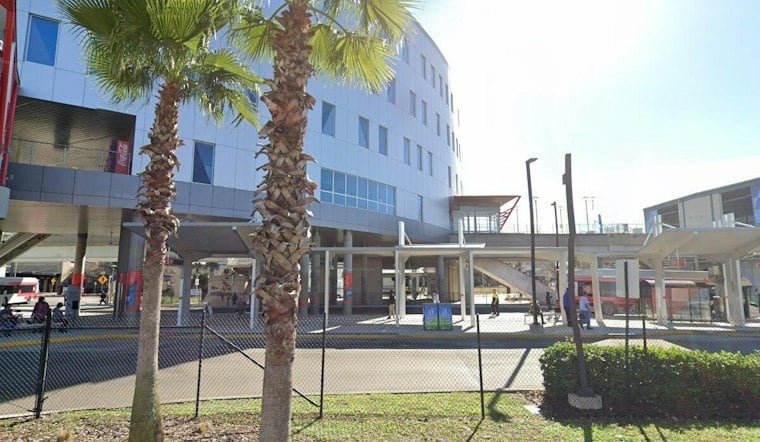
Jacksonville's Skyway monorail will stop carrying passengers beginning November 2, part of a sweeping $39 million reduction to the Jacksonville Transportation Authority's fiscal year 2027 budget that also pauses the NAVI autonomous shuttle program and changes weekday bus service.
The cuts, detailed by News4JAX, include reductions to the Jacksonville Transportation Authority's fiscal year 2027 budget.
The scale of the retreat reflects how quickly JTA's finances deteriorated. A City of Jacksonville Council Auditors report released in August found the authority's projected FY 2026 deficit had ballooned to $31.8 million by June 30, according to Jacksonville Today. That deficit had grown by $29.5 million in just three months, the outlet reported.
A Rapid Reversal From Spring Optimism
As recently as May, JTA's board voted 7-0 to approve a preliminary $139.2 million FY 2027 budget aimed at closing a far smaller $17.5 million deficit through route reductions and NAVI schedule tweaks, per the Jacksonville Daily Record. Four months later, the authority was forced into far deeper cuts than that earlier plan had anticipated.
The pressure had been building for months. In February, JTA's board approved $14.2 million in mid-year emergency spending reductions, including 15% salary cuts for senior executives, after sales tax revenue fell nearly $11 million below projections, according to a JTA press release. Higher mileage-based fares for Connexion Plus paratransit riders were scheduled to take effect April 2.
A six-month fare-cut pilot that slashed bus fares starting February 1 failed to reverse the slide. Fixed-route bus ridership dropped 18.3% year-over-year in February and another 10% in March, the Jacksonville Daily Record's reporting shows, undercutting hopes that cheaper fares alone could rebuild the rider base.
What Riders Will See Starting November
Under the new plan, JTA's core bus service will undergo service changes beginning November 2, and the authority says it will release 44 additional administrative employees as part of the reductions. As many as 150 frontline operations positions could also be cut, building on layoffs that already began in December and February and administrative furloughs that involved 87 senior employees.
Not every route will be treated equally. JTA says it will preserve frequency on its highest-ridership lines: routes 1, 3, 8, 10 and 19 will continue running every 30 minutes on weekdays, and the First Coast Flyer bus rapid transit lines will keep 20-minute weekday headways.
NAVI's first phase, also known as the Bay Street Innovation Corridor, cost $65 million to launch but averaged only 49 riders per day in March, or about 1,075 monthly trips, according to the Jacksonville Daily Record — far short of JTA's long-range target of 280 daily riders by 2035.
The Skyway's Uncertain Future
The Skyway itself now faces an uncertain future.
JTA is considering redevelopment concepts to replace or upgrade the Skyway, with costs of up to $565 million, according to WJXT News4JAX.
Leadership In Transition
JTA is navigating the cuts after longtime CEO Nathaniel “Nat” Ford Sr., who led JTA for more than 13 years, announced in July that he would step down effective January 8, 2027. Ford's exit followed growing public and city council scrutiny over autonomous vehicle spending and operational deficits, as Hoodline previously reported in coverage of Ford's departure.
The budget overhaul focuses on reducing costs and prioritizing essential services.
The budget overhaul also follows JTA's July proposal to raise standard fixed-route bus fares from $1.75 to $2.00 and St. Johns River Ferry vehicle fares from $7-$8 to $8-$10 starting January 1, 2027, a move Hoodline detailed would generate an estimated $1.57 million in new revenue. Between the fare hikes, staffing cuts, and the Skyway and NAVI suspensions, JTA is now betting that a leaner operation can buy time to rebuild its finances before restoring the services Jacksonville riders lost this fall.




