

























































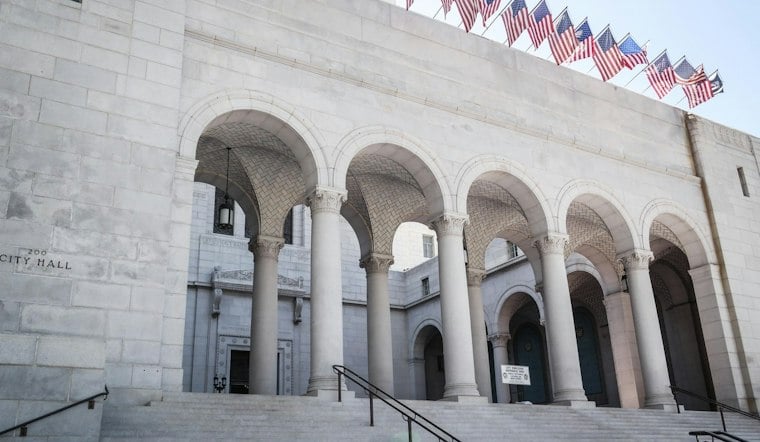
A Los Angeles City Council committee is set to consider a motion that would direct rental assistance, legal defense funding, and outreach toward Salvadoran immigrants and other Temporary Protected Status holders amid uncertainty over the future of federal protections for El Salvador. The motion, introduced by council members Hugo Soto-Martínez and Monica Rodriguez on August 21, calls for the city to analyze which industries would be hit hardest by TPS terminations and to identify specific supports for vulnerable residents caught in the fallout.
The Civil Rights, Immigration, Social Services and Neighborhoods Committee will take up the motion as reported by MyNewsLA.com, which notes the proposal would still need approval from the full City Council before taking effect. Los Angeles County is home to the largest Salvadoran ethnic population in the United States, according to the Los Angeles Almanac.
U.S. Citizenship and Immigration Services formally confirmed on August 12 that Temporary Protected Status designations and related work authorizations for El Salvador were set to terminate on September 9, but the administration later paused the termination, and Salvadoran TPS holders retained protection and work authorization until a further announcement, according to a notice posted by USCIS. The National Immigration Forum provides information on the overall TPS population, per the National Immigration Forum. Per MyNewsLA's reporting, a potential termination could affect as many as 170,000 immigrants nationwide, including 150,000 children.
Council Members Say Federal Indecision Fuels Fear
Rodriguez said the Trump administration's deliberate indecisiveness on Temporary Protected Status is leaving hundreds of thousands of Salvadorans trapped in a state of limbo, according to the same MyNewsLA report. She said Los Angeles must continue protecting Angelenos from the administration's attacks. Mayor Karen Bass thanked Soto-Martínez and Rodriguez for what she called their forward-thinking motion and said Los Angeles must deploy a swift, unified city response to support Salvadoran Angelenos and other TPS holders.
Councilmember Nithya Raman, who co-authored the city's sanctuary city ordinance and is challenging Bass in the November 3 election, criticized the administration for creating confusion and fear among Salvadorans relying on TPS. Raman said the decision could put families at risk of separation, endanger communities living under threat of deportation, and impact the local economy. She added that Los Angeles communities deserve stability, not confusion, over losing TPS in the coming days or weeks.
The Bass administration has said it plans to create a safety net for Salvadoran Angelenos and other TPS holders and will continue working with the City Council, city departments, and community partners, per MyNewsLA. The U.S. Department of Homeland Security has said that Salvadoran individuals present in the country under TPS retain protection until an announcement is made, and that it will announce a decision on El Salvador's TPS at an appropriate time. The Salvadoran TPS program has typically been renewed every 18 months, and Temporary Protected Status generally allows immigrants from countries affected by armed conflict and natural disasters to live and work in the United States.
A Legal Landscape Reshaped by the Supreme Court
The urgency behind the motion traces partly to a U.S. Supreme Court ruling on June 25 in Mullin v. Doe, in which justices decided 6-3 that federal immigration law bars federal courts from reviewing Department of Homeland Security decisions to terminate Temporary Protected Status, according to the Supreme Court's opinion. Justice Samuel Alito wrote the majority opinion reversing lower court stays that had previously shielded TPS holders. The ruling addressed the scope of judicial review of TPS decisions.
That reality has already played out for another TPS population. Following federal terminations, the U.S. government resumed ICE charter removal flights on August 20, deporting more than 160 individuals in a single day after court injunctions dissolved, according to The Guardian. The Department of Homeland Security had terminated TPS for about 300,000 Haitians in July, per MyNewsLA's reporting, and those deportees were returned to Cap-Haïtien because of safety restrictions at the primary airport in Port-au-Prince.
RepresentLA Faces a Funding Gap Just as Demand Rises
The motion calls for additional investment in RepresentLA, the city's legal defense program for immigrants, alongside outreach, education, and rental assistance or other financial aid for affected residents. A report from the L.A. County Department of Consumer and Business Affairs describes RepresentLA's coalition and legal services.
The proposed expansion of RepresentLA would require additional funding.
Sanctuary Status Survives a Federal Challenge
The TPS motion also places city-level immigration protections in focus. Questions about the balance between city policy and federal immigration enforcement have accompanied that framework.
City Attorney Hydee Feldstein Soto has defended the city's approach as a matter of local control over municipal personnel and resources.
Bukele's Role and What Comes Next
MyNewsLA's report also notes that the Trump administration has previously declined to end TPS for thousands of Salvadoran immigrants and has paid millions of dollars to El Salvador for accepting and holding U.S. deportees. Nayib Bukele, El Salvador's leader and an ally of President Trump, agreed to accept and hold those deportees, according to the same report.
For now, Salvadoran immigrants under TPS can legally work and live in the United States while the Department of Homeland Security withholds a final announcement. Whether the City Council motion advances, and how the city would pay for an expanded safety net, remains to be seen once the full council takes up the proposal.



