

























































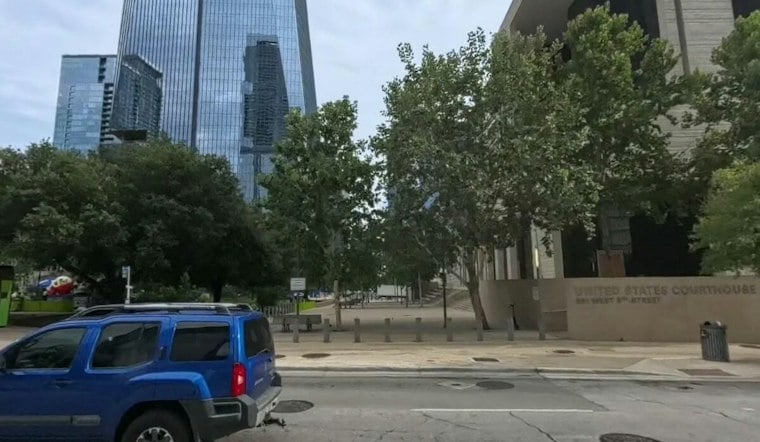
A 6,700-square-foot mansion overlooking Lake Travis, two private planes, a Rolls-Royce and more than $2 million in cash and accounts are all on a federal forfeiture list tied to an alleged Austin-based drug trafficking operation. At the center of the case is Sergio Alejandro Valle-Ramirez, identified by federal authorities as Defendant No. 1.
Federal authorities indicted 14 people in connection with the Austin-based Valle Drug Trafficking Organization, according to the Austin American-Statesman. The forfeiture list includes assets reviewed by the Statesman in court records, among them two planes and a 2021 Azimut yacht, cars, handguns, purses and $581,344 in cash or collateral.
The centerpiece property is a 2023-built home that had been listed for lease at $21,500 a month. The property was listed for lease, according to Ready Front Real Estate.
A Decade-Old Pattern of Federal Scrutiny
This is not Valle-Ramirez's first brush with federal drug charges. In 2013, 19 people were arrested in an Austin cocaine operation involving cocaine from Mexico and bulk cash smuggling, with drugs distributed to more than five states, according to the U.S. Department of Justice.
Separately, the article discusses Valle's prior legal history.
The article also mentions Valle-Ramirez's earlier federal case.
Defense Attorneys Push Back on Marijuana Charges
The indictment includes conspiracy charges involving hundreds of pounds of marijuana and THC, while some defendants also faced money-laundering charges.
Defense attorneys for other defendants argue the case overreaches. The article also discusses Dallas defendant Alexander Oliver and his attorney, Leslie Boykin.
Federal drug penalty statutes have not been altered by a December 2025 executive order directing the attorney general to complete the process of rescheduling marijuana from Schedule I to Schedule III under the Controlled Substances Act, according to McCarty-Larson. Federal criminal defense analysts note that Schedule III reclassification does not change statutory penalty ranges or federal sentencing guidelines for bulk marijuana distribution charges, meaning prosecutors can still pursue heavy sentences despite the shifting national policy landscape.
Texas's Shifting Cannabis Enforcement Climate
The federal charges land amid an increasingly tangled state regulatory picture. Under Texas Health and Safety Code § 481.121, marijuana possession is governed by weight-based penalties, while oil or liquid THC concentrates fall under separate, stricter Penalty Group 2 felony rules, per the same McCarty-Larson analysis.
In July, the Texas Department of State Health Services enforced reinstated rules classifying delta-8, delta-10 and THCP as Schedule I controlled substances statewide, making unauthorized possession or sale of those hemp-derived compounds a state jail felony, according to TXK Today. That crackdown follows years of growth in the state's hemp economy under 2019's HB 1325, according to the Neal Davis Law Firm.
Case Details and What Comes Next
The Valle Drug Trafficking Organization was active from March 2022, with indictments in the case. The DEA was involved in the forfeiture effort, according to Lake Travis News's reporting.
The reporting mentions more than $2 million in cash and bank accounts. Valle has not responded to phone calls seeking comment, the Statesman reported.
The case remains in discovery, with a trial to come.



