

























































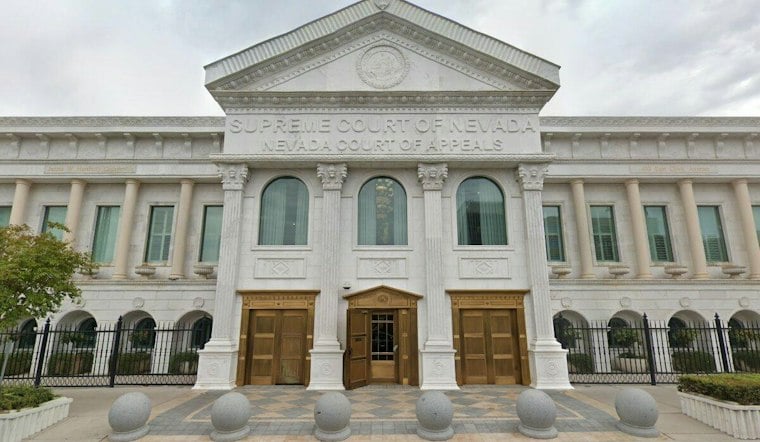
The Nevada Court of Appeals has reopened Mary Lorenzo’s effort to be legally recognized as the mother of 8-year-old Alexander. It held that Nevada’s presumptive-parentage law cannot categorically exclude a would-be parent because of sex, marital status or lack of a genetic connection, according to the court’s opinion. The case returns to district court for further review; the appeals court did not award Lorenzo custody.
Lorenzo and her former partner chose surrogacy together after she could no longer become pregnant, and she cared for Alexander from birth, according to KTNV. After the relationship ended, she was cut off from her son, the station reported.
Lorenzo was denied legal custody access because she was not genetically related to Alexander, had not given birth to him and was not married to his biological father, according to the station's report. A lower court ruled against her, and she appealed.
A Legal Fight Rooted in a Gap in the Surrogacy Contract
The formal court record fills in why Lorenzo's case became so complicated. In the appeal, her former boyfriend, identified in court documents as Pierre Gendebien, successfully asked the district court to dismiss her complaint because she lacked a genetic link to the child, was not married to him, and was omitted as an intended parent from the gestational agreement, according to FindLaw. Eighth Judicial District Court Judge Mari D. Parlade initially dismissed Lorenzo's complaint for maternity and custody in October 2022, and later denied her request for nonparent visitation in December 2024 following an evidentiary hearing, per the same source.
The Nevada Court of Appeals issued its published opinion in Lorenzo v. Gendebien on June 18, 2026, under citation 142 Nev. Adv. Op. No. 46, according to FindLaw. The court held that Nevada’s presumptive-parentage statutes under Nevada Revised Statutes Chapter 126 are equitable in nature and cannot be restricted on the basis of sex, marital status or lack of biological connection, except in limited circumstances, the opinion states. The court reversed the lower court’s ruling, per KTNV, and designated its decision for publication, meaning it can establish precedent for similar parentage disputes across the state.
Why Lorenzo Had Standing to Sue in the First Place
Under NRS 126.231, any interested party may file an action to establish a mother-child relationship, a standard Nevada case law defines as an individual holding a direct personal, social, or financial stake in establishing or disestablishing parentage, per FindLaw's account. The Nevada Parentage Act was originally enacted in 1979, based on the Uniform Law Commission's 1973 Model Uniform Parentage Act, and remains codified under NRS Chapter 126, according to the same source.
That statutory framework generally gives strong protections to intended parents in surrogacy arrangements. Nevada law permits commercial surrogacy and enables intended parents to secure pre-birth parentage orders statewide regardless of genetic ties, marital status, or sexual orientation, according to FamilyVale. But Lorenzo's case fell outside that protection because she wasn't named in the original gestational agreement, leaving her to fight for recognition after the fact.
A 2013 addition to Nevada law
Nevada’s statutory history provides a date for the state’s gestational-agreement provisions: the Nevada Legislature records that NRS 126.500, the definitions section for provisions in NRS 126.500 through 126.810, was added in 2013. That statutory note establishes when this part of the law was added; it does not, by itself, spell out the requirements intended parents must meet to obtain a parentage order.
What the Ruling Actually Changes, and What It Doesn't
The appellate court did not award Lorenzo custody. Instead, it instructed the district court on remand to evaluate Gendebien’s rebuttal arguments under a newly announced three-factor test for presumptive parentage under NRS 126.051, according to Justia Law. The case now returns to the lower court for further proceedings under that framework.
Lorenzo’s attorney, Amber Candelaria, represented her pro bono before the Court of Appeals, according to KTNV. The station reported that Candelaria argued Nevada law should recognize families formed through assisted reproduction and parent-child relationships that extend beyond genetics. Candelaria was also running for a Clark County Family Court judicial seat in Department Z during the 2026 election cycle while handling the appeal, according to Justia Law.
A Mother Still Waiting
The ruling gives Lorenzo another opportunity to establish a legal parent-child relationship, but she has not regained custody or contact with Alexander. KTNV reported that she has not seen him in years.
Lorenzo told KTNV that Alexander is alive, doing well and thriving, but that she cannot be with him. The district court must now apply the appellate court’s three-factor test in deciding the next steps in her case.
The ruling lands amid broader national uncertainty over surrogacy parentage law. The U.S. Supreme Court declined in September 2026 to block a California judicial ruling declaring intended parents the sole legal parents of a child born via surrogate in Texas, according to the Maryland Daily Record, underscoring how unsettled these disputes remain across state lines even as Nevada charts its own precedent.





