

























































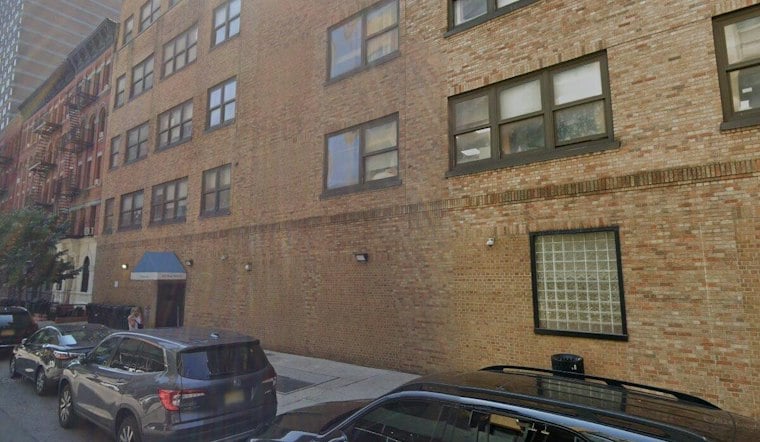
The Upper East Side parcel where Yankees legend Lou Gehrig was born in 1903 has traded hands for $73.1 million, closing the book on Taconic Partners' ambitious plan to turn the site into a life sciences research hub named in his honor. City property transfer records show the sale of 309 East 94th Street closed on September 10, with the buyer identified as a special-purpose entity tied to LCOR.
The transaction, recorded through the entity 309 East 94th Street Development LLC, formalizes Taconic's exit from the block-through assemblage between First and Second Avenues, according to PincusCo. The sale price marks a steep comedown from the roughly $350 million total development budget Taconic and its partners had projected for the project, which included $280 million in construction costs layered atop their original $70 million land purchase, as reported by The Real Deal. Taconic Partners, Nuveen and Flatiron Equities had acquired the property from the Karten family, which had owned it for nearly four decades, in an all-cash deal in December 2021, per the same outlet.
The site includes a five-story loft-style building, a two-story garage, and an auto shop, and together with a parcel at 324 East 95th Street forms a roughly 87,000-square-foot assemblage. Construction had reportedly started at the property as of 2023, according to New York YIMBY, though its completion status remains unclear per The Real Deal's reporting.
A Tribute to the Iron Horse, Unbuilt
Taconic's vision for the site was steeped in baseball history. The address is the birthplace of Hall of Famer Lou Gehrig, marked with a commemorative plaque installed by the New York Yankees in 1990, according to Columbia College Today. Gehrig's nickname, the Iron Horse, inspired the name Taconic chose for its planned facility: Iron Horse Labs, an eight-story, 200,000-square-foot research building pitched as a rare commercial life sciences project on the Upper East Side.
Architecture firm Perkins & Will designed a facade for the project featuring custom triangular passive sun-shading panels engineered to resemble baseball stadium pennants, a tribute to Gehrig detailed by Healthcare Real Estate Insights. Taconic had also planned to reinstall Gehrig's birthplace plaque inside the building's main lobby, the same account notes. The proposed development sat near major academic medical institutions and the Second Avenue subway, and the developers secured a $79 million construction loan from Ares Commercial Real Estate in 2022 to begin site work.
A Lab Market That Cooled Fast
The project's collapse tracks a broader retreat from speculative lab space in New York. Commercial life science lab availability in the metro area climbed to 30.8% vacancy by late 2025 as speculative completions outpaced tenant leasing, according to Facilities Dive. New York recorded just 27,000 square feet of lab leasing in the first quarter, and year-to-date leasing velocity declined 10 percent year over year according to CBRE, with lab leasing down 84 percent from the prior quarter, per The Real Deal's reporting.
Taconic had invested roughly $2 billion in a push to become New York City's premier life sciences developer, funding projects including Hudson Research Center and West End Labs before sector demand softened nationwide, according to Bisnow. The firm has been shedding its speculative lab bets: Taconic sold its West End Labs asset at 125 West End Avenue to Bill Ackman's Pershing Square Foundation for $188 million in July, a deal Hoodline covered in its report on the Ackman purchase.
Municipal Support Has Also Wavered
Even the city's own backing for biotech infrastructure has shown cracks. In June, the New York City Economic Development Corporation quietly reduced staff within its life sciences and healthcare unit, raising concern among developers about ongoing municipal support, Hoodline reported at the time. The EDC's LifeSci NYC initiative had previously aimed to catalyze 3.5 million square feet of lab space across the city.
Yet the picture isn't uniformly bleak for biomedical research in New York. Institutions across the metro area received nearly $3.2 billion in NIH research grant allocations in fiscal year 2024, the highest total of any U.S. metropolitan area, even as commercial lab leasing stayed slow, according to CBRE. The contrast underscores a split between robust academic research funding and a private biotech sector that has scaled back its commercial footprint.
What Comes Next for Gehrig's Birthplace
LCOR, the buyer, is a real estate firm primarily focused on transit-oriented multifamily residential development along the East Coast. Its major 2026 commitments include a $193 million Miami apartment tower and a $5 billion multi-phase residential buildout at Brooklyn's Atlantic Yards, according to The Real Deal. That portfolio, consisting almost entirely of market-rate and affordable rental developments near transit, strongly suggests the Upper East Side site could shift from the planned lab complex to residential apartments.
What that means for the partially built structure, the site's zoning, and Gehrig's commemorative plaque remains an open question. Neither Taconic representatives nor LCOR representatives responded to a request for comment, according to The Real Deal's reporting. For now, the corner where the Iron Horse was born sits in limbo between two very different visions for its future.





