

























































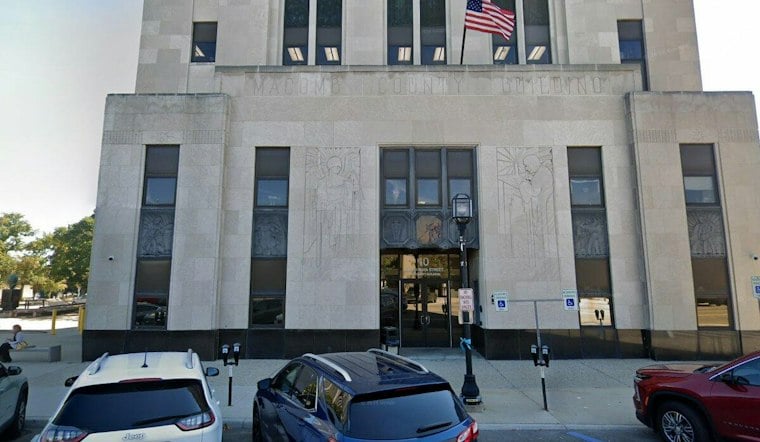
Six men were arraigned in late August in 41-B District Court in Clinton Township on felony allegations involving unpaid court-ordered child support, according to FOX 2 Detroit. The reported arrearages ranged from $7,202.84 to $35,913.78. The allegations have not been adjudicated.
The cases illustrate how Macomb County says it decides when a long-running support dispute may warrant criminal charges. The Macomb County Prosecutor’s Office says its Family Division considers felony charges when arrears exceed $5,000, payments have stopped for at least three consecutive months and evidence indicates that the noncustodial parent has the ability to pay, according to the Macomb County Prosecutor’s Office.
Criminal charges are described as a later step
Michigan’s ordinary child-support system relies on civil collection tools before criminal prosecution. The Michigan Department of Health and Human Services lists measures including income withholding, tax-refund offsets, liens and license suspensions, and says felony nonsupport charges generally are issued only after other collection methods have not succeeded, according to its child-support enforcement guidance.
That distinction matters in the current Macomb cases. FOX 2 reported that the six defendants had faced prior show-cause hearings or bench warrants, but those enforcement histories do not by themselves establish that any defendant had the financial capacity to pay. Whether the legal requirements are met remains a matter for the criminal proceedings.
Ability to pay is a separate legal issue
A 2004 Michigan Court of Appeals decision shows why ability to pay can become a contested issue in a nonsupport prosecution. In a separate Saginaw County case, the court reversed an order denying the prosecution’s request to exclude evidence of the defendant’s inability to pay. The court also said Michigan nonsupport offenses generally presuppose an ability to pay, according to the Michigan Court of Appeals. That ruling does not establish the facts or outcome of the six Macomb cases.
Macomb has proposed an alternative to conviction
Macomb County has also proposed a Child Support Specialty Court aimed at some eligible defendants who might otherwise face felony prosecution. Under the prosecutor’s proposal, participants could plead guilty but defer sentencing while completing a yearlong program involving payments, employment and court oversight; successful completion could allow them to avoid a felony conviction, according to the Macomb County Prosecutor’s Office.
The specialty-court proposal is separate from the six pending allegations and does not indicate that any of those defendants qualify. Together, the charging criteria, civil remedies and proposed court program show the county’s stated approach: pursue payment through administrative and civil means when possible, while reserving felony cases for allegations involving substantial arrears, prolonged nonpayment and an asserted ability to pay.





