

























































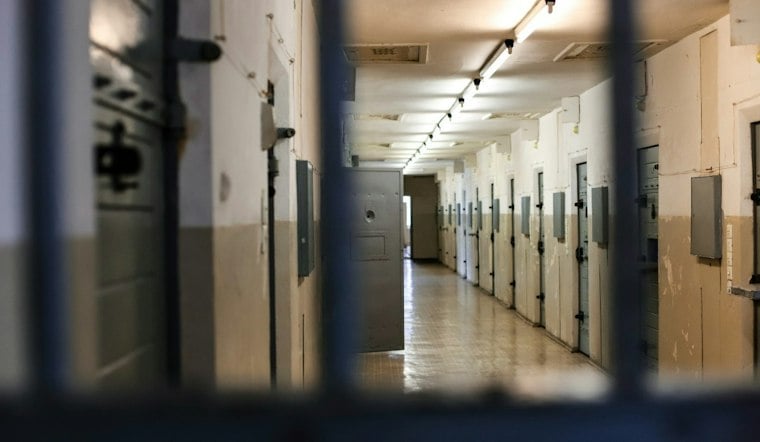
A Milwaukee mother says she did everything right — she told county officials her son had stopped taking his medication and was slipping into crisis. Instead of getting him treatment, TJ ended up in jail. The case, involving TJ and his mother, Raven Hampton, highlights a gap between what Milwaukee County promises families facing a loved one's mental illness and what actually happens when that person disengages from care.
According to the Milwaukee Journal Sentinel, TJ's parents warned the county that their son had stopped treatment before he experienced the mental health crisis that ultimately ended in jail rather than a hospital bed. The family's account centers on a settlement agreement.
How Settlement Agreements Are Supposed to Work
Under Chapter 51 of Wisconsin's civil commitment statutes, courts consider criteria for involuntary commitment, according to Justia Law. Settlement agreements have become increasingly common in the county's mental health system.
TJ's case raises a broader question: how counties respond when someone stops following a settlement agreement before a crisis escalates.
Civil Agreements and Criminal Cases
TJ's case shows that a settlement agreement did not keep him out of jail after his crisis.
That is essentially what TJ's family says happened. They told the county their son had stopped his treatment, but rather than triggering a swift medical intervention, his crisis instead ended with him in the Milwaukee County Jail — the same facility where, as Hoodline previously reported on a detainee's death, mental health care has faced sustained scrutiny.
A Jail System Already Strained by Mental Illness
The jail where TJ ended up has a substantial population of inmates with serious mental health conditions. Sheriff Richard Schmidt said roughly 30% of the jail's approximately 900 inmates suffer from serious mental health conditions, according to WUWM 89.7 FM.
Mental health care inside the jail is also complicated by the facility's contracted healthcare provider. Wellpath LLC, which delivers medical and mental health services inside the Milwaukee County Jail, filed for Chapter 11 bankruptcy in November 2024 to reorganize more than $500 million in debt, including $110 million in legal settlements, per Urban Milwaukee's reporting. Wellpath took over the contract in 2019 after replacing former vendor Armor Correctional Health Services, which had faced inmate deaths and criminal charges against its staff.
Despite the bankruptcy, the county has continued funding the arrangement. In December 2024, County Executive David Crowley approved a retroactive $1 million annual increase to Wellpath's contract to cover rising healthcare labor costs, extending the deal through its scheduled conclusion in March 2026.
A History of Medication Lapses Behind Bars
This isn't the first time a gap in psychiatric care inside the jail has had serious consequences. In September 2023, Milwaukee County paid a $1.05 million court judgment tied to former contractor Armor Correctional Health's failure to give a detainee his prescribed schizophrenia medication back in 2016. The detainee had been released and subsequently rearrested before Armor's medication failure led to his psychiatric decline, according to Prison Legal News. That detainee reportedly went 65 days without his required antipsychotic medication due to administrative errors by jail medical staff.
The county's obligation to maintain adequate jail healthcare traces back even further, to the 2001 Christensen v. Sullivan state-court consent decree, which set population controls and health-screening requirements. That decree grew out of a 1996 inmate lawsuit that led to mandatory intake health screenings and court-ordered oversight, according to the Civil Rights Litigation Clearinghouse.
The County's Alternative to Jail-Based Crisis Care
Milwaukee County has tried to build an off-ramp from this cycle. The Mental Health Emergency Center opened in September 2022 on the city's north side as a 24/7 psychiatric emergency department, shifting emergency intake away from the county's legacy Behavioral Health Complex in Wauwatosa.
In its first year of operation, ending in September 2023, the center handled more than 7,000 patient visits, split almost equally between voluntary admissions and involuntary emergency detentions. That volume underscores the ongoing demand for crisis stabilization across the county — demand that, for families like TJ's, doesn't always translate into intervention before a crisis turns criminal.



