

























































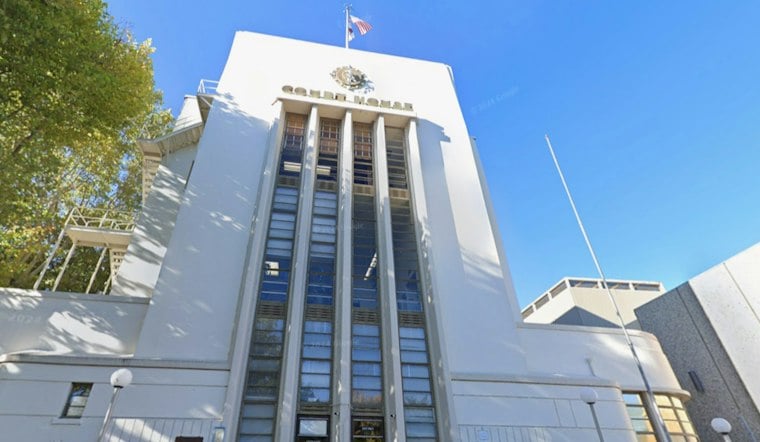
A California appellate court has appointed a referee judge to determine whether the Nevada County District Attorney's office should face sanctions or State Bar reporting after generative artificial intelligence fabricated facts and legal citations in criminal filings. The scrutiny, which escalated in August 2026, centers on District Attorney Jesse Wilson's office and has already drawn in a former deputy prosecutor who says she was blocked from disclosing the errors to the court.
The case traces back to an August 2025 habeas corpus challenge, Kjoller v. Superior Court, in which prosecutors submitted a brief containing three completely fabricated case citations, three irrelevant case citations, and a misapplied constitutional provision, according to Civil Rights Corps, which filed the challenge alongside the Nevada County Public Defender. As reported by CBS News, the allegations against the district attorney's office have only intensified since the errors first surfaced.
Wilson acknowledged in late 2025 that prosecutors had used generative AI that caused errors in criminal filings, and the office later confirmed in August 2026 that an internal audit had identified mistakes bearing AI markings across four felony cases, per CalMatters. The audit reportedly found no broader pattern beyond those four cases, according to the same reporting.
A Whistleblower's Claim of a Cover-Up
The scandal took a darker turn with an August 2026 court declaration from former deputy prosecutor Madison Maxwell, who handled three of the four affected cases before resigning from the office in May 2026. According to CalMatters, Maxwell stated in her declaration that her supervisor prevented her from immediately reporting the AI errors and apologizing to the court and defense counsel. That allegation pushes the controversy beyond a simple technical mistake and into questions of an attempted internal cover-up.
The Nevada County District Attorney's office has declined to discuss the specifics of individual cases. In a September 2026 statement reported by CBS News, the office said it had taken “corrective measures” and looks forward to working with the court-appointed referee to resolve the matter. Around the same time, the Nevada County Board of Supervisors convened a closed-door meeting regarding the AI scandal, though it issued no public statements afterward, per the same CBS News report.
State Supreme Court Ordered the Investigation
The referee's appointment did not happen in a vacuum. In January 2026, the California Supreme Court unanimously granted review in Kjoller v. Superior Court and ordered the appellate court to issue an order to show cause regarding sanctions, overruling lower court denials of an investigation, according to Horvitz & Levy. That order sent the matter back to the Third District Court of Appeal, setting up the formal referee investigation now underway.
Legal scholars and civil rights organizations argued in a November 2025 amicus brief filed with the California Supreme Court that the Nevada County case marks the first known instance in the United States of public prosecutors submitting AI-hallucinated legal authority in a criminal proceeding, according to a filing from UC Berkeley Law. That distinction matters because prosecutorial reliance on fabricated citations directly affects criminal defendants' pretrial liberty and due process rights, unlike civil cases where AI hallucinations typically just result in fines or a brief being struck.
New State Law Targets AI Verification
The Nevada County case has unfolded against a backdrop of new statewide rules governing AI in the courtroom. On August 31, 2026, California lawmakers passed Senate Bill 574, adding Section 6068.1 to the Business and Professions Code to require attorneys to personally verify all legal citations and formally disclose generative AI use in court filings, as Hoodline previously reported. The bill was introduced by Sen. Tom Umberg.
The Nevada County matter is not the first time California's legal system has grappled with AI-generated fabrications. In April 2026, three California civil attorneys faced potential license suspensions and probation in a State Bar Court action after submitting AI-hallucinated case citations in their own filings, Hoodline reported at the time. That case offered an early glimpse of how state regulators might treat unverified AI use — a question now playing out at a much higher stakes level inside a criminal prosecutor's office.
For now, the referee's investigation continues, with no timeline announced for when it might conclude or what sanctions, if any, could follow. District Attorney Wilson's office maintains the errors were isolated and have been remediated, while Maxwell's declaration keeps alive the question of whether supervisors tried to keep the mistakes from ever reaching the court in the first place.





