

























































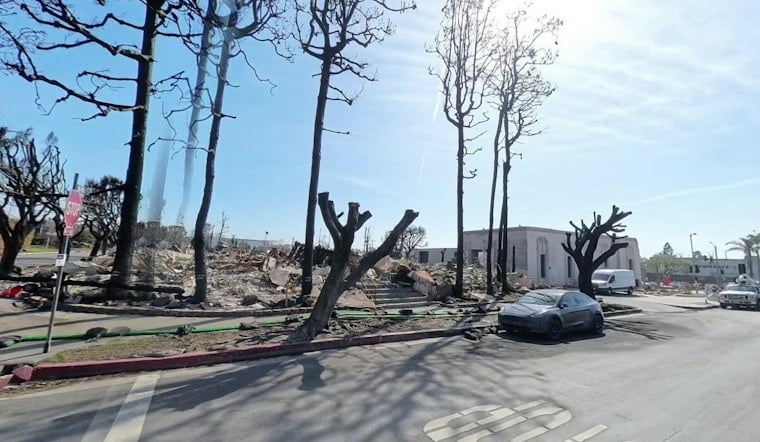
A obscure expiration clause buried in decades-old condo paperwork nearly derailed the rebuilding of an entire Pacific Palisades community after last year's firestorm — and now a new California law is meant to make sure it never happens again. Assembly Bill 2692, signed as an urgency measure on August 24, 2026, and effective immediately, gives Los Angeles County homeowners associations with expired CC&Rs a temporary path to revive their governing documents without needing every single owner to agree.
The law was written specifically with the 107-unit Via de la Paz condominium community in Pacific Palisades in mind, according to the San Diego Union-Tribune. More than half of that complex's homes burned in the January 2025 Palisades Fire, but rebuilding stalled because the community's CC&Rs had expired shortly before the disaster, leaving the community unable to administer its $40 million insurance payout and blocked from Small Business Administration and Habitat for Humanity assistance, per the Office of Assemblymember Jacqui Irwin.
Via de la Paz homeowners had actually done the hard part already: 101 of 107 unit owners, more than 94%, agreed to reinstate their CC&Rs before AB 2692 even existed. But California law at the time required unanimous, 100% owner consent to revive an expired declaration, according to an analysis from the California State Senate Judiciary Committee. Ninety-four percent support wasn't enough — the law demanded everyone.
How the New Reinstatement Process Works
AB 2692 created a temporary Civil Code Section 4276 that allows Los Angeles County HOAs with expired CC&Rs to hold a membership vote to reinstate their documents, per the Union-Tribune's reporting. The required vote threshold matches whatever the expired CC&Rs originally specified, or a simple majority of all members if the old documents don't state an approval percentage.
Under the statute, reinstatement only takes legal effect after three sequential steps are completed: member vote approval, a formal written certification signed by an association officer, and recording the certified reinstatement with the Los Angeles County Recorder, according to HOA Weekly. Any membership vote must still comply with the Davis-Stirling Common Interest Development Act and the HOA's own governing documents, the Union-Tribune reports. Once revived, a declaration can be extended by the initial CC&Rs term or 20 years, whichever is less, and the HOA must eventually seek approval for an amendment removing the expiration date entirely or converting it to automatic renewal.
A Narrow Window, Limited to One County
The opportunity is temporary and geographically narrow. Civil Code 4276 expires January 1, 2028, meaning associations have only until December 31, 2027, to act, and the law does not help HOAs outside Los Angeles County. Any Los Angeles County HOA with expired CC&Rs can use it, though — regardless of whether the association sits in Pacific Palisades or Altadena, since both communities were hit by last year's fires. The Union-Tribune, whose reporting anchors much of this account, notes that associations should consult their HOA attorney before attempting the reinstatement process.
The underlying problem traces back decades. Older California HOA CC&Rs typically expired at least 40 years after the association was created, a legacy of the Davis-Stirling Common Interest Development Act's requirement that associations maintain a recorded declaration. Membership could have extended the CC&Rs before expiration, but many older developments never held that vote, according to background from FindHOALaw. Once a declaration lapses, an HOA loses its association status and may face assessment or insurance-related operational problems.
Part of a Broader Legislative Push
AB 2692 doesn't operate alone. It runs alongside SB 625, a separate law effective January 1, 2026, that automatically voids HOA restrictions impeding disaster rebuilding and sets a 30-day completeness deadline and a separate 45-day decision deadline for architectural review, per HOA Weekly. Assemblymember Jacqui Irwin's bill cleared the Assembly in a 75-0 concurrence vote on August 6, 2026, before being chaptered as urgency legislation, according to her office.
The scale of what prompted this legislative fix is staggering. The Palisades Fire destroyed more than 6,800 structures and killed 12 civilians, according to Hoodline.
Rebuilding Remains a Gauntlet Beyond HOA Rules
Even with the HOA fix in place, Los Angeles County fire survivors continue to navigate a recovery landscape full of other obstacles. Hoodline previously reported on a sting that resulted in felony charges against six unlicensed contractors soliciting illegal construction deals in Pacific Palisades. And this month, the Board of Supervisors opened an investigation into Farmers Insurance over widespread claim denials tied to lead, asbestos, and toxic soot contamination in standing homes across the Eaton and Palisades burn zones.
Grassroots pressure has also shaped the broader recovery conversation. In August, more than 100 Eaton Fire survivors and community advocates rode a bus from Pasadena to Sacramento to lobby lawmakers for a proposed $25 million Community Aid for Rebuilding and Equity fund meant to help low-income homeowners facing insurance shortfalls. For the Via de la Paz owners and others like them, AB 2692 clears one major legal barrier — but it arrives alongside a recovery process still defined by contractor fraud risk, contested insurance claims, and a race against the statute's own 2027 deadline.




