

























































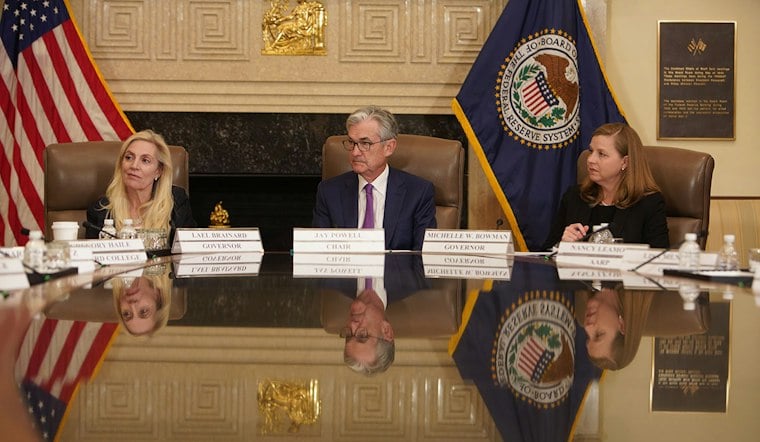
Federal Reserve examiners knew, or should have known, about vulnerabilities inside Silicon Valley Bank as much as a year before the lender collapsed in 2023, according to a new independent review. The review, commissioned by Fed Vice Chair for Supervision Michelle Bowman, attributes the delay primarily to a risk-averse supervisory culture rather than to the post-2018 easing of rules, while also citing unclear decision-making within the Fed.
A Second Look at What Went Wrong
The findings come from a review conducted by Starling Trust Advisors, which Federal Reserve Vice Chair for Supervision Michelle Bowman hired to take another look at SVB's failure, according to Reuters, as carried by the Kansas City Star. Bowman had previously called for an independent study of the collapse, and the review she commissioned found that supervisory staff knew or should have known about the bank's vulnerabilities as early as March 2022, as reported by qz.com. Despite that early awareness, the report notes, supervisors did not take prompt action to push SVB to reduce its interest-rate risk or its concentration of risks, according to Yahoo Finance.
Silicon Valley Bank's collapse came in March 2023, after the bank announced a $1.8 billion loss on securities sales and moved to raise additional capital, the same report notes. Venture capital-backed technology companies made up a heavy share of the bank's deposit base, and 94 percent of those deposits were uninsured — a combination that left SVB especially exposed once depositors began pulling their money. The Starling review concluded the bank ultimately failed from a confluence of large unrealized accounting losses, an unstable deposit base, and insufficient readiness to obtain emergency borrowing when it needed it, per Reuters.
Why Examiners Hesitated
SVB's Deposit Structure in Context
SVB's reliance on uninsured deposits was extreme, with 94 percent of its deposits uninsured. More broadly, the Federal Deposit Insurance Corporation says the industry-wide share of uninsured domestic deposits rose from 18 percent in 1992 to a peak of 49 percent in 2021, providing wider context for the deposit risks exposed by SVB's failure.
Bowman attributed the supervisory inaction to a long-standing culture of risk aversion among examiners, rather than to any directive or suggestion that scrutiny be scaled back, according to Reuters. The review said staff believed it was safer to take no action than to risk acting incorrectly. Bowman also pointed to a lack of clear decision-making and direction within the Fed as a contributing factor, the wire service reported.
The review also rejected the idea that the delays were caused by a 2018 regulatory tailoring law that Congress passed directing the Fed to ease rules for many banks, according to Reuters. Bowman, who was nominated to her Fed supervision role by President Donald Trump and is now leading a broader effort by U.S. bank regulators to streamline bank rules and oversight, said the slow response was not due to the 2018 law.
A Review That Cuts Against an Earlier One
The Starling review differs from the Federal Reserve's earlier postmortem on SVB, which was led by Michael Barr, Bowman's Democratic predecessor as vice chair for supervision, Reuters reported. Barr's review found that, under his Republican predecessor, Randal Quarles, examiners felt pressured to go easier on banks and faced a higher burden of proof before reaching a supervisory conclusion. Quarles, a Trump appointee who stepped down months before SVB's vulnerabilities became apparent, has denied that examiners were pressured to ease up and said he instead encouraged examiners to focus on liquidity risk and concentration of deposit risk, according to the same report.
Barr's report recommended tougher bank rules and oversight, particularly for larger regional lenders, but those changes were not enacted amid pushback from the banking industry and skepticism from some congressional lawmakers, Reuters noted. Senator Elizabeth Warren, the senior Democrat on the Senate Banking Committee, has criticized the Starling review, according to the same reporting; the available account does not detail her objections.





