

























































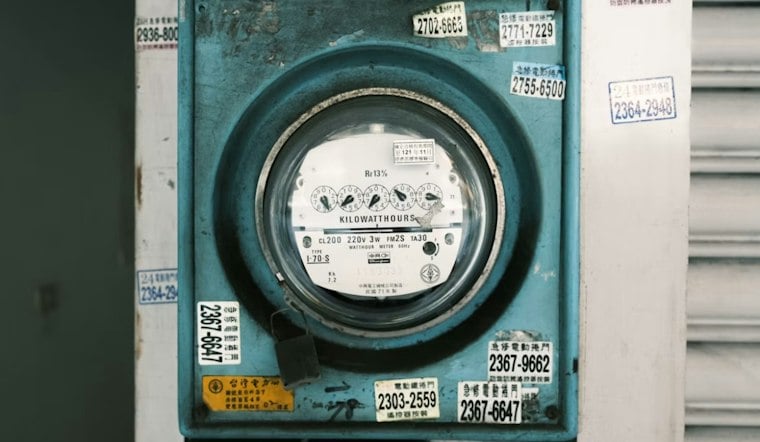
Oakland County officials are asking residents to dig up their old DTE Energy bills and hand them over as ammunition in a fight against the utility's proposed 10% electric rate increase. DTE filed a $474 million rate hike request with the Michigan Public Service Commission earlier this year, and if regulators approve it, the increase would take effect in March 2027.
Oakland County Board of Commissioners Chair Dave Woodward is asking residents to submit copies of two electric bills — one from December 2025 and one from April 2026 — to help build a case that the rate hike is out of step with what customers are actually experiencing, according to WXYZ Channel 7. Oakland County residents can submit their bills through the county's online form, and Woodward said he's hoping for a strong sample size, estimating that 500 to 1,000 bills would give the county a useful dataset to present to regulators.
Both the Oakland County Board of Commissioners and the Macomb County Board have voted to formally intervene in the DTE rate case, arguing the proposed hike is too steep. Macomb County's board passed its own intervention resolution on July 24 under Article VII, Section 15 of the Michigan Constitution, according to Macomb County Government, which explicitly grants counties the authority to intervene in public utility rate cases.
Woodward Says Real-World Increases Feel Steeper Than 10%
Woodward said a 10% rate increase is out of proportion to reality, and that customers' actual rate increase experience was probably in the double digits, per the station's report. Businesses and residents across the county have reported rising utility costs, and the frustration isn't limited to households.
John Prepolec, who owns Alchemi and Johnny's Speakeasy in downtown Royal Oak, told the outlet that his electric bill has doubled since he opened his businesses a decade ago, even as inflation over that period ran around 3.5%. His monthly electric bill reached nearly $2,000 this summer, and he said a 10% rate hike is difficult to justify on top of that. Matthew Gray, another local resident quoted in the same report, said he would be willing to participate in the county's bill submission effort.
State AG Also Pushing to Cut the Request
The county effort isn't happening in isolation. The Michigan Attorney General's Office is separately fighting the DTE rate hike request, and Attorney General Dana Nessel filed formal testimony on August 28 asking the Michigan Public Service Commission to slash DTE's $474.3 million ask by 71%, recommending the commission cap the revenue increase at no more than $134.5 million and limit residential rate hikes to 2%, according to the State of Michigan. DTE's filing, made under MPSC Case No. U-22046 in April, seeks an overall 7.6% revenue increase that would translate into monthly residential increases ranging from 7.3% to 10.8% depending on usage and peak hours.
The new request came just two months after the MPSC approved a separate $242.4 million electric rate increase in Case No. U-21860, which raised typical residential bills by 4.65% starting in March. That rapid succession of filings has fueled frustration among local officials watching bills climb twice within the same year.
Data Center Pause Offer Draws Criticism
DTE has offered to pause new rate hike requests for two years — until at least 2028 — if the current $474.3 million increase is approved and an Oracle-backed data center in Saline Township opens by late 2027. Nessel has publicly criticized that conditional offer as a “ransom note” while separately appealing the data center's MPSC approval in court, as reported by FOX 2 Detroit.
DTE has said the requested funds are needed for grid infrastructure projects, including converting the coal-fired Belle River Power Plant to natural gas and building the Trenton Channel Energy Center, which the company describes as poised to become the Great Lakes region's largest standalone battery energy storage facility, per CBS News Detroit. The utility has also said the grid is getting more resilient, that customers' bills remain below regional and national averages, and that outage times improved 90% from 2023 to 2025.
Consumer Advocates and Reliability Rankings Add Pressure
Consumer Reports urged MPSC regulators on September 10 to reject the rate increase entirely, pointing out that DTE and Consumers Energy are both seeking to raise their allowed Return on Equity profit rate from 9.9% to 10.25%, a change that would boost shareholder earnings, according to Consumer Reports. Meanwhile, the Citizens Utility Board of Michigan's 2025 Utility Performance Report ranked Michigan 50th nationwide for total power outage duration per customer, finding that the state's electric utilities deliver among the nation's slowest restoration times despite charging rates above regional averages.
Separately, an analysis published by Planet Detroit in June found that despite earning more than $1.5 billion in profit in 2025, DTE Energy paid no current federal income taxes that year, marking 12 consecutive years of federal tax exemptions tied to federal infrastructure investment credits. In response to the recurring rate cases and storm-related outages across Southeast Michigan, state lawmakers have introduced Senate Bill 768 to limit utility rate hike requests to once every three years, while the MPSC recommended performance-based penalty mechanisms in August.
A formal MPSC decision on Case No. U-22046 is expected in early 2027. Until then, Oakland County officials are betting that a stack of resident electric bills might carry as much weight before regulators as the legal filings themselves.



