

























































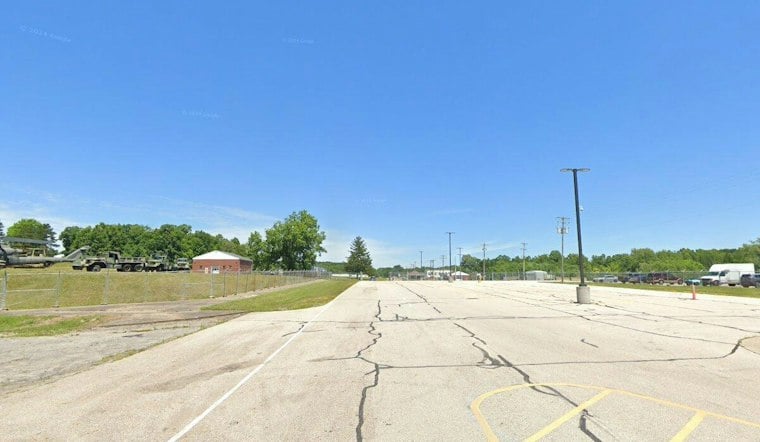
Deep in Paris Township, Ohio, a 21,000-acre stretch of land that once churned out artillery shells for World War II has become one of the Ohio Army National Guard's busiest training grounds. Camp James A. Garfield Joint Military Training Center now hosts about 20,000 soldiers during peak summer months, a dramatic shift for a site that spent decades sitting largely idle after its wartime and Cold War heyday.
The transformation has come with a price tag of roughly $50 million in new facilities and training infrastructure, according to garrison commander Shaun Robinson, who has worked at the site since 2016, as reported by News 5 Cleveland. Robinson told the station that 20 new buildings have gone up since he arrived, part of a buildup that has quadrupled both training volume and soldier throughput at the camp over the past decade. “This has become a modern premier training site,” Robinson said, according to the station's report.
From Munitions Plant to Premier Range
The base's roots go back to the Ravenna Arsenal, a major military munitions manufacturing center during World War II. At its operational peak, the Ravenna Army Ammunition Plant employed up to 15,000 workers across 12 production lines and turned out more than 36 million bombs and artillery shells for U.S. forces, according to the Newton Falls Preservation Foundation. That wartime workforce surge was so large it reshaped the neighboring village of Windham, which saw its population grow by more than 1,200% in the 1940s, a jump recorded in the 1950 U.S. Census as the largest percentage population growth of any American municipality, per Wikipedia.
The arsenal was all but shuttered during the Vietnam War and remained underutilized for decades afterward. The station's report notes that News 5 Cleveland visited the site in 1986 and 1987, capturing it during that dormant stretch before its later revival. The installation did not take on its current name until October 10, 2018, when it was officially designated Camp James A. Garfield Joint Military Training Center, moving on from its earlier titles as Camp Ravenna Joint Military Training Center and the Ravenna Army Ammunition Plant, according to the Ohio National Guard. It was renamed in honor of President James A. Garfield, who also served as an Ohio Army National Guard officer.
New Ranges Built for Modern Combat
Physical reminders of the site's past are still scattered across the property. More than 600 earth-covered ammunition magazines, known as igloos, remain standing alongside 56 original arsenal-era buildings, per the same account from News 5 Cleveland. Some of those igloos are now repurposed as bomb shelters for the Ohio Army National Guard.
Layered on top of that legacy infrastructure is a wave of new live-fire construction. A 1,400-meter machine gun range with thermal shooting capabilities allows soldiers to train on long-distance targets, and the camp's .50-caliber machine gun range, which opened in 2024, is the only range in Ohio where that kind of heavy-weapon activity can be conducted, according to operations training manager Martin Marino, as cited in the station's report. That range was designed for soldiers to train on stationary infantry and armor targets using both ground-based and vehicle-mounted machine guns, according to a report from DVIDS.
Camp James A. Garfield also features close-range marksmanship courses and long-distance firing ranges stretching nearly a mile, along with a training trench that opened last month designed to prepare soldiers for modern battlefield conditions. Training exercises use bullets, detonating cord and Bangalore torpedoes as aids, underscoring how realistic the drills have become.
A Regional Hub With Deep History
The buildup at Camp James A. Garfield did not happen overnight. State officials unveiled $6.2 million in completed live-fire infrastructure back in December 2019, including a $4.1 million 16-lane automated record fire range and a $2.1 million combat pistol qualification range, both featuring automated pop-up targets and concrete firing positions, as part of a broader $37 million modernization plan documented by DVIDS at the time. The base was even considered in June 2019 as one of three national finalists for a proposed $3.6 billion East Coast Missile Defense System, a project state officials estimated could have generated up to $4 billion in regional economic activity before another site was chosen, according to Business Journal Daily.
Getting the land ready for any of this required decades of cleanup. Environmental remediation across the 21,000-acre site began in 1989 and has cost more than $150 million to remove unexploded ordnance, heavy metals and explosive residue left behind by decades of ammunition manufacturing, per the Center for Health, Environment & Justice's CSWAB fact sheet. That work cleared the way for the new ranges now drawing soldiers from across the region.
Base leadership has previously pointed to the installation's economic footprint as well, estimating in September 2023 that Camp James A. Garfield generates roughly $50 million in annual economic impact for the Mahoning Valley through local purchasing, contractor spending and payroll, according to the Tribune Chronicle. Ohio's state operating budget enacted in July 2025 allocated $2 million for fiscal year 2026 to the Eastern Ohio Military Affairs Commission to support infrastructure repairs and construction projects across regional military assets, including Camp James A. Garfield, according to the Youngstown/Warren Regional Chamber.
Today, the camp serves as a destination site for military units from across the Midwest, with its mission centered on producing trained and ready soldiers who can deploy when called. Mechanics from the Ohio Army National Guard's 1st Battalion, 145th Armored Regiment began training on new Joint Light Tactical Vehicles at the camp in October 2023, part of an Army-wide effort to replace aging Humvees with better-protected vehicles, according to DVIDS. For a property that sat quiet for decades after the Vietnam War, the pace at Camp James A. Garfield now looks nothing like its past.





