

























































Palm Coast has closed out a bruising budget season, finalizing a $534 million spending plan for fiscal year 2026-27 that includes six layoffs, a rolled-back property tax rate, and a hard-fought compromise to add two new sheriff's deputies. The city council also adopted a tax rate of 4.14 per $1,000 of taxable value, up from last year's 4.09, even as it braces to lean on a bank line of credit to help cover a costly legal settlement.
Layoffs Hit Code Enforcement and Land Management
In July, Palm Coast laid off six employees from its Community Development Department, a move the city says will save nearly $500,000 in salaries, according to city spokeswoman Brittany Kershaw, as reported by the Miami Herald. Among those cut were the department's code enforcement manager, an animal control officer, a temporary animal control officer, a temporary staff assistant, a land management coordinator, and a landscape architect, per the same report. The cuts came as the council pushed for broader budget adjustments to absorb rising costs elsewhere in the city's ledger.
The new fiscal year, which begins October 1, arrives with an $88 million general fund budget carved out of the larger $534 million overall spending plan. That general fund breaks down to roughly $12.5 million for law enforcement, $17 million for the fire department, $11 million for public works, and $10 million for parks, the Herald reports. The rest of the budget is dominated by $311 million in proprietary funds covering stormwater, utilities, garbage collection, and building permits, alongside $88.5 million in capital projects, $11.8 million in special revenue funds, and nearly $40 million in internal services.
A Compromise on Deputy Staffing
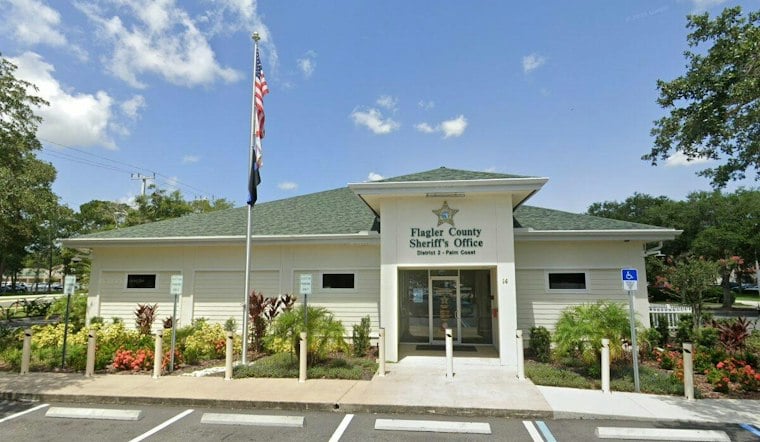
Flagler County Sheriff Rick Staly had requested nine new deputies to keep pace with rising call volume, but the city council initially balked, prompting Staly to criticize what he called Palm Coast's apparent unwillingness to fund the additional positions, according to the Herald. At its September 9 budget hearing, the council reversed course just enough to add $330,000 for two new deputies at $166,000 each, according to Flagler Buzz. The outlet reports it was a partial reversal of an earlier decision to freeze all new deputy hires.
Part of what strained the public safety budget was already baked in before any new hires were discussed. Sheriff Staly told the council that Palm Coast's base law enforcement contract rose by nearly $1 million — an 8.6% increase for the same number of deputies — driven by an $800,000 retroactive state pension adjustment for Florida Retirement System retirees and a 44% spike in employee health insurance premiums, the outlet's report notes. Palm Coast contracts with the Flagler County Sheriff's Office rather than running its own police department, so those cost increases land directly in the city budget. A 2024 joint staffing analysis by the sheriff's office and city administration reported a 37-road-deputy deficit and a plan to add 12, 12, and 13 deputies through 2027, according to Observer Local News.
The $17 Million Land Deal Behind the Squeeze
Much of the city's fiscal pressure traces back to a legal fight over land in Town Center. On August 19, the city council voted 4-1 to approve a $17 million land acquisition agreement to buy 259 acres across 23 parcels owned by Allete, the parent company of Palm Coast Holdings LLC, settling a breach-of-contract lawsuit over promised water and sewer utility capacity, according to FlaglerLive. The Allete subsidiary had sued the city in October 2025, alleging Palm Coast failed to guarantee the utility capacity needed for planned commercial land sales.
Beyond the purchase price, the settlement saddles Palm Coast with $1.9 million in bond debt payable through 2036, or $190,000 annually, and strips $774,984 in annual property tax revenue from local rolls now that the parcels are city-owned, FlaglerLive reports. That includes $580,810 a year that had previously funded the Town Center Community Development District. Because the city charter caps general fund borrowing at $15 million, officials plan to use a projected $11 million line of credit and dip into general fund reserves to help cover the purchase, according to the Herald.
Tax Rate Ticks Up as Reserves Get Tapped
The rolled-back millage rate of 4.1387 per $1,000 of taxable value is expected to generate $45.5 million in property tax revenue, all of which goes toward the general fund, per the Herald's reporting. At a 4.0893 millage rate, a property with $250,000 in taxable value would owe about $1,022.33 in annual city property taxes. The paper also reports a net increase in Palm Coast's overall taxable property value, driven by new construction.
To help fund the Town Center down payment without breaching the borrowing cap, city council members authorized a request for proposals for a bank line of credit while planning to draw general fund reserves down from 28% to somewhere between 15% and 20%, according to Flagler Buzz. That range still fits within the city's financial policy, which targets reserves between 10% and 20% of budgeted expenditures. Officials could not wait for a possible November ballot measure — one of three charter amendments Palm Coast voters will consider that would double the borrowing limit to $30 million — because of a 60-day legal due-diligence timeline tied to the settlement.
A Bigger Threat Looms Statewide
Palm Coast leaders have also pointed to uncertainty around Florida's proposed constitutional Amendment 3 as a driver of this year's cuts. The measure, which requires a 60% supermajority to pass on the November 3 ballot, would expand non-school homestead exemptions to $250,000 by 2028 and could cut local government property tax revenues by an estimated $12 billion in recurring revenue, according to WFSU News. That statewide fiscal cloud sits alongside the city's own budget pressures as officials look ahead to next year.
The new $534 million overall budget marks a steep drop from the record $696 million approved for the prior fiscal year, when a 65% spending surge was driven largely by water and wastewater infrastructure investments, according to AskFlagler. Even with this year's belt-tightening, questions remain about how Palm Coast will manage or eventually resell the newly acquired Town Center parcels, and about whether deputy staffing levels will keep pace with the county's continued growth.





