

























































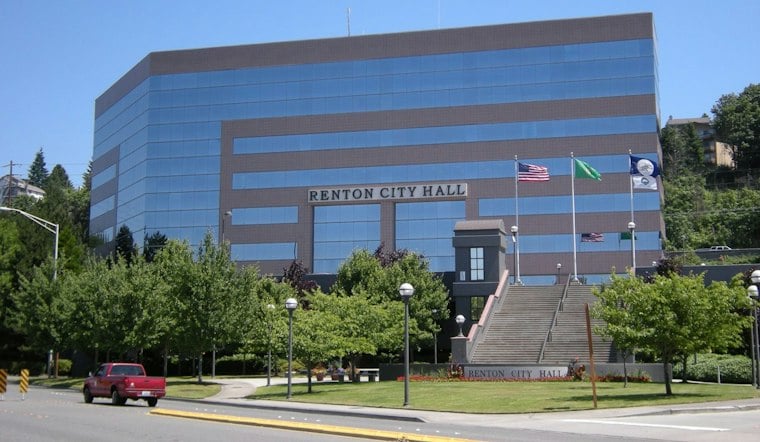
Renton's City Council is set to cast a final vote Monday on an ordinance that would ban camping, storing belongings, and keeping shopping carts on city property, with violators facing up to 90 days in jail and a $1,000 fine. The proposal also requires people to leave city property promptly when ordered to do so by an authorized official.
According to FOX 13 Seattle, the vote follows the U.S. Supreme Court's ruling in Grants Pass v. Johnson, which the outlet reports allows local governments to enforce public camping bans. City officials have stated in the ordinance that Renton has a compelling interest in protecting the health and safety of city employees and members of the public who use city property, per the same report. The station notes that a previous circuit court decision was overturned by the Supreme Court in that ruling.
The station's reporting, drawn from Renton City Council agenda materials and city documentation, indicates that prior enforcement efforts were impractical because law enforcement lacked the authority to arrest people for these violations. Reclassifying the offenses as misdemeanors, per the ordinance, provides officers a legal basis to detain or arrest people who continue camping in public spaces. Renton residents have made numerous complaints about public parks and associated property crime, and the city's draft legislation cites those concerns directly, the article notes.
A Second and Final Reading Monday
The council scheduled the second and final reading of the ordinance for Monday, according to the Renton Reporter. The chapter creates prohibitions on public camping, unauthorized property storage, shopping cart possession, and failure to obey orders to leave, while introducing a unified geographic trespass zone system across city properties including parks, trails, transit facilities, and municipal utilities.
The push toward enforcement has been paired with a leadership shift inside city hall. Renton hired Kent Hay — the former Director of Human Services in neighboring Auburn who developed that city's enforcement-focused homelessness model — in March as Renton's Human Services Director to overhaul its outreach strategy, the Renton Reporter has reported. Mayor Armondo Pavone said the city is moving away from traditional non-profit models to emulate Auburn's approach, arguing that public outreach must pair compassion with accountability.
City Redirects Grant Funds Away From Non-Profits
That philosophy comes with a budget shift. Renton plans to redirect more than $800,000 in existing grant funds previously allocated to roughly 50 non-profit organizations toward running its own city-operated behavioral health center and direct intervention services, according to the Auburn Reporter.
Critics of the ordinance argue that camping bans like Renton's fail to address the root causes of homelessness, per FOX 13 Seattle's reporting, and opponents contend such bans simply displace unhoused individuals and their belongings to neighboring areas rather than resolve the underlying problem. Camping bans, the outlet notes, do not provide long-term solutions.
Part of a Wider South King County Trend
Renton's proposal mirrors a broader pattern among South King County suburbs. Tukwila's council voted in July to enact its own public camping ban punishable by up to 90 days in jail and $1,000 fines, joining similar anti-camping laws already passed in Burien, SeaTac, and Auburn, according to FOX 13 Seattle.
The legal groundwork for this wave traces back to the U.S. Supreme Court's June 2024 ruling in City of Grants Pass v. Johnson, which found 6–3 that penalizing public sleeping does not violate the Eighth Amendment's ban on cruel and unusual punishment, even when shelter space is unavailable, according to MRSC. That decision overturned restrictions the Ninth Circuit had established under Martin v. Boise.
Countywide Numbers Still Climbing
The debate unfolds against a backdrop of homelessness across King County.
Separately, the regional response includes service-provider efforts even as cities like Renton lean harder on enforcement.





