

























































SEPTA has given its long-term modernization push a new name: Accelerate. The plan envisions updated stations, new trains and systemwide improvements, but the agency has not provided a total price or a completion date for the initiative. That uncertainty matters because Accelerate arrives alongside an existing capital program that already carries major fleet, infrastructure and borrowing commitments.
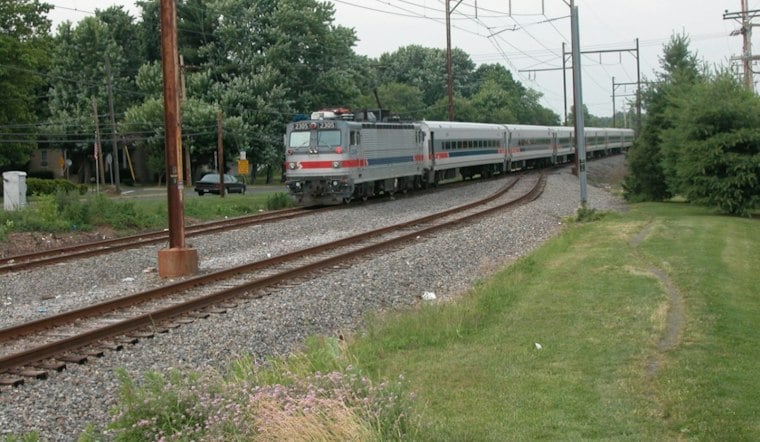
At the plan’s unveiling, General Manager Scott Sauer described Accelerate as ambitious but could not say what the full program would cost or when it would be finished, NBC10 Philadelphia reported. The projects discussed included a $6 billion trolley-modernization effort, a $1 billion Market-Frankford Line improvement program and a $2 billion effort to replace aging Silverliner IV Regional Rail cars. SEPTA also hopes to replace trains on the Broad Street Line and the Norristown High Speed Line, now branded the M.
Accelerate is not starting from zero
SEPTA’s existing 12-year Capital Program already includes funding for Trolley Modernization, new rail cars and station-accessibility work, according to the agency’s FY2027 budget materials. That overlap is central to understanding the announcement: the publicly described Accelerate figures cannot yet be treated as a separate, fully priced package on top of the existing program. SEPTA has not published, in the materials documented here, a consolidated cost showing which projects are already funded, which would require additional money and how the initiatives would be sequenced.
The agency’s verified capital figures show the scale of the commitments already in place. SEPTA says its FY2027 capital budget is $920.7 million, while its 12-year capital program totals $16.5 billion across more than 140 projects. The agency also says it must borrow approximately $4.3 billion over 12 years, and that long-term debt is expected to consume more than 20% of its capital resources by FY2036. Those figures do not establish the cost of Accelerate; they show why its financing cannot be separated from SEPTA’s existing obligations.
A budget under pressure
SEPTA’s FY2027 operating budget totals $1.84 billion and includes a remaining structural gap of about $192 million after austerity measures and increased revenue, according to the agency’s budget announcement. The same budget relies on the second and final year of a $394 million capital-funds transfer approved by PennDOT to support operations. SEPTA distinguishes that temporary transfer from its recurring funding sources.
According to SEPTA’s funding overview, the largest share of its budget comes from Pennsylvania’s Public Transportation Trust Fund, which draws on state sales-tax revenue, vehicle-registration fees and other motorist charges. The agency’s funding structure therefore links its operating stability to state transportation policy even before lawmakers consider any additional money for Accelerate.
The modernization wish list also confronts a large maintenance burden. SEPTA has reported that its state-of-good-repair backlog has doubled over the past decade to $10.2 billion. Regional Rail stations are only about 30% fully ADA-accessible, according to the NBC10 account, while SEPTA’s existing capital materials identify station accessibility as one of the program’s ongoing investment needs.
A comparison, with limits
Other large transit agencies have faced the same mismatch between capital needs and available funding, but their solutions are not directly transferable. The Washington Metropolitan Area Transit Authority’s capital documents describe a dedicated funding arrangement providing $500 million annually for capital work, alongside a broader capital program. WMATA separately models its FY2026 state-of-good-repair backlog at $4.2 billion, with 90% in infrastructure and facilities, according to its state-of-good-repair outlook.
Those WMATA figures are useful as context, not as a like-for-like ranking. The agencies differ in network size, age, design and funding arrangements. The comparison does show the policy choice SEPTA faces: ambitious capital programs become more executable when agencies have predictable long-term funding, while borrowing and temporary transfers leave less flexibility for additional work.
For now, Accelerate is best understood as a direction and collection of major priorities rather than a fully costed construction schedule. SEPTA has identified projects and says it intends to improve service while pursuing them, but the agency has not supplied an overall price or deadline. How much of the vision moves beyond the existing capital program will depend on future investment decisions, including those made in Harrisburg.





