

























































Immigration attorneys based hundreds of miles from Tacoma, Washington say judges there have quietly stopped letting them appear by video for detained clients, forcing last-minute flights, dropped cases, or a scramble to find local counsel their clients never chose. The shift affects lawyers across Oregon, Idaho and Alaska, none of which operate their own immigration detention facilities, meaning most detained immigrants from those states are taken to the Northwest ICE Processing Center in Tacoma.
The change amounts to an apparent unwritten policy, as reported by The Oregonian/OregonLive, under which Tacoma court judges stopped allowing remote appearances on behalf of detained clients after previously permitting attorneys to log in via Webex. Anchorage-based attorney Nicolas Olano said the court has adopted an unwritten local practice of denying remote appearance requests, and he described traveling from Anchorage to Tacoma on roughly two days' notice after a remote appearance request was denied ahead of a Wednesday hearing. He said all of his subsequent requests to appear online were denied, and on one occasion he was reprimanded and disconnected from a proceeding without getting the chance to discuss the matter with his client first.
A Chicago Lawyer's Overnight Scramble
Olano is not alone. A Chicago-based immigration attorney told the same outlet she booked airfare the night before her client's hearing after being denied the opportunity to appear online, a pattern the article's reporting suggests is becoming routine for out-of-state counsel with clients funneled into the Tacoma docket. Oregon attorney Alicia Vial Beesley said the in-person requirement makes representing detained people very difficult, and that it is forcing attorneys to take on fewer detained clients, or none at all.
The Tacoma court has suggested that affected attorneys instead associate with local Washington immigration lawyers to handle in-person appearances, but Olano and Vial Beesley both said that is not a workable solution. Associating with local counsel imposes additional expense on detained individuals and their families, according to the pair, and it hands the case to an attorney the client never selected. Olano argued that detainees transferred from Alaska should not lose access to their chosen Alaska attorney simply because they were moved to Washington.
Why Detainees Pick Attorneys Close to Home
Detained immigrants generally hire attorneys near their own families and witnesses, not near the facility where ICE happens to hold them. Local attorneys can access a client's records and evidence more easily and tend to build relationships with the client's family over the life of a case, something a hastily associated Tacoma-area lawyer would have to build from scratch, if there were even enough local attorneys to cover the volume. Attorneys unfamiliar with a case may not know what the client actually needs, Vial Beesley said, and a lack of continuous representation could allow cases to be terminated before detainees ever get to present their side, or leave them unable to understand their appeal options.
The stakes of losing counsel at the Tacoma bench are steep. Data compiled by Syracuse University's TRAC Immigration covering the first nine months of fiscal year 2026 found that immigration judges at the Tacoma Immigration Court denied asylum applications in 78.4% of cases. Court filings show that Tacoma judges granted bond in only 3% of requested cases during fiscal year 2023, the lowest rate of any immigration court in the country, following a 2022 local policy under which the court determined that longtime unlawful residents without criminal records could not be released on bond, a precedent other courts around the country later followed. A federal judge intervened in 2025, finding that longtime non-citizens who are not dangerous or flight risks are not subject to mandatory detention.
Federal Rules Leave Room for Local Practice
The Executive Office for Immigration Review, housed within the U.S. Department of Justice, oversees immigration courts nationwide, and its policy manual, last updated in March, includes no requirement that attorneys appear in person. Broader federal guidance preserves judicial discretion, letting individual immigration judges grant or deny remote appearances case by case, according to FindLaw, which notes that federal lawsuits elsewhere have challenged uniform remote-appearance denials when judges fail to weigh individual motions. EOIR spokesperson John Martin did not answer questions about the Tacoma court's change, per the original report.
Remote hearings are hardly a fringe tool nationally. A July report from the U.S. Government Accountability Office found approximately 2.2 million remote hearings out of nearly 6 million total immigration court hearings held across fiscal years 2022 through 2025, using Webex or similar video technology, technology that immigration courts adopted broadly in 2020 to manage pandemic disruptions and mounting backlogs. The report's aggregate figures underscore the scale of remote hearings nationally, even as advocates say the current restriction is now taking that option away.
Oregon's Legal Aid Investment at Risk
The restriction lands squarely on Oregon's investment in universal legal defense. Equity Corps of Oregon, the state-funded program created under Senate Bill 1543 in 2022, had provided legal defense services to 26,007 immigrant residents and defended 3,300 in court by September, offering free consultation and court defense to Oregonians facing removal in a system that does not guarantee public defenders to indigent respondents the way criminal courts do. Immigrants with legal representation are 15 times more likely to seek legal relief and 5.5 times more likely to win their cases than those without a lawyer, according to data compiled by Equity Corps.
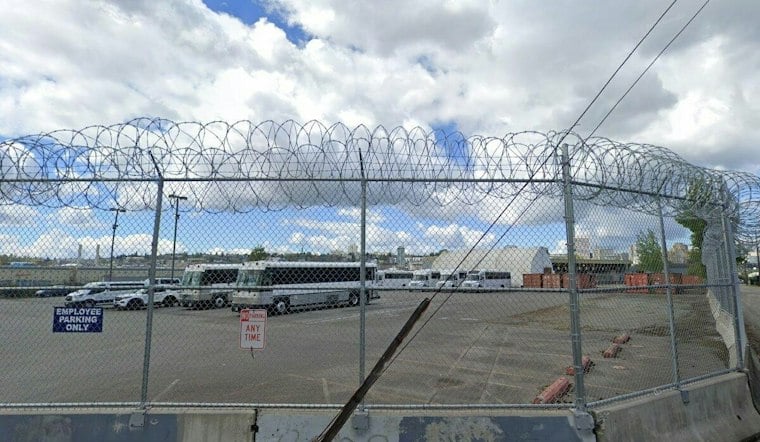
The Northwest ICE Processing Center, owned and operated by private prison contractor GEO Group, holds up to 1,575 beds and is one of the largest detention facilities in the Pacific Northwest, according to the Northwest Immigrant Rights Project. The facility, opened in 2004 as the Northwest Detention Center and renamed in 2019, has drawn separate legal scrutiny this year: a federal judge ordered GEO Group in July to allow Washington state health officials inside for safety inspections, after Governor Bob Ferguson and Attorney General Nick Brown sued in April over more than 3,500 detainee complaints about medical care, sanitation and food quality, as OPB reported. The dispute with GEO Group was separate from the remote-hearing issue.
Attorneys warn the remote-access rollback compounds an already difficult system. Vial Beesley said access to legal representation makes a huge difference for detained people, and Olano warned that the restriction could give ICE more power to violate due process if it continues unchecked. He said judicial review may ultimately be necessary if Tacoma's practice does not change, leaving attorneys in Portland, Anchorage, Boise and beyond to decide, hearing by hearing, which cases they can still afford to take.



