

























































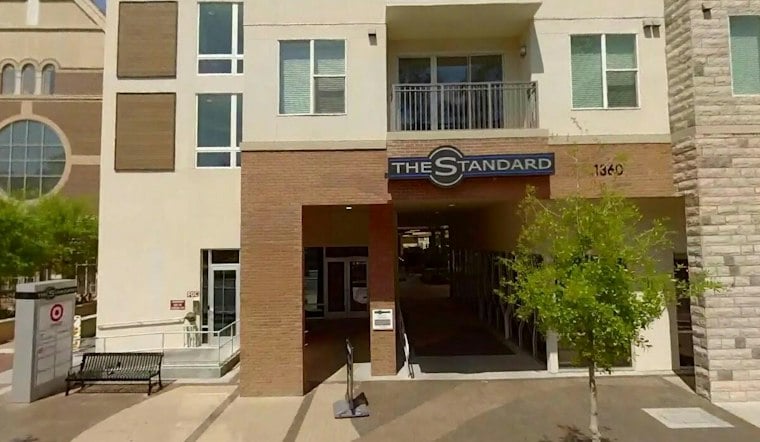
A Tampa family office is pouring money into college housing hundreds of miles from home, backing three new student housing developments near Florida State University, the University of Florida and the University of Tennessee worth more than $300 million combined. Liberty Group, which oversees more than $1.5 billion in investments, is teaming up with Society Hill Capital on the projects, which together will add 1,681 beds across the three university markets.
The partnership isn't new. As reported by Tampa Bay Business and Wealth, Liberty Group previously invested in Statehouse Gaines, a 693-bed community near Florida State University that opened fully leased before selling last year. That track record is why the two firms are doubling down: Liberty Group elected to reinvest with Society Hill Capital for three more developments, according to Society Hill Capital founder Justin Wilson, who told the outlet that repeat capital is the only endorsement that counts in this business.
Three Campuses, One Bet on Scarce Beds
The first project out of the ground is Chapter House at Florida State University, a 129-unit, 511-bed community slated for completion in 2027. It sits at 601 W. Madison St. and 506 W. Gaines St. in Tallahassee's College Town submarket, within walking distance of FSU's campus near Legacy Hall and the new College of Business, according to Multi-Housing News. The property includes more than 4,000 square feet of ground-floor retail and was financed with debt from Pacific Life and preferred equity from Marble Capital.
Two more projects are set to follow in 2029: Chapter House at the University of Florida in Gainesville, with 219 units and 684 beds, and the Nine at the University of Tennessee in Knoxville, with 116 units and 486 beds, per the same account. Developer 908 Group and Batson-Cook Development Company are building all three properties, with 908 Group having delivered more than $1.25 billion in purpose-built student housing across 21 projects and over 10,000 beds nationwide, Multi-Housing News reports.
Why Tallahassee and Gainesville Keep Drawing Capital
The Chapter House FSU project marks the fourth joint venture between 908 Group and Batson-Cook, which previously developed Gator Walk near UF in 2022 and the Nine at Gainesville in 2018, the outlet's report notes. Batson-Cook, an Atlanta-based firm and a subsidiary of Kajima USA, has now built a long-term track record across Florida's college towns alongside 908 Group.
The math behind the bet is stark in Gainesville. The University of Florida enrolled a record 63,148 students in Fall 2025 but offers only about 8,000 on-campus beds, meaning enrollment growth has outpaced new bed supply by more than two-to-one over two years, according to JLL Capital Markets. UF ranks among the nation's top public universities but has no live-on requirement for undergraduates, leaving tens of thousands of students to compete for off-campus units. JLL reported 4% year-over-year rent growth at one Gainesville property, while citywide residential rent climbed to roughly $1,700 a month, per Yardi Matrix and WUFT News.
Knoxville and Tallahassee Face Their Own Crunches
Knoxville has its own version of the story. The University of Tennessee reached an all-time record enrollment of 40,421 students in Fall 2025 following a 20% five-year enrollment surge, a squeeze so severe that the university temporarily leased a local hotel to house students back in 2022, according to UT Institutional Research data. UT sustained that growth partly through a record 92.4% first-year retention rate in Fall 2025.
Tallahassee, meanwhile, is drawing developers even as Florida State builds its own dorms. FSU announced a $374 million five-year campus expansion plan in 2026 to add 2,500 new on-campus beds, a 765-seat dining hall and a parking garage while demolishing legacy residence halls like Rogers, McCollum and Salley, per Government Market News. Even with that public investment, FSU ranked third among all Southern universities for active off-campus student housing development as of late 2025, with 2,353 beds under construction, trailing only Texas A&M and NC State, according to Multi-Housing News and Yardi Matrix.
A Structure Built to Reward the Developer's Own Risk
Liberty Group's role in the three deals is as a co-GP equity investor, supplying capital that sits alongside the developer's own money and takes losses before limited-partner equity, per Tampa Bay Business and Wealth's reporting. That structure can give investors greater participation in a successful development compared with a standard limited-partner stake. Society Hill Capital invests both through funds and as a co-GP, with a focus squarely on purpose-built student housing around Power Four universities.
Wilson said flagship universities keep growing while walkable beds next to campus remain hard to entitle and build, a dynamic he sees as the core opportunity behind the strategy. He told the outlet he prefers owning three sites with a long-term partner rather than chasing volume across dozens of markets.
A National Slowdown, a Regional Exception
The Florida and Tennessee push comes as nationwide student housing deliveries slowed to roughly 27,000 new beds in 2025, down from nearly 35,000 in 2024, while national rent growth moderated to under 1% year-over-year, according to Multi-Housing News and Yardi Matrix. Sector growth has shifted toward targeted Power Four and SEC/ACC flagship markets with strong enrollment drivers, which helps explain why Liberty Group and Society Hill Capital are concentrating their bets rather than spreading capital thin.
Liberty Group CEO Punit Shah, who is also a Miami Marlins co-owner, said the family office looks beyond individual deals when deciding where to deploy capital, measuring the relationship behind a transaction rather than the transaction in isolation, per the same account. Shah said his family is pleased to continue investing alongside Society Hill Capital and 908 Group across the UF, FSU and UT projects. Liberty Group has pursued other high-profile regional bets closer to home as well, including a multi-year land-use dispute over a proposed hotel on Harbour Island in Tampa, as previously reported by Hoodline.





