

























































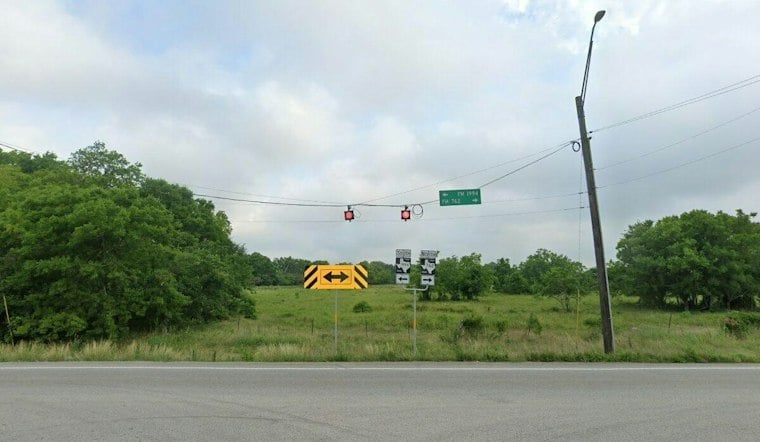
Tesla is dangling a $10.1 billion solar manufacturing complex over Fort Bend County, but the company says it will only pull the trigger if local officials agree to cut its school property tax bill. Lamar Consolidated Independent School District trustees are set to vote Tuesday night on a proposed tax incentive agreement, following a scheduled public hearing, that could determine whether the project — code-named internally as Project Crystal Sun — lands on approximately 3,050 acres near FM 762 and FM 1994 outside Needville.
According to Click2Houston, Tesla has not officially decided to build the facility in Fort Bend County, and Tuesday's vote comes as the company continues evaluating the site. Tesla says the project could eventually create nearly 10,000 permanent full-time jobs. Tesla would remain responsible for other applicable school property taxes even if the incentive is approved.
The scale of the filing itself is striking. Tesla's tax-incentive application, prepared by advisory firm Kroll, signed on July 22 and surfaced publicly on August 6, details a total capital outlay of $10.116 billion — $1.5 billion for real property development and $8.6 billion for manufacturing equipment and personal property, according to Electrek. The application outlines full vertical integration inside a single complex — ingot production, wafer slicing, cell fabrication, and finished module assembly — a structure Electrek notes is rarely seen in the U.S., where most solar plants only assemble cells imported from overseas.
The Jobs and Payroll Numbers Behind the Pitch
An economic benefit study prepared for the state filing estimates that at full capacity, the facility would generate roughly $1.3 billion in annual payroll across 9,712 permanent full-time positions, plus about 1,147 peak construction jobs, per KHOU. Those jobs would sit on the proposed approximately 3,050-acre campus near Needville. The station also reports that Kroll's model projects the campus would contribute an estimated $107 billion to Texas GDP and generate $6.4 billion in combined state and local tax revenue over a 38-year evaluation window, with $2.2 billion of that flowing directly to the state.
Under Fort Bend County's statutory criteria for Texas's Jobs, Energy, Technology and Innovation program, a manufacturing project need only commit to $200 million in capital investment and 75 new jobs to qualify. Tesla's proposal exceeds those thresholds by roughly 50 times and 130 times, respectively, according to Clean Energy News. The tax break itself would come through the JETI Act, known as Chapter 403, which provides a 10-year appraised-value limitation for qualifying industrial projects, a program Community Impact notes replaced the expired Chapter 313 incentive.
County Officials Already Cleared One Hurdle
Local government has already taken a required first step. On August 24, the Fort Bend County Commissioners Court voted 4-0 to create Reinvestment Zone 34 across the approximately 3,050-acre site, according to Community Impact. Interim County Judge Daniel Wong recused himself from that vote due to prior corporate ties to Tesla. Establishing a reinvestment zone is a mandatory prerequisite under Texas law before local taxing jurisdictions can offer property tax abatements; Lamar CISD is separately considering the tax agreement.
Tesla has made clear the incentive isn't just a bonus request. In its filings with the Texas Comptroller, the company stated it is actively evaluating a competing out-of-state location and asserted the Fort Bend County site would not be economically competitive without local property tax incentives, KHOU reports. That leverage is a familiar tactic in corporate site selection, but it raises the stakes for trustees weighing Tuesday's vote against the promised jobs and investment.
A Timeline That Hinges on Multiple Approvals
Should the Texas Comptroller, the Governor, and Lamar CISD all approve the incentive agreements, Tesla projects spending across 2026-2028 and beginning commercial operations in early 2029, according to Construction Dive. That schedule depends on independent, positive determinations from both state leadership and local school trustees — meaning Tuesday's vote is one piece of a larger approval chain, not a final word on whether the plant gets built.
The Fort Bend proposal also lands amid a broader wave of Musk-linked industrial activity in the region. Texas Governor Greg Abbott confirmed another major Musk venture, the Terafab semiconductor project in nearby Grimes County, according to KHOU's Houston Business Journal coverage. The broader discussion also includes Tesla's growing footprint in Texas. Hoodline's own list of Houston's factory heavyweights has already tracked Tesla's growing footprint across the region.
For now, the immediate question facing Fort Bend County residents is narrower: whether Lamar CISD trustees agree Tuesday night to move the tax agreement forward. Whether that vote ultimately leads to shovels in the ground near Needville still depends on decisions still pending in Austin and inside Tesla itself.





