

























































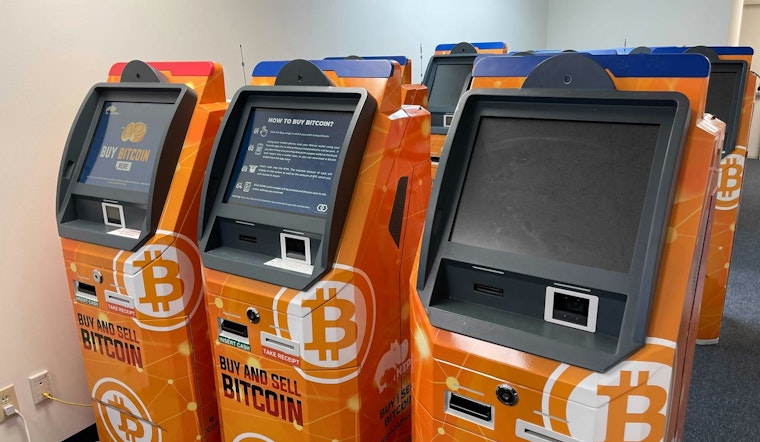
Texas led the nation in cryptocurrency kiosk fraud last year, and advocates say older residents are paying the steepest price. As state lawmakers prepare for the next legislative session, groups like AARP Texas are calling for stronger protections against scams that funnel cash through crypto ATMs and into untraceable digital wallets within minutes.
The push comes as KXAN Austin reports that AARP said it was worried about cryptocurrency kiosks, which allow users to convert cash into digital currency and transfer those funds within minutes. Andrea Earl, the associate state director of advocacy and outreach at AARP Texas, spoke with KXAN's Will Dupree and Avery Travis about the group's concerns as lawmakers gear up for the next legislative session.
The numbers behind that concern are stark. Texas logged 1,179 reported crypto kiosk fraud complaints in 2025, resulting in $56.8 million in stolen funds — the highest total of any state in the country, according to FBI Internet Crime Complaint Center data released in May. Nationwide, the FBI logged 13,460 kiosk-related complaints last year with losses topping $388 million, a 23% jump in complaints and a 58% surge in losses compared to 2024.
Older Adults Bear the Brunt of the Losses
Adults aged 60 and older filed 6,188 of those complaints nationally and lost $257.5 million, or roughly two-thirds of all kiosk scam losses in 2025, per the same FBI data. The pattern lines up with what's happening on the ground in Texas: the Tyler-based Financial Crimes Intelligence Center estimates that 70% of the state's crypto ATM users are over age 60, according to the Texas Tribune. That same reporting notes Texas ranks second only to California in total cryptocurrency kiosks statewide.
The Federal Trade Commission's broader elder fraud data underscores how much money is on the line. Total fraud losses reported by Americans 60 and older quadrupled from $600 million in 2020 to $2.4 billion in 2024, driven largely by large-loss imposter and investment schemes exceeding $100,000 per victim, the agency reported in December 2025. A Commodity Futures Trading Commission fraud advisory issued this month warned that scammers often manipulate victims through QR codes at kiosks, converting cash into digital assets that move to overseas wallets within minutes — a process that makes recovery by law enforcement nearly impossible.
A Regulatory Gap Heading Into the Next Session
Texas currently has no state-level oversight of crypto kiosks. Lawmakers introduced Senate Bill 1705 during the 2025 session to require kiosk operators to implement blockchain analytics and display fraud warnings, but the bill died on the calendar that May, according to Texas Legislature Online. With statewide action stalled, some cities have moved on their own. The San Antonio City Council passed a local ordinance in May, drafted with the Bexar County Sheriff's Office, requiring all virtual currency kiosks in the city to display clear, bilingual warning signs stating that government and law enforcement agencies never demand crypto payments.
Hoodline previously reported on a related scheme in San Antonio's jury duty crypto shakedown, in which scammers posing as officers pressured a resident into a $2,000 payment at a 7-Eleven kiosk before that ordinance took effect.
Other States Offer a Template
Texas advocates have pointed to regulatory models already in place elsewhere. California's Digital Financial Assets Law caps cash customer transactions at crypto kiosks to $1,000 per day, and state enforcement agencies ordered a multi-kiosk operator to shut down 42 ATMs statewide in May for repeated cap violations. Indiana, Tennessee, Minnesota, Hawaii, and more than 20 Massachusetts municipalities have gone further, enacting complete bans or severe cash transaction limits on crypto ATMs by mid-2026 due to unmanageable fraud levels.
Whether Texas follows suit remains an open question as lawmakers prepare for the next legislative session. For now, the state's lack of statutory caps, warning requirements, or blockchain tracking mandates leaves crypto kiosks in gas stations and convenience stores across Texas operating with fewer guardrails than in many other states — even as advocates like AARP Texas warn that older residents continue to bear the financial brunt.





