

























































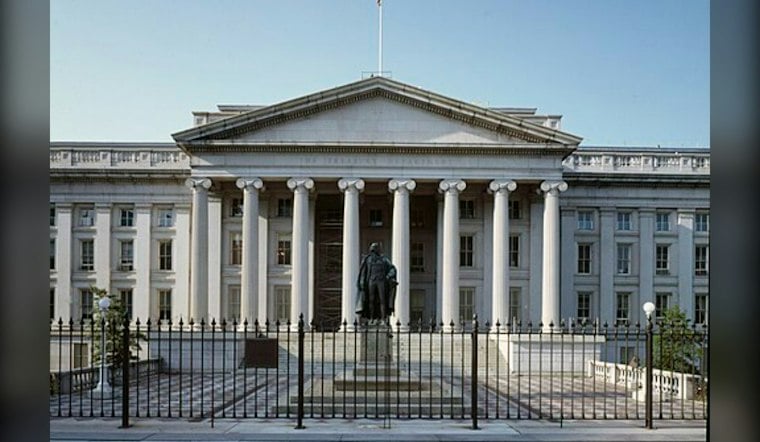
The U.S. Department of the Treasury has sanctioned the Iranian digital assets exchange BitBank, along with a network of affiliated executives and companies, for allegedly channeling hundreds of millions of dollars in cryptocurrency to the Islamic Revolutionary Guard Corps. The designation targets an exchange that Treasury says is controlled by previously designated Iranian financier Babak Zanjani, a figure once sentenced to death in Iran for embezzling billions from the country's state oil company.
Zanjani's Return From a Death Sentence
According to Dallas Express, Treasury says Zanjani used BitBank to move hundreds of millions of dollars' worth of Bitcoin to the IRGC, and that he personally promoted the exchange on his own social media accounts in 2024. Zanjani had his death sentence commuted in Iran in 2024, and Treasury says he returned publicly in 2025 as a backer of regime-linked economic projects. Before that reversal of fortune, Zanjani had built a sprawling $13 billion network of more than 60 companies across Turkey, Malaysia and the UAE designed to help Iran dodge Western oil sanctions, according to The Guardian, which reported his 2016 death sentence for embezzling more than $2.7 billion from the National Iranian Oil Company.
Treasury Secretary Scott Bessent said efforts to finance the Iranian regime using cryptocurrencies “are not beyond OFAC's reach,” per the Dallas Express report, adding that the department will continue to sanction supporters of the Iranian regime. The BitBank designation was issued under Executive Order 13902, which authorizes sanctions against Iran's digital asset sector and other parts of its economy, and it lands within Operation Economic Outcast, the sweeping campaign Treasury launched on August 24, 2026.
Hormuz Tanker Tolls Funneled Through Crypto
Operation Economic Outcast extends secondary sanctions risk to foreign entities across five sectors of the Iranian economy — digital assets, aviation, gold, shipping and technology — while indefinitely suspending five general licenses that had authorized certain remittances and exchanges, according to a client memo from Paul, Weiss. Treasury says the Iranian-state-linked Hormuz Safe Marine Services Authority relied on BitBank to route payments to the regime. Before OFAC designated Hormuz Safe on July 29, 2026, the outfit charged commercial oil tankers between $1 million and $2 million in Bitcoin or stablecoins per transit for so-called safe-passage insurance through the Strait of Hormuz, advertising safe passage while operating under Iran's economy ministry, according to Cryptonews.net.
BitBank was designated for operating in Iran's digital asset sector, and its software developer, Pishtaz Simorgh Electronic Trade Company, was designated for the same reason. Pishtaz Simorgh was established in 2024 and registered at the exact same Tehran street address as BitBank, and it operates as a subsidiary of the previously sanctioned Dot One Value Creation Group, which Treasury identifies as a key holding entity in Zanjani's commercial portfolio, according to bne IntelliNews.
Three Executives Named Alongside the Exchange
Treasury designated three individuals alongside BitBank and Pishtaz Simorgh. Hossein Ali Zaker Hossein, identified by Treasury officials as Zanjani's principal lieutenant, brokered digital asset transactions that ultimately reached the IRGC and directly managed the majority of Zanjani's oil export operations, per the same bne IntelliNews report. Mohammad Mahdi Zaker Hossein is named as a Dot One manager and chief executive of Pishtaz Simorgh, while Seyed Adel Heidari is identified as vice chairman of Dot One's board.
Under the designations, all property and interests in property belonging to these individuals and entities within U.S. jurisdiction are blocked, and designated persons must report that blocked property to OFAC. Entities owned 50% or more by blocked persons are themselves blocked, and U.S. persons are generally prohibited from engaging in transactions involving designated parties unless OFAC grants specific authorization. Violations of U.S. sanctions can result in civil or criminal penalties.
Enforcement Falls on Foreign Exchanges and Banks
Unlike some past crypto-related designations, OFAC published no specific wallet addresses alongside the BitBank listing, according to Unchained Crypto. That omission places the burden of tracing and blocking BitBank-related flows directly on foreign crypto exchanges and banks, since secondary sanctions allow the U.S. to sever foreign institutions from the American financial system without requiring any direct U.S. nexus. Foreign financial institutions that continue engaging with the designated persons may themselves face secondary sanctions exposure.
Two days before the BitBank designation, on September 16, 2026, Treasury's Financial Crimes Enforcement Network convened a global information-sharing exchange with international banking executives, distributing actionable intelligence aimed at closing illicit Iranian revenue and procurement networks under Operation Economic Outcast, according to a U.S. Department of the Treasury release. The exchanges are meant to target the correspondent-banking nodes that give Iranian proxies access to the global financial system.
Part of a Widening Crackdown
BitBank's designation follows a string of earlier U.S. actions against Iranian digital asset infrastructure this year, including the June 2 designation of Nobitex — which processed more than half of all Iranian digital asset inflows in 2025 — and the August 8 sanctions against UAE-linked exchange Shelbit, which blockchain tracing showed had transferred more than $676 million in crypto to Binance wallets, as Hoodline previously reported. Dubai's Virtual Assets Regulatory Authority is also mentioned in connection with Iranian-linked crypto entities.
The economic fallout from the broader campaign has been steep. Following the rollout of Operation Economic Outcast in late August 2026, the Iranian rial collapsed to a record low of more than 2.05 million rials per U.S. dollar, per Wikipedia's tracking of the sanctions campaign, while regional trading partners including the United Arab Emirates began suspending commercial transactions with Tehran amid missile fire and regional escalation. That currency collapse has unfolded alongside ongoing military and maritime disruptions in the Persian Gulf, the same conditions that gave rise to Hormuz Safe's tanker toll scheme in the first place.





