

























































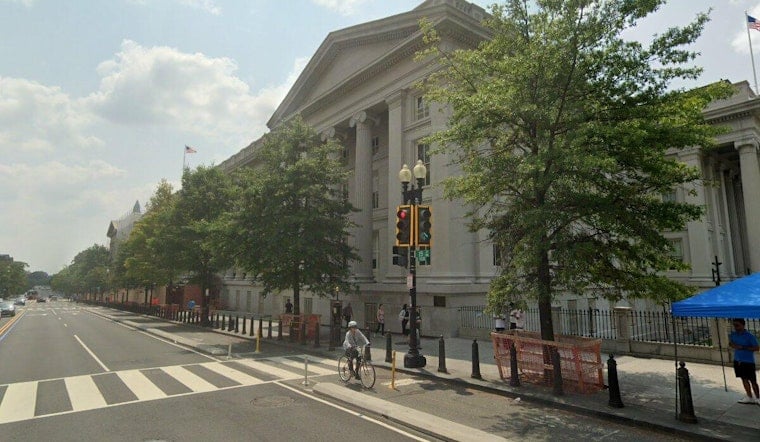
The Trump administration wants to strip tax-exempt status from private colleges and universities that maintain diversity, equity and inclusion policies, in a move that could affect more than 18,000 private schools, colleges and other education institutions nationwide. The Treasury Department proposed the regulation Thursday, targeting policies and programs that help students because of their race.
According to a report from the Boston Globe, the proposed rule would take effect after May 2027 and classifies race-based benefits in admissions, scholarships and facilities as incompatible with continued tax-exempt status. Treasury Secretary Scott Bessent said schools rebranding race-based preferences as equitable, inclusive, or diversity-enhancing does not change their discriminatory nature, according to the same report. Trump officials argue that favoritism toward Black and Hispanic students conflicts with civil-rights law and say DEI policies discriminate against white and Asian American students.
The administration's target is broader than one law firm's memo or one agency memo — it is aimed squarely at ending diversity, equity and inclusion policies directed at Black, Hispanic and other minority students, per the Globe's reporting. IRS Chief Executive Officer Frank J. Bisignano said private schools that promote discriminatory practices will no longer be exempt from taxes, and the newspaper's account notes that schools continuing to engage in racial discrimination should expect to lose tax-exempt status. The proposed regulations, the report states, put institutions on notice.
A Legal Playbook Built on a 1983 Supreme Court Case
The regulatory push leans on decades-old precedent. In 1983, the Supreme Court of the United States upheld the IRS decision to deny Bob Jones University its tax exemption, affirming that the agency can revoke 501(c)(3) status if an organization's policies violate fundamental national public policy. The IRS revised its position in 1970 and revoked Bob Jones University's tax exemption in 1976 over a ban on interracial dating and marriage on campus.
According to the U.S. District Court for the District of Columbia's 1971 decision in Green v. Connally, federal public policy against racial discrimination in education could override an organization's claim to tax-exempt benefits.
That case sits alongside more recent debates over race-conscious college admissions. The proposed regulations also address private-school tax-exempt status and racial discrimination.
The administration has also issued executive orders targeting diversity, equity and inclusion practices across higher education and the private sector.
Harvard Already in the Crosshairs
President Trump has already threatened to cut Harvard University's tax-exempt benefit, and Harvard officials have said there is no legal basis for removing the university's tax-exempt status. University officials argued that stripping the exemption would force cuts to financial aid and crucial medical research. Tax exemptions save many private universities millions of dollars every year — losses the federal government has rarely targeted until now.
Hoodline previously reported on Harvard faculty who pledged salary cuts for legal defense against federal actions threatening the university's status. The Justice Department has separately opened investigations into several medical schools accused of favoring Black and Hispanic students in admissions, adding another front to the federal pressure campaign.
Colleges Already Retreating From DEI
Some universities have shut down or rebranded their DEI offices, according to the Globe's reporting. The Chronicle of Higher Education reported that George Washington University dissolved its Office of Diversity, Equity, and Community Engagement and created a new Office of Community, Culture, and Inclusion. According to Georgetown University, at least 116 colleges and universities had renamed or dismantled DEI offices, jobs, and hiring practices aimed at diversity, equity and inclusion since January 2023. Hoodline has documented similar retrenchment elsewhere, including at UNC Charlotte, where DEI offices were axed under administrative and policy mandates, and in Nevada, where regents recently delayed a vote to eliminate a diversity panel after students pushed back.
These federal moves follow years of state-level action.
Legal Guardrails and Financial Stakes
Nonprofit organizations also face compliance obligations. Nonprofit status allows donations to be tax-deductible, a benefit that disappears if an institution loses its exemption.
The financial exposure goes beyond income tax bills. According to Bond Buyer, schools that lose 501(c)(3) status could also be barred from accessing the municipal bond market, drastically increasing borrowing costs for campus construction and infrastructure projects. That pressure compounds other financial pressures already facing colleges.
Opposition Calls the Rule an Attack on Access
The administration's higher-education policies have drawn public disapproval, as reported by the Associated Press. The criticism echoes concerns raised earlier in 2025, when the Treasury Department publicly stated that tax-exempt status is “a privilege and not a right,” signaling that IRS revenue procedures could be used to target campus activity acknowledging race, including scholarships, housing and student publications.
The administration also pursued a similar approach in 2025, proposing restrictions on eligibility for federal programs serving employees of nonprofits deemed to operate with a substantial illegal purpose, including illegal discrimination. With the rule not set to take effect until after May 2027, colleges have months to decide whether to fight it in court, adjust their policies, or both.




