

























































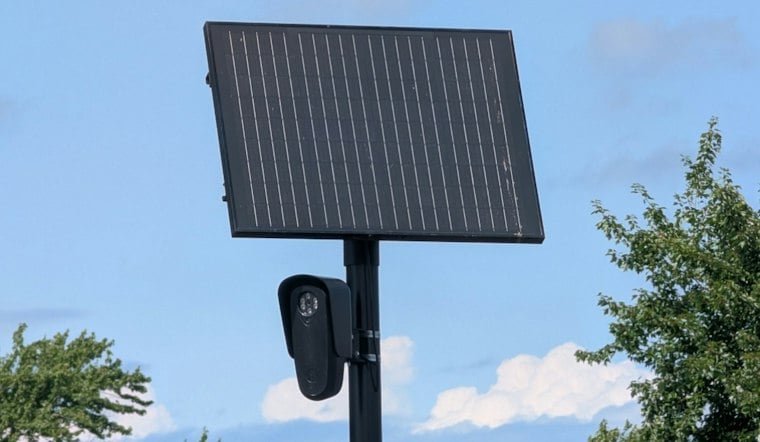
Wauwatosa police say a camera alert helped them crack open a disturbing case: after law enforcement received a report regarding the sexual assault of a child, officers turned to Flock camera technology to track down a suspect vehicle, and that alert ultimately led to an arrest on a charge of repeated first-degree sexual assault of a child.
According to WFRV Local 5, the suspect vehicle triggered an alert from the Flock camera system, and information from that alert aided officers in locating the vehicle. Wauwatosa police officers then arrested the suspect on the charge, per a social media post cited by the station. The Wauwatosa Police Department credited Flock cameras as an important tool in preventing serious crimes, saying that locating people wanted in connection with serious offenses matters and that Flock is one more tool used to help keep Wauwatosa safe. Authorities released no other information at the time of publication, and WFRV said it will update the story as necessary.
How License Plate Cameras Work
Flock is one investigative tool that can help officers quickly identify and locate vehicles connected to cases, according to the Wauwatosa department's own framing of the technology. Automated license plate recognition systems, broadly speaking, automatically capture an image of a vehicle's license plate, convert it into readable characters, compare it against law-enforcement databases and alert officers when a flagged vehicle is spotted, according to the International Association of Chiefs of Police. Those systems capture a contextual photo of the vehicle, an image of the plate itself, geographic coordinates and a timestamp for each recording, the group notes.
The IACP also recommends that officers treat any ALPR alert as an investigative lead rather than conclusive evidence, confirming vehicle and record details before taking enforcement action. The organization further advises that agencies maintain written policies covering authorized uses, access, security, data sharing, retention limits, complaints and consequences for misuse, and that data be purged once it no longer serves an authorized purpose.
Similar Cases Across Wisconsin
Wauwatosa's experience echoes other agencies around the state that point to Flock as a tool in serious investigations. In Two Rivers, city officials said Flock provided information that helped locate a suspect in an arson case, and in a separate hit-and-run investigation, officers used a vehicle description along with the camera system to find a suspect vehicle within minutes, according to FOX 11 News. Two Rivers officials said the cameras have also assisted investigations involving stolen vehicles, significant theft, endangered children, child abuse, juvenile runaways, drug activity, overdoses and homicides over the prior year.
The University of Wisconsin–Madison Police Department likewise uses Flock Safety cameras as an investigative tool and says the system has helped solve several serious crimes since it was implemented on campus, per the university's own Office of the Secretary of the Academic Staff Knowledgebase. That entry notes UWPD restricts internal access to nine individuals, limits external access to Wisconsin law-enforcement agencies, and requires every search to carry a documented reason and case number. The university's information also states Flock data may not be used for immigration enforcement or reproductive-rights investigations, with access logged and audited. Still, the UW–Madison Academic Staff Assembly approved an amended resolution earlier this year calling for cancellation of the university's Flock contract and a review of other surveillance-technology agreements.
Not Every Wisconsin City Is On Board
The technology's reception varies widely across the state. Several Northeast Wisconsin communities — Appleton, Grand Chute, Oshkosh and Sturgeon Bay — have ended their Flock services, while Green Bay opted to continue using the cameras, the FOX 11 report notes. Two Rivers, addressing privacy concerns directly, said it has reduced Flock data retention to seven days, that its police department conducts monthly audits of the system and searches, and that access is limited to legitimate law-enforcement purposes; the city also emphasized its cameras identify vehicles and license plates rather than using facial recognition to identify people inside them.
Misuse cases have also surfaced. A former Milwaukee police officer, Josue Ayala, was sentenced to 12 months of probation and a $500 fine after pleading guilty to improperly using Flock data to track an ex-girlfriend and her partner, according to The Post-Crescent. Accounts differ on the punishment handed to a Menasha police officer disciplined for a similar off-duty misuse of the system: FOX 11 reported the officer was sentenced to six months in jail for using Flock to stalk an ex-girlfriend, while The Post-Crescent reported Menasha officer Cristian Morales received a nine-month jail sentence, with three months stayed, followed by three years of probation.
What the Research Shows
Beyond individual case studies, broader research suggests license plate readers can move the needle on certain crime categories without being a cure-all. A study evaluating a major expansion of fixed automated license plate readers installed at every entrance and exit to Atlantic City found the expansion did not reduce violent crime overall but was associated with reductions in shootings, motor-vehicle thefts and property crime, according to Taylor & Francis Online. That research also found arrests and vehicle recoveries tied to stolen plates or vehicles were two to three times more likely during patrols when the technology was in use, and noted that as of 2020, nearly 65 percent of municipal police departments with 100 or more officers had adopted ALPR technology — often concentrated in specialized investigative units rather than spread across routine patrol work.



