

























































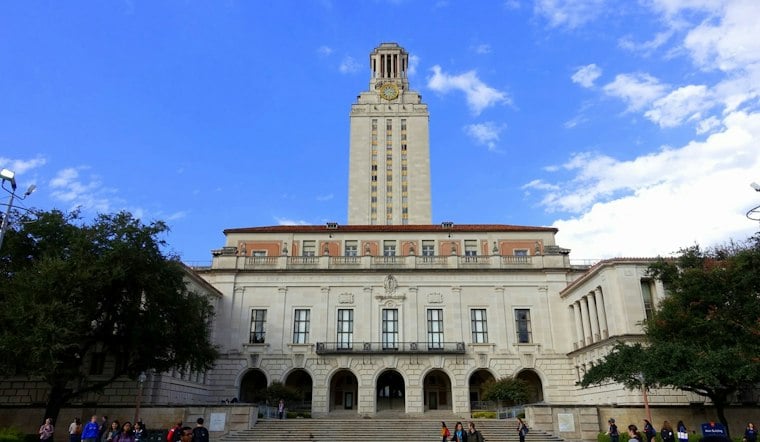
A federal appeals court in New Orleans is set to hear arguments Tuesday over whether the University of Texas System can enforce a state law restricting protests and other expressive activity on campus after dark. The case centers on Senate Bill 2972, known as the Campus Protection Act, which a federal judge blocked last year after ruling it likely violates students' First Amendment rights.
What's at Stake in Tuesday's Hearing
The U.S. 5th Circuit Court of Appeals will hear the University of Texas System's appeal of a preliminary injunction that currently blocks enforcement of the law, according to KXAN Austin. The hearing is scheduled for Tuesday at 9 a.m. in New Orleans. Appeals courts typically issue rulings months after a hearing, so a decision is not expected immediately.
SB 2972 took effect on September 1, 2025, reversing a 2019 state law that had required outdoor spaces at Texas public universities to function as open forums for public speech, per The Texas Tribune. The new law requires public universities to restrict several forms of protected speech after 10 p.m. and during the final two weeks of a semester, and it places additional limits on end-of-term guest speakers, amplified sound and percussion instruments.
Students Sued Within Days of the Law Taking Effect
UT System student organizations said the law infringes on their First Amendment rights and sued shortly after it took effect, with the Foundation for Individual Rights and Expression representing them in court. The groups argued the law could punish students for wearing clothing with political messages, playing music, writing, speaking, or attending a candlelight vigil at night. The Texas Office of the Attorney General represented the University of Texas System, which countered that the law sets content-neutral time, manner, and place restrictions rather than targeting any viewpoint.
U.S. District Judge David Alan Ezra sided with the students on October 14, 2025, granting a temporary injunction after finding they were likely to succeed in their lawsuit. The judge ruled that the university system's policies posed a substantial threat to free speech and described those policies as ambiguous. Ezra wrote that giving administrators and law enforcement broad discretion to decide what counts as disruptive speech creates a substantial risk that the policy will be weaponized against speech with which they disagree, and he added that the bans impermissibly expand officials' ability to go after protected speech, according to the same KXAN report.
Appeal and the Pause on Proceedings Below
The Texas Office of the Attorney General appealed the injunction on November 4, 2025. Both parties agreed to put the underlying district court case on hold until the 5th Circuit rules on the preliminary injunction, and proceedings will resume once that ruling comes down, the station's report notes.
At the hearing, FIRE senior attorney Adam Steinbaugh is arguing for the plaintiffs, while Texas Assistant Solicitor General Daniel Ortner is arguing for the defendants. Steinbaugh has said a federal court correctly ruled that Texas' law was unconstitutional, adding that the First Amendment does not rise and fall with the sun.
A Possible Ripple Effect on Student Organizing
Beyond the courtroom, the law's chilling effect has shown up in campus political activity. University Democrats reported that their voter registration numbers fell from a typical 8,000 per semester to 4,000 this fall, with the group's president attributing at least part of the decline to the law, per KXAN's reporting.
KXAN reached out to the University of Texas for a statement ahead of the hearing and said it would update its article if the university provides one. For now, the fate of SB 2972's nighttime and end-of-term speech restrictions rests with the appellate panel in New Orleans, with the broader lawsuit over the law's constitutionality still waiting in the wings.





