

























































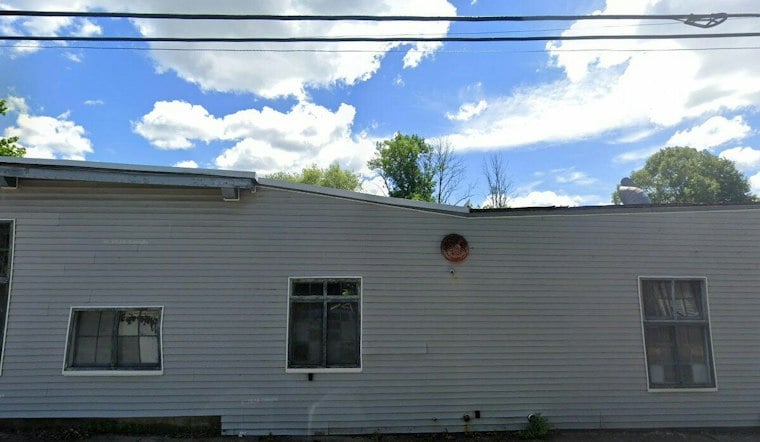
A long-vacant warehouse at 129 Ballou St. in Woonsocket is slated for conversion into 15 homes priced, according to the project’s reported plans, between $275,000 and $299,000. The development is intended to offer an entry point into homeownership in a city where housing costs have risen.
Jesse Jacavone, affiliated with Duo Development Corporation, bought the property after what he described as years of community complaints about people using drugs inside the building, according to The Valley Breeze. Jacavone said the project is intended to give people an opportunity to own a home. The abandoned 15,800-square-foot light industrial warehouse sold for $325,000 on Feb. 9, 2024, according to Coldwell Banker records.
From Zoning Filings to a $1.03 Million State Grant
City planning records show that Jacavone Investment Corp. and LandUse.co submitted adaptive-reuse plans in February and March 2026 to convert the building into housing in an R-3 residential zone. Early city agendas listed 16 units; state grant filings and more recent developer statements describe a 15-unit project, according to the City of Woonsocket.
In June 2026, Gov. Dan McKee and the Rhode Island Executive Office of Housing awarded Duo Development Corporation a $1.03 million grant for the project. It was part of a $7.5 million allocation for six entry-level homeownership developments statewide, according to the Office of the Governor. Jacavone told The Valley Breeze the grant helped make the development possible amid high construction costs, and said keeping the homes affordable while staying within budget was a major challenge.
How the Housing 2030 Program Fits In
The grant came from Round 1 of Rhode Island’s Housing 2030 Entry-Level Homeownership Program, launched in February 2026 with $20 million from a voter-approved $120 million housing bond. The program supports affordable homes for low- and moderate-income buyers, with homes priced under $400,000 and buyers earning up to 120% of Area Median Income, according to the Executive Office of Housing. The state’s broader production goal followed a period in which Rhode Island averaged 90 affordable homeownership units permitted annually from 2019 through 2023; leaders set a goal of 1,000 such units by 2030, according to the Rhode Island General Assembly.
What the State’s Housing Figures and Rules Mean
Rhode Island municipalities permitted 2,655 residential units in 2024, the largest annual total since 2005, according to Rhode Island 2030. That statewide figure counts permits—not completed homes or specifically affordable owner-occupied homes—so it is not a direct measure of progress toward the 1,000-unit affordable homeownership goal.
For homes receiving program funding, the Rhode Island Executive Office of Housing requires a sale price under $400,000 and buyer income no higher than 120% of area median income. Buyers must use the home as their primary residence and may not rent it during the deed-restriction period, under the program rules. The Ballou project’s reported prices are below the program-wide price limit; income eligibility and occupancy restrictions also apply.
The developer's ownership structure has drawn its own scrutiny. Corporate filings show Duo Development Corporation is co-owned by Jacavone and business partner Kyle Seyboth, who faced public scrutiny in August 2026 after the Rhode Island Attorney General's office filed legal claims regarding disputed property transactions, as reported by GoLocalProv. Seyboth denied wrongdoing in response to those civil claims, the outlet noted.
What's Inside the New Condos
The planned mix includes four two-bedroom homes of about 1,300 square feet and one-bedroom units ranging from 950 to 1,000 square feet. Jacavone told The Valley Breeze that the conversion involves extensive new work: new windows and a roof are in place, the old siding is being removed, and HVAC work is underway.
Jacavone described plans for central air conditioning and heat, hardwood floors and tiled bathrooms, and estimated that the homes could go on the market in spring 2027, according to The Valley Breeze. He also told the newspaper he had spoken with prospective buyers who meet the income threshold, including a Woonsocket firefighter earning $60,000 a year.
Why Woonsocket Needs the Inventory
The timing reflects a tightening local market. Median home sale prices in Woonsocket reached approximately $417,500 by mid-2026, trailing Providence County's $465,050 median by about $47,500, according to Long Realty Inc., with local inventory sitting at just 2.3 months of supply. In nearby East Woonsocket, median home prices climbed to $470,000 by August 2026 — a 14.4% year-over-year jump — per Redfin, with homes there selling in an average of 25 days.
Woonsocket is technically one of only eight Rhode Island municipalities meeting the state's 10% statutory target for deed-restricted affordable housing, hitting 17.09% compliance in 2025, according to What's Up Newp. But much of that total relies on rental vouchers and existing rental developments rather than entry-level owner-occupied housing like the Ballou Street condos. That gap matters locally: an October 2026 United Way of Rhode Island report found 58% of Woonsocket households live below the ALICE threshold, unable to afford basic necessities despite being employed — the second-highest share in the state after Central Falls, as Hoodline previously reported.
The Ballou Street building remains under construction, with its roof and windows in place as crews work on HVAC and siding. If the spring 2027 schedule holds, the 15 homes would add a small but uncommon entry point to homeownership in Woonsocket.





